



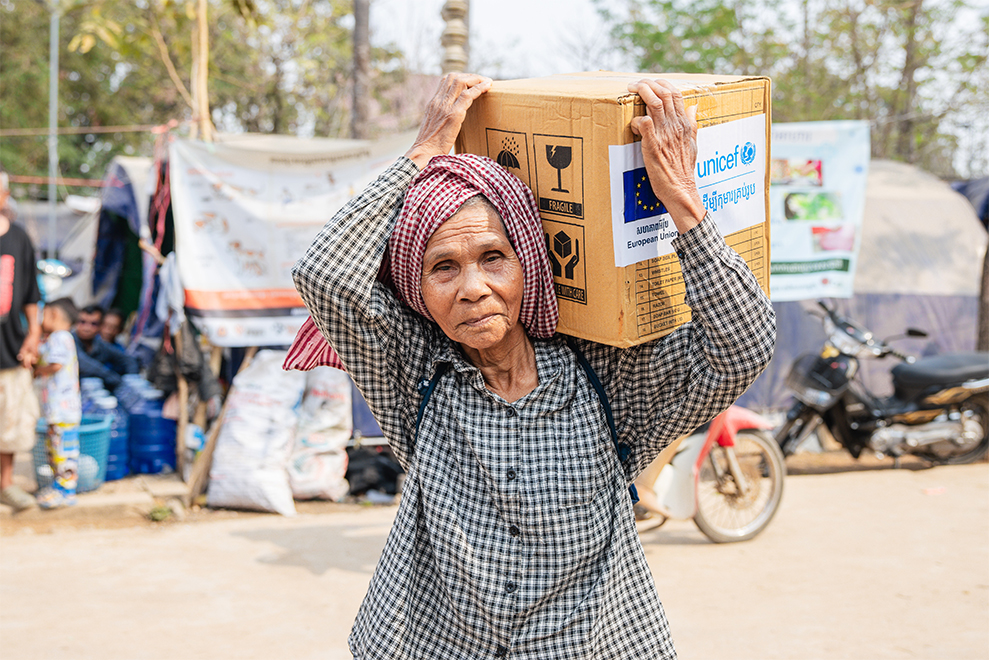
The EU and UNICEF have delivered more than 30 tonnes of emergency humanitarian supplies to families displaced by the ongoing border crisis, providing critical support to an estimated 15,000 people — most of them women and children — across four northwestern provinces.
Senior officials, including EU ambassador to Cambodia Igor Driesmans, Minister of Agriculture, Forestry and Fisheries Dith Tina, Banteay Meanchey governor Oum Reatrey, and UNICEF deputy representative Anirban Chatterjee, joined a distribution operation at Wat Kandoal in Banteay Meanchey province on February 7.
The assistance included large tents and tarpaulins to serve as temporary learning and child-friendly spaces, along with hygiene kits, solar lamps, and essential health and water supplies aimed at helping displaced families maintain basic living conditions while sheltering at relocation sites in Oddar Meanchey, Banteay Meanchey, Siem Reap and Preah Vihear.
Driesmans said the delivery reflects the EU’s continued commitment to protecting vulnerable civilians affected by armed conflict and displacement.
He noted that, alongside material aid, psychosocial support is being provided through the Transcultural Psychosocial Organization Cambodia to address trauma experienced by displaced communities.
“Today, we are proud to deliver essential supplies through our partnership with UNICEF Cambodia,” he said, adding that the EU remains committed to safeguarding the wellbeing and dignity of every displaced child and family.
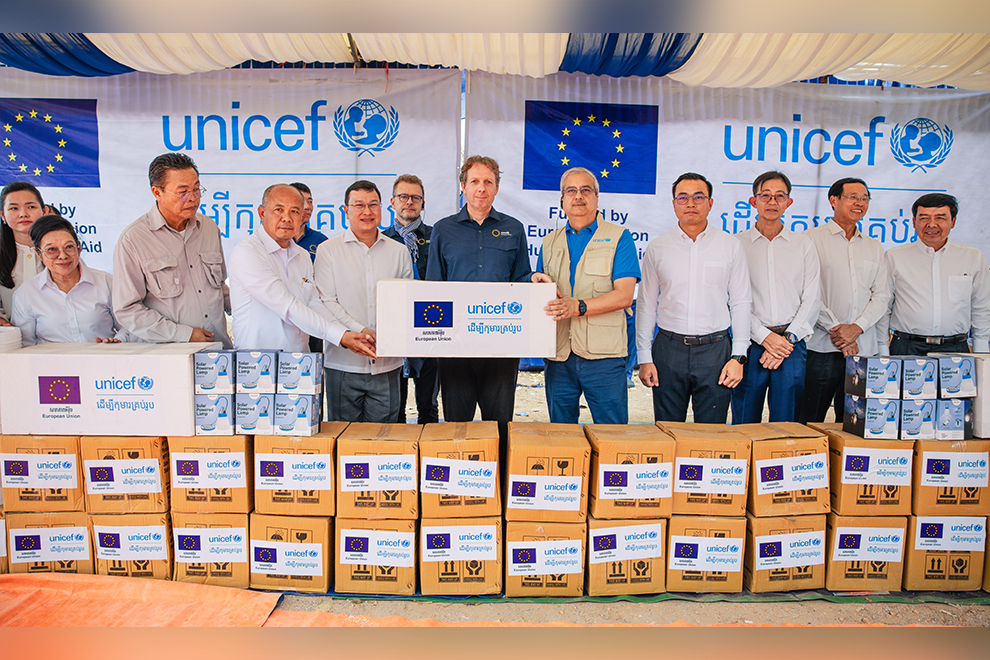
Chatterjee thanked the EU for enabling continued access to essential services during the crisis, emphasising the importance of sustaining children’s education, safe water, hygiene and healthcare in displacement settings.
“This support will help ensure that young children keep learning, that families have safe water and hygiene, and that communities can maintain essential health and dignity as they navigate this challenging period,” he said.
Humanitarian needs have intensified in recent months as thousands of residents fled border areas to seek safety inland, placing pressure on temporary shelters and local authorities.
Aid agencies warn that without sustained assistance, displaced children face heightened risks of interrupted schooling, poor sanitation and long-term psychological distress.
The EU’s contribution was delivered through ReliefEU Capacities, part of the European Commission’s humanitarian aid operations, which provide rapid emergency logistics, transport and supply support when humanitarian systems are stretched.
The mechanism is designed to meet immediate needs while strengthening access for frontline responders.
Both the EU and UNICEF said they will continue working with Cambodian authorities and partners to ensure displaced families receive essential protection and services, while also supporting preparedness and recovery efforts in affected communities.
The latest delivery underscores the scale of humanitarian needs created by the border crisis and the growing reliance on international assistance to protect vulnerable civilians — especially children — from its lasting impact.
