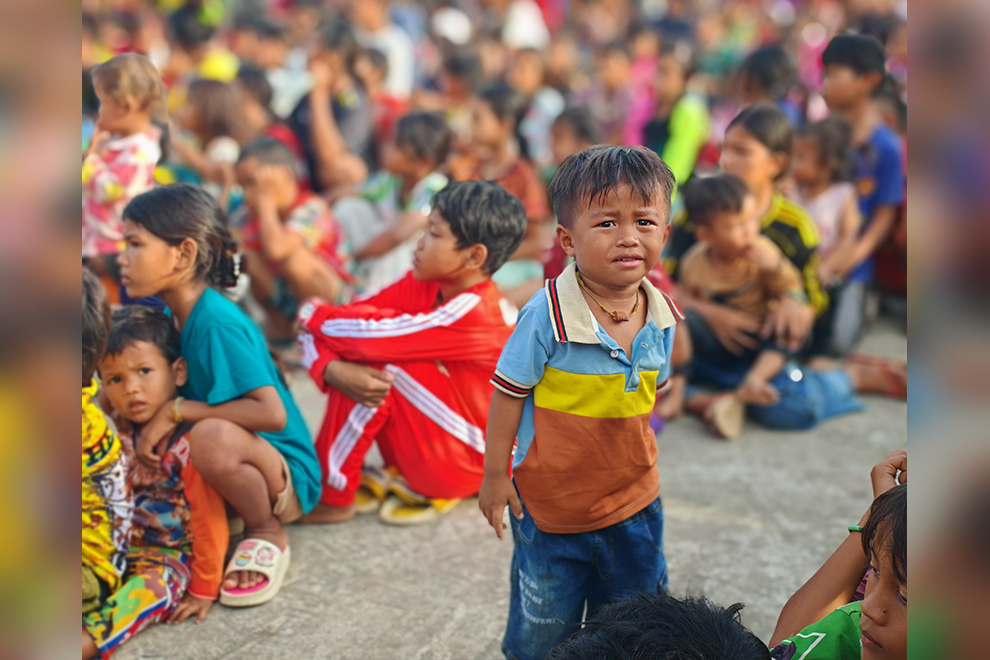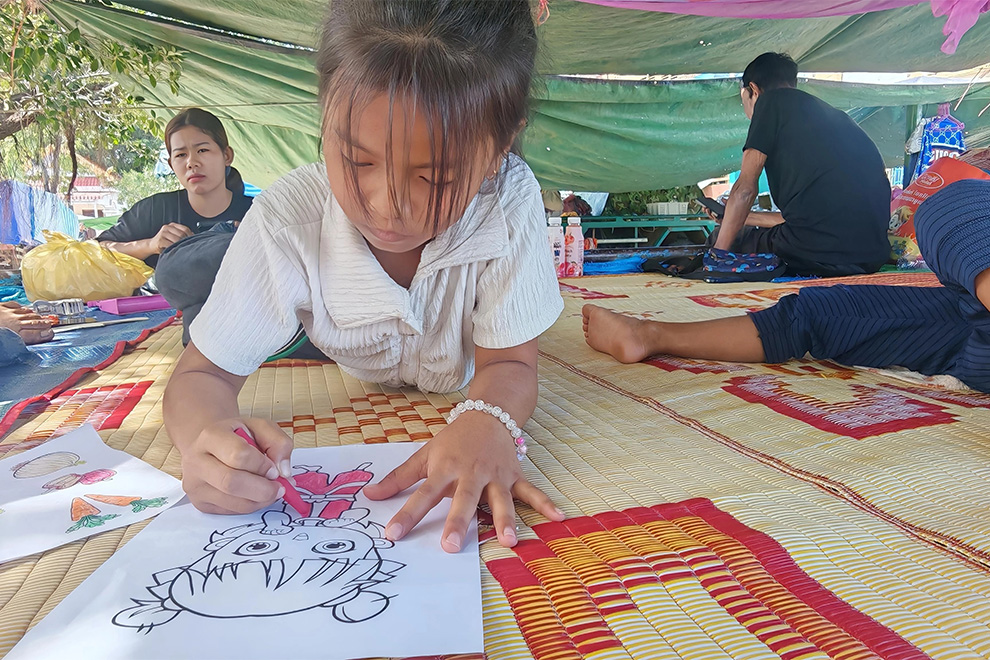
The Cambodian first lady and humanitarian organisations are calling for immediate and scaled-up assistance as renewed clashes along the Cambodia–Thailand border drive mass displacement, overwhelm existing relief capacity and exposing hundreds of thousands of children and families to escalating risks.
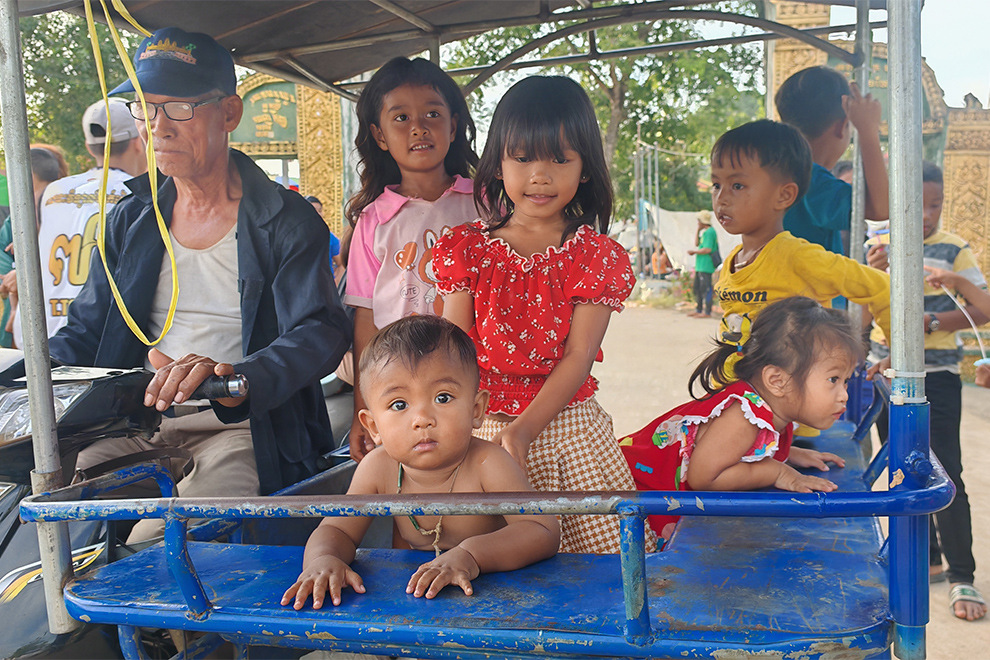
Authorities reported that by 7am on December 16, a total of 126,508 families — 422,698 people — had been displaced across seven provinces, including Preah Vihear, Oddar Meanchey, Banteay Meanchey, Battambang, Pursat, Koh Kong and Siem Reap.
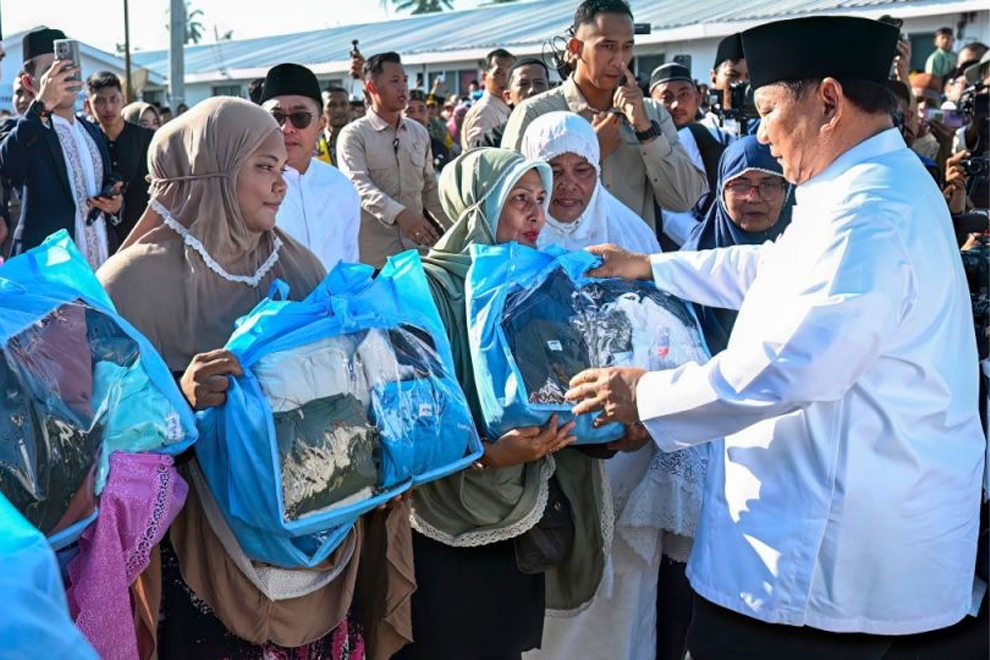
Amid the growing crisis, first lady Pich Chanmony has called on communities to come together to assist refugees and those serving on the battlefield until stability is restored.
“Our young people and citizens must unite in supporting frontline soldiers and displaced families. I urge national solidarity to help the country overcome this difficult period,” she said.

The speed and scale of displacement in December 2025 are unprecedented for Cambodia.
World Vision Cambodia said the renewed escalation has forced civilians to flee across northwestern and western provinces, straining shelters, food supplies, water and sanitation services, as well as health care.
“Children are facing a hidden emergency. Children are among the most severely affected. While food and shelter dominate immediate needs, the less visible impacts on children – trauma, disrupted learning and loss of stability – are growing rapidly,” according to World Vision Cambodia.
According to the Ministry of Education, Youth and Sport, 1,039 schools were closed as of December 15, disrupting learning for more than 242,881 students.
With safe shelter and daily routines lost, humanitarian actors say hundreds of thousands of children now require urgent protection, psychosocial support, continuity of learning and mental health care.
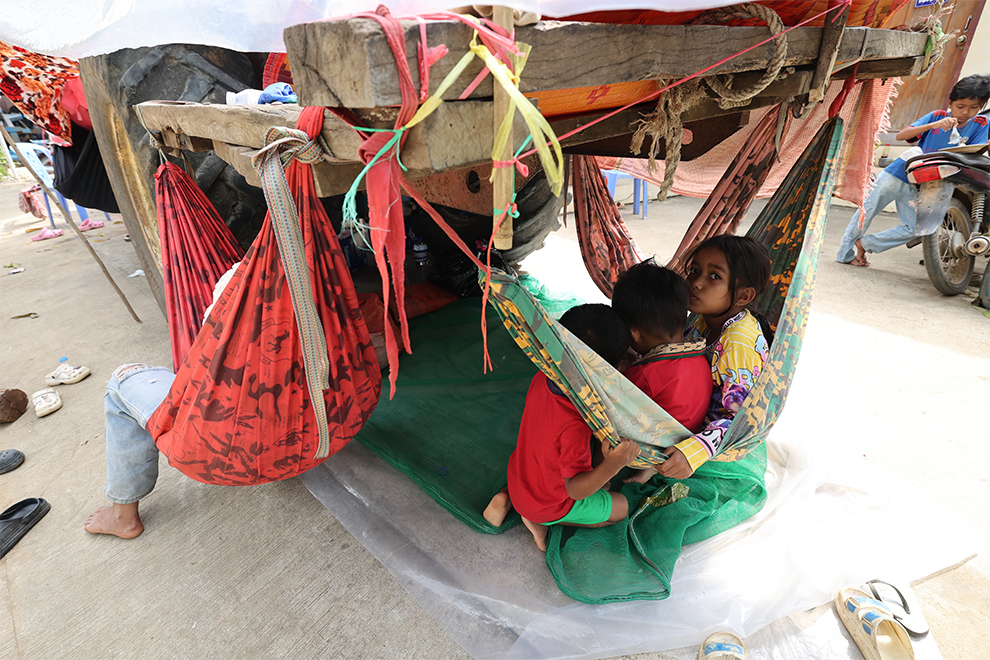
The government, local authorities and community groups have been providing assistance, including temporary shelter, food, water, hygiene kits and basic health services.
World Vision Cambodia said the scale of displacement is exceeding current capacity, leaving critical gaps in shelter, food security, water and sanitation, and health services.
It has activated an emergency operation in several provinces, including Preah Vihear, Banteay Meanchey, Siem Reap, Battambang and Oddar Meanchey.
“Families forced to flee their homes are facing urgent and complex needs. Beyond food and clean water, children need safe and protective spaces, psychosocial care and a sense of stability in the midst of fear and uncertainty,” said Janes Imanuel Ginting, national director of World Vision International in Cambodia.
“Timely and flexible support from partners and donors is critical to protect children and save lives,” he added.
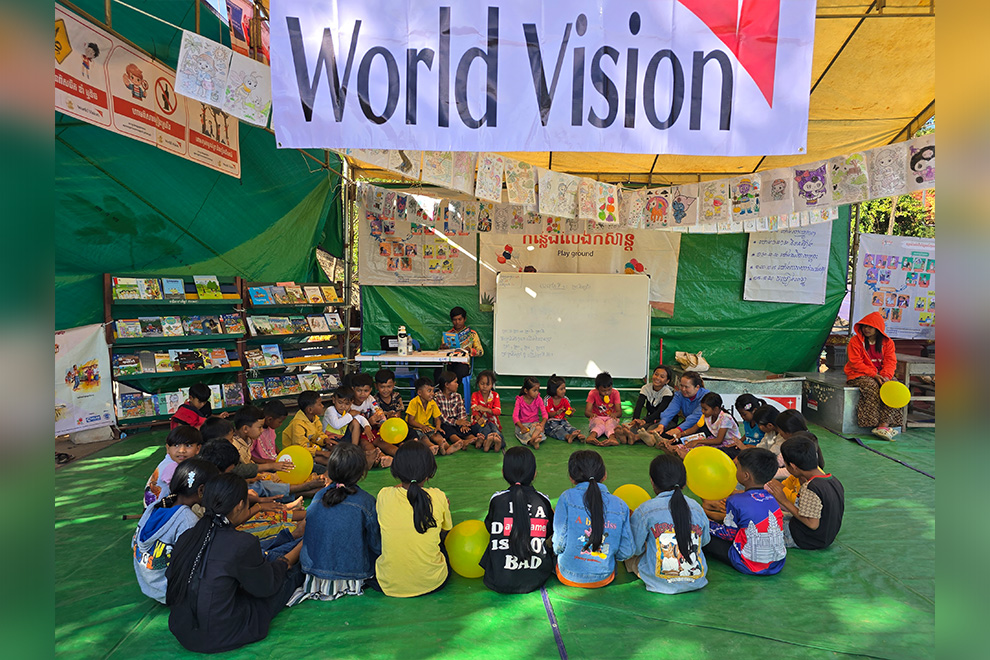
Between December 11 and 14, its teams supported more than 44,600 people across 30 displacement sites, providing child protection services, emergency water and sanitation support and non-food assistance.
The organisation established 30 child-friendly spaces, installed 37 latrines and 19 water tanks, distributed 1,560 non-food item kits, and delivered psycho-awareness training to more than 1,200 people.
World Vision said it plans to scale up its response to reach more than 220,000 people as needs continue to rise.
The organisation appealed to donors, private sector partners and the public to provide immediate and flexible funding, prioritise child protection, psychosocial support and education in emergencies, and support humanitarian coordination and access so aid can reach the most affected communities quickly and equitably.