



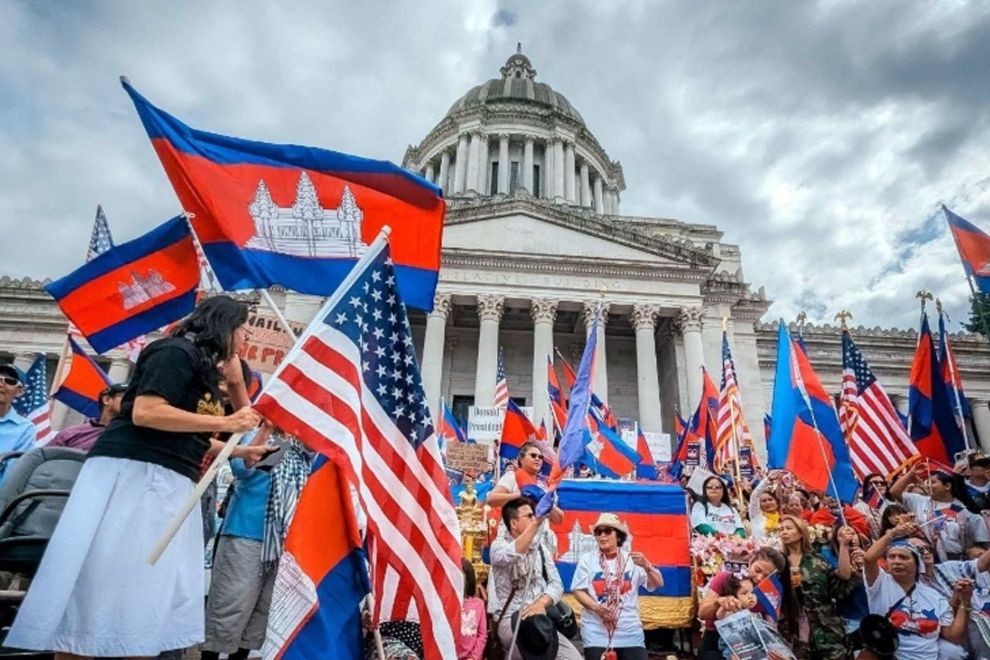
Following deadly border clashes, a diplomatic downgrade and land encroachment, Thailand is now moving forward with a series of lawsuits against Cambodia, accusing it of armed aggression and war crimes.
The Thai government has announced plans to sue Cambodia and its leaders in court, with a key focus on charges of intentionally laying new landmines, injuring Thai soldiers.
Thailand’s acting prime minister stated that the legal action is a direct response to Cambodian violations of Thai sovereignty and international law, adding that warrants will be issued for Cambodian leaders if they enter Thai territory.
Cambodia dismissed Thailand’s legal actions as baseless and politically motivated, accusing Bangkok of recklessness and ignorance of diplomatic protocol.
The Cambodian government has rejected all accusations, including the claim that it planted new landmines, and has accused Thailand of fabricating evidence to justify its own ceasefire violations.
The Cambodian Ministry of Foreign Affairs and International Cooperation has declared the legal threats as a deliberate attempt to deflect attention from Thailand’s own hostile actions and has warned that it will file reciprocal lawsuits against the Thai officials responsible for military incursions and attacks on Cambodian citizens.
Core accusations and counter-accusations
Landmines
Thailand claims Cambodia planted new anti-personnel landmines along the border, injuring soldiers in areas that were previously cleared. Officials say this breaches the Ottawa Convention and international law.
Cambodia has categorically rejected these accusations, calling them “fabricated”.
Heng Ratana, director-general of the Cambodian Mine Action Centre (CMAC), said the explosions on July 16 and 23 occurred about 300 meters inside Cambodian territory, and the alleged PMN-2 mines would have caused instant death rather than leg injuries.
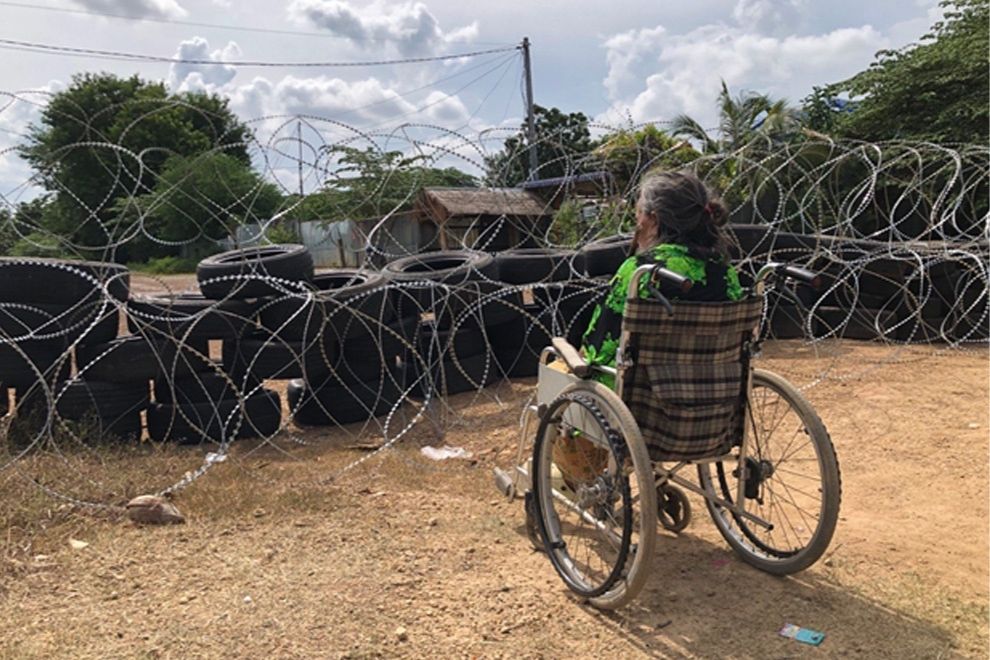
“Therefore, accusing Cambodia of using PMN-2 mines, with the result that someone stood on one and only lost a leg, is untrue. Secondly, they claim the explosion occurred in an area already cleared of mines, but that area is within Cambodian territory,” he noted.
“After the explosion, their forces attempted to inspect the site, but our forces were already stationed there, preventing their entry, and they remained 300 metres from the explosion site. Thus, their claim of finding new mines at the explosion site is false,” he added.
Ratana said Thailand’s accusations appeared to serve as a pretext for aggression.
Ceasefire violations and encroachment
Thailand alleges Cambodian forces repeatedly entered Thai territory and encouraged permanent settlements, to provoke a response.
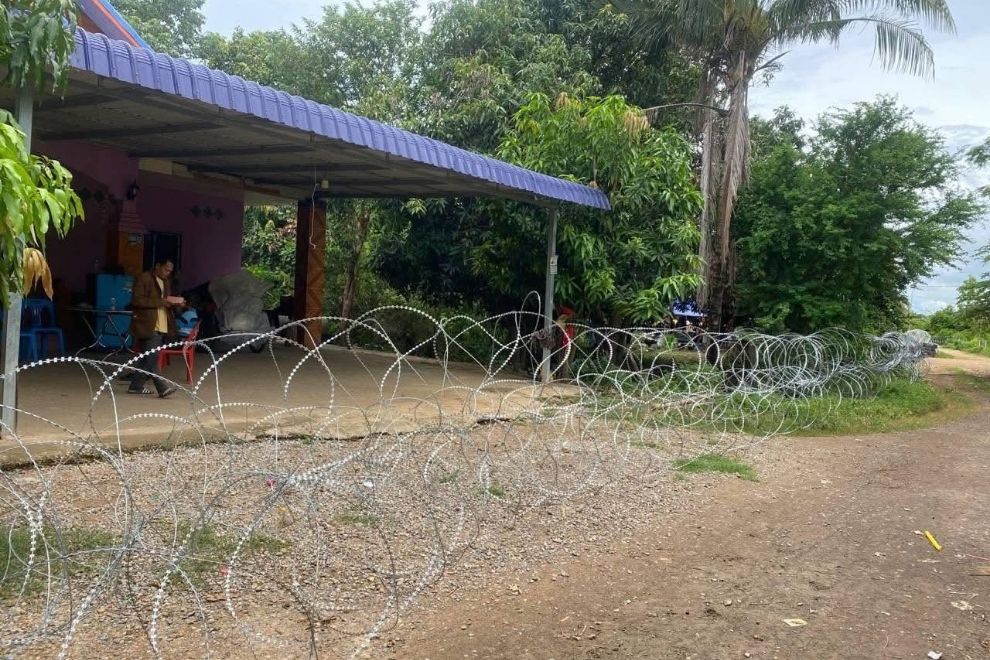
Cambodia denies this, accusing Thai soldiers of forcing villagers from Prey Chan village and nearby Chok Chey, erecting barriers, and violating the ceasefire.
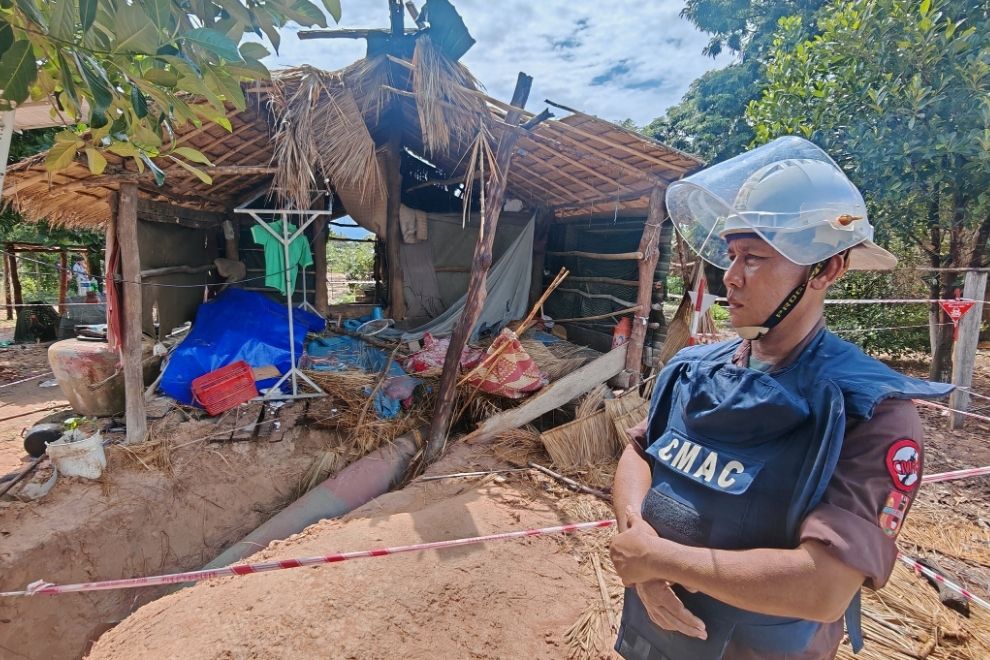
The Cambodian Joint Border Committee (JBC) condemned Thailand’s unilateral occupation as violating the 2000 MoU and international law. Villagers, like Nang Pov, expressed fear of further encroachment.
“The unilateral land occupation by the Thai military… is a violation of the spirit of the 2000 MoU and international law. It violates the jurisdiction of the Joint Border Committee (JBC) and undermines the results of past efforts and the negotiation process,” the committee stated.
The JBC demanded the immediate removal of the barriers and prevention of further incidents.
Indiscriminate attacks on civilians
Thailand accused Cambodia of targeting hospitals, schools and petrol stations.
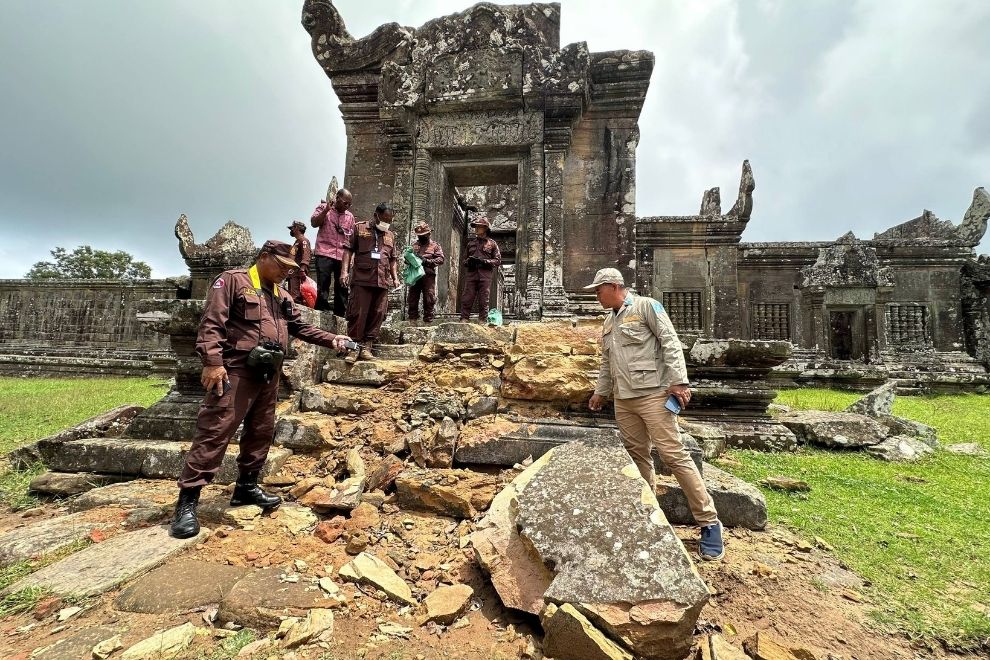
Cambodia countered, claiming Thai forces used heavy weapons, including cluster munitions, against civilians.
The Ministry of National Defence reported 172,000 displaced people, over 600 schools closed, and damage to homes, religious sites and the UNESCO-listed Preah Vihear Temple. Cambodia formally raised the issue with the UN Security Council.
Diplomatic and political actions
In late July, Thailand downgraded diplomatic relations, prompting Cambodia to reciprocate. Both countries launched international campaigns to support their positions.
Thailand has launched a diplomatic campaign to gather international support for its position. The foreign ministry organised an August 16 field visit for a delegation of diplomats from various countries, especially those which are parties to the Ottawa Convention.
The goal was to show them evidence of Cambodia’s alleged landmine use and the damage to Thai civilian communities.
Thailand is also holding 18 captured Cambodian soldiers, who Cambodia demanded be released, citing violations of international humanitarian law.
Cambodia emphasised that the soldiers were captured after the ceasefire while approaching Thai forces in good faith.
The International Committee of the Red Cross confirmed the detained soldiers were in satisfactory health, though Cambodia alleged past detainees had been tortured.
Key incidents
May 28 Incident
Cambodia said Thai soldiers fired first on Cambodian soldiers in a trench, killing one Cambodian.
Thailand claimed its forces attempted to persuade the Cambodians to withdraw before being fired upon.
July 24 Incident
Thailand stated fighting began when Cambodian soldiers approached the Ta Mone Thom Temple and fired BM-21 rockets into Thai territory, prompting Thailand to respond with air strikes from F-16 fighter jets.
Cambodia claimed Thailand fired first and violated its territory. Both sides blamed the other for initiating hostilities.
Cambodia’s defence ministry claimed that Thailand deployed a drone before opening fire, and that Cambodia “acted strictly within the bounds of self-defence, responding to an unprovoked incursion by Thai troops that violated our territorial integrity”.
Cambodian Prime Minister Hun Manet requested a UN Security Council meeting, accusing Thailand of “unprovoked, premeditated and deliberate attacks”.
This clash involved heavy artillery, rockets and airstrikes.
Legal action announced by Thailand
Thailand plans to pursue domestic lawsuits against former Prime Minister Hun Sen and current Prime Minister Hun Manet for armed aggression and sovereignty violations, potentially leading to arrest warrants should they enter Thailand.
Acting Prime Minister Poomtham Vechayachai emphasised that the legal action follows National Security Council discussions and is an attempt to seek accountability for attacks that affected Thai citizens and property.
“We have discussed taking legal action against Cambodia and its leaders for their use of military force and weaponry to violate Thai sovereignty,” Poomtham said.
“This is a matter that our legal team has reviewed,” he was quoted as saying by The Nation Thailand.
Thailand also announced plans to file a case at the International Criminal Court (ICC) accusing Cambodia of war crimes and violating the Ottawa Convention with landmines.
Cambodian countermeasures
Senate president Hun Sen has criticised the reported remarks by the Thai acting prime minister, particularly his comments that Cambodian leaders such as himself and Prime Minister Hun Manet would be arrested if they entered Thailand.
Citing a Thai media report, Hun Sen said that if the publication accurately reflected the acting leader’s words, it demonstrated recklessness and a lack of understanding of both customary law and diplomatic protocol.
“If Thailand is in a position to arrest Cambodian leaders, then Cambodia could likewise arrest the Thai leaders who invaded Cambodia and killed our citizens,” he added, accusing the aggressors of violating customary law.
He questioned whether such rhetoric was aimed at fostering trust between the two neighbours or if it instead amounted to a provocation that risked reigniting the tensions which were eased by a recent ceasefire.
Cambodia strongly condemned Thailand’s threats as reckless. It appealed to the UN and ASEAN over ceasefire violations, including the displacement of citizens, barbed wire barriers and the allegations that new landmines were laid.
Cambodia requested ICJ rulings on several disputed areas and accused Thailand of violating the 2000 MoU and international law by using unilateral maps.
Cambodian officials emphasised a peaceful resolution while maintaining the right to legally and diplomatically counter Thailand’s actions.
