



Cambodia’s policymaking landscape is undergoing a transformation, one that is reshaping not only how decisions are made but also who gets to sit at the table.
At the heart of this shift is the Ponlok Chomnes II: Data and Dialogue for Development in Cambodia Program (2023–2027), a collaboration between the Royal Government of Cambodia, the Australian Government and The Asia Foundation.
The initiative, now in its second phase, seeks to embed research and evidence more firmly into national policies, while amplifying the voices of women, youth and marginalised groups.
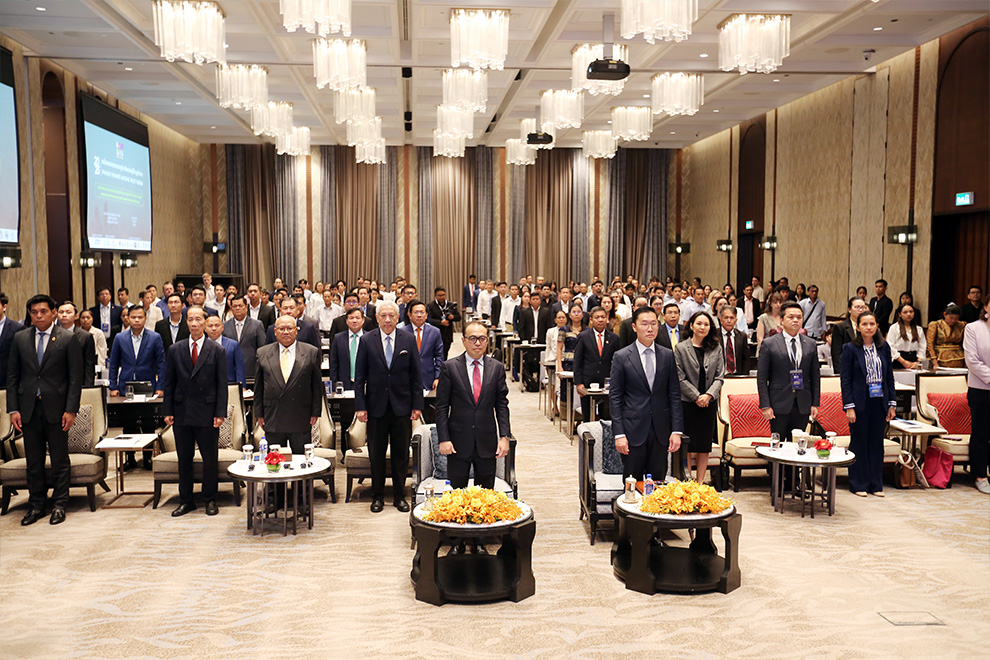
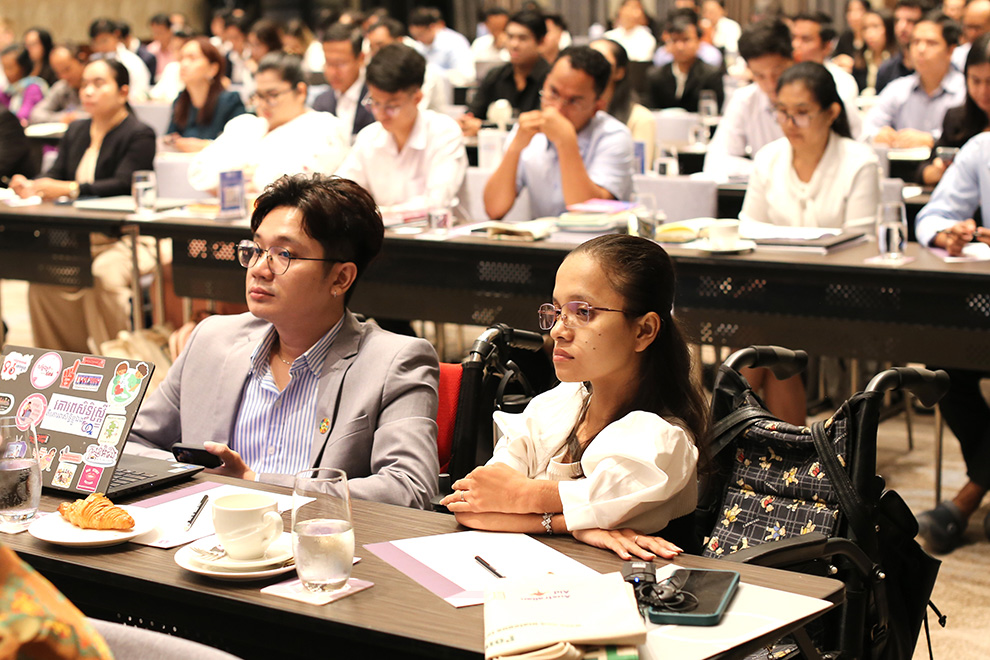
At this year’s Ponlok Chomnes National Policy Forum 2025, convened in Phnom Penh on September 5, more than 200 participants — from ministers and researchers to civil society leaders and grassroots representatives — gathered to explore the role of evidence in “inclusive policymaking in the age of uncertainty”.
From capacity building to policy shaping
Australian ambassador Derek Yip reflected on the evolution of the programme since its launch in 2019.
“One of the really big focuses of phase one has been to build capacity,” he said.
“To build the capacity of researchers to undertake robust research, to gather data. It was really about starting on the skills base,” he added.
Now, Yip explained, Ponlok Chomnes II has shifted the focus to try and encourage the adoption and incorporation of this robust research and data into the policymaking process.
That shift is already producing results. Research projects funded under the programme are feeding directly into reforms in education, climate action, social protection and disability inclusion.
In partnership with the Ministry of Education, Youth and Sport, the Cambodian Development Resource Institute (CDRI) is conducting studies on school management and teacher professional development.
“When I look back at 2019, when we really were just starting on building the capacity of researchers to now having projects that are informing policies that will make huge differences to the future of Cambodia,” Yip said.
“I see research contributing to better education, better human development, and economic diversification — which are huge priorities for the Royal Government of Cambodia,” he continued.
Cambodian policymaking turns toward evidence
The government has been equally vocal about its commitment to evidence-based and inclusive policymaking.
“The Royal Government of Cambodia always makes policy decisions based on inclusive evidence to ensure that our policies truly serve the needs and aspirations of all citizens, especially those most vulnerable in the face of uncertainty,” Permanent Deputy Prime Minister Vongsey Vissoth told the Forum.
He emphasised that under phase one of the Pentagonal Strategy and the National Strategic Development Plan, the government is prioritising the integration of research, data and evaluation into policy.
The adoption of key strategies in 2024 — from the new National Disability Strategic Plan to the National Social Protection Policy Framework 2024–2035 and NDC 3.0 on climate action — further illustrates this shift.Still, Vissoth acknowledged the challenges.“Cambodia still lacks good policy implementation,” he said.
“The government encourages ministries and institutions to organise and compile reliable data systems with open and constructive discussions to contribute to improving policy formulation as well as implementation of reforms in a number of sectors,” he added.
Inclusive voices at the center
What distinguishes Ponlok Chomnes from earlier policy initiatives is its focus on inclusion.
The programme has deliberately expanded the space for women, marginalised groups and youth to contribute to dialogue.“This is a very important question and it’s a big focus of Ponlok Chomnes II,” said Yip, responding to a query about how underrepresented voices are included.
“If you do not have everyone feeding into the policy process and into the research that informs it, then you are only going to be doing policy for part of society,” he noted.
Concrete progress backs up that principle. In 2024, 34 per cent of research outputs had a female first author, up from just 18 percent in 2023.
The SheThinks Network, launched in 2021 as a small informal circle of women scholars, has grown into an 80-member strong, structured network, with members presenting research at international conferences.
One of the programme’s researchers, Mean Vibolvattanak, who helped compile new guidelines on research quality and inclusive dialogue, explained it neatly.“No one is excluded from research and policy formulation. On the other hand, research with me promotes my rights,” she said.
Research supported under Ponlok Chomnes has also highlighted how climate change disproportionately affects people with disabilities and informed national-level social protection and disability policy.Another study on the well-being of lower-income households shaped debates on social protections.
Numbers that tell a story
The 2024 achievements snapshot underlines the scale of progress:
⦁ 26 partners engaged in evidence-informed policy work.
⦁ 38 research outputs generated, many influencing national dialogues.
⦁ 1,990 participants reached through forums and policy discussions.
⦁ 38 young researchers trained — including 20 women, three LGBTQIA+, one person with a disability, and two from the Cham community.
⦁ Participation from Indigenous, LGBTQIA+, and rural youth researchers in national dialogues.
At least 10 of 31 policy dialogues last year were moderated by women, and more than 30 per cent of participants at sub-national dialogues represented underrepresented groups.
For The Asia Foundation, which implements the programme, these are not just numbers but indicators of a growing ecosystem.
Programme director Dolgion Aldar said Cambodia’s knowledge sector is growing, and the forum is about turning that strength into inclusive and evidence-based decisions.
“This forum developed by our Cambodian research partners shows how partnership and local expertise can enrich national policy dialogue,” she said.
Bridging policy and people
Beyond data and reports, what makes Ponlok Chomnes stand out is the way it connects the knowledge sector with real-world policymaking.
One young research fellow, for example, advised Phnom Penh City Hall on pedestrian-friendly urban design — inputs that helped shape the riverside “walking street”.
Others have explored topics ranging from the safe use of social media by minors to incentivising environmentally sustainable vehicles.
“Now some of these young research fellows have become alumni of these fellowships and are part of civil society, research organisations and even government,” said Yip.
“So we are seeing this flow through — linking research to policymaking and decision-making,” e added.
Looking ahead
The programme is not without challenges. Turning research into actual policy reforms requires sustained political will, coordination across ministries and resources for implementation.
But the trajectory is clear: Cambodia is embedding evidence and inclusion into its governance fabric.
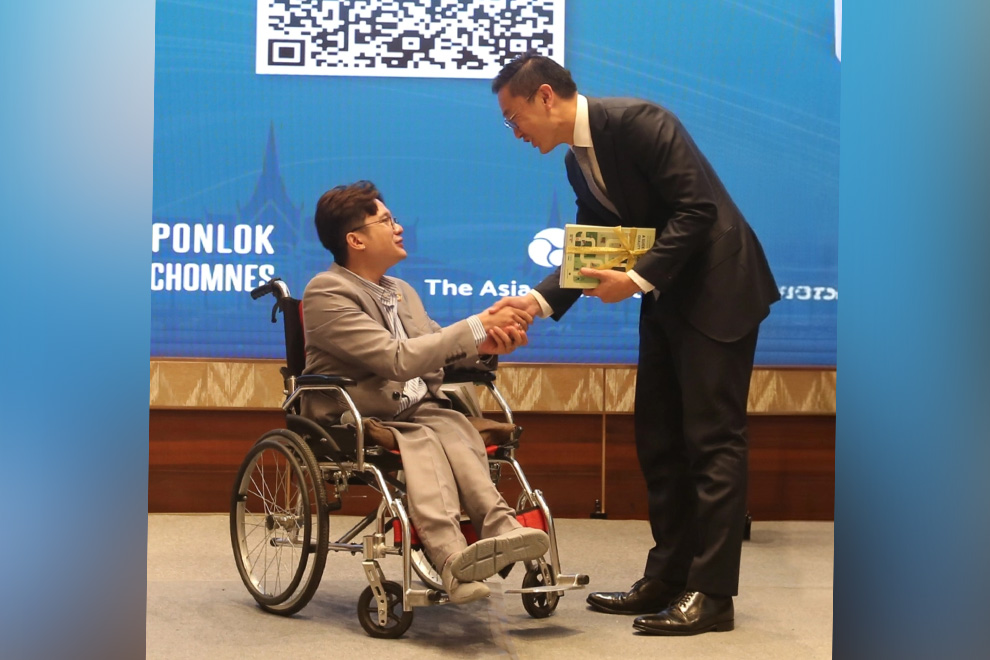
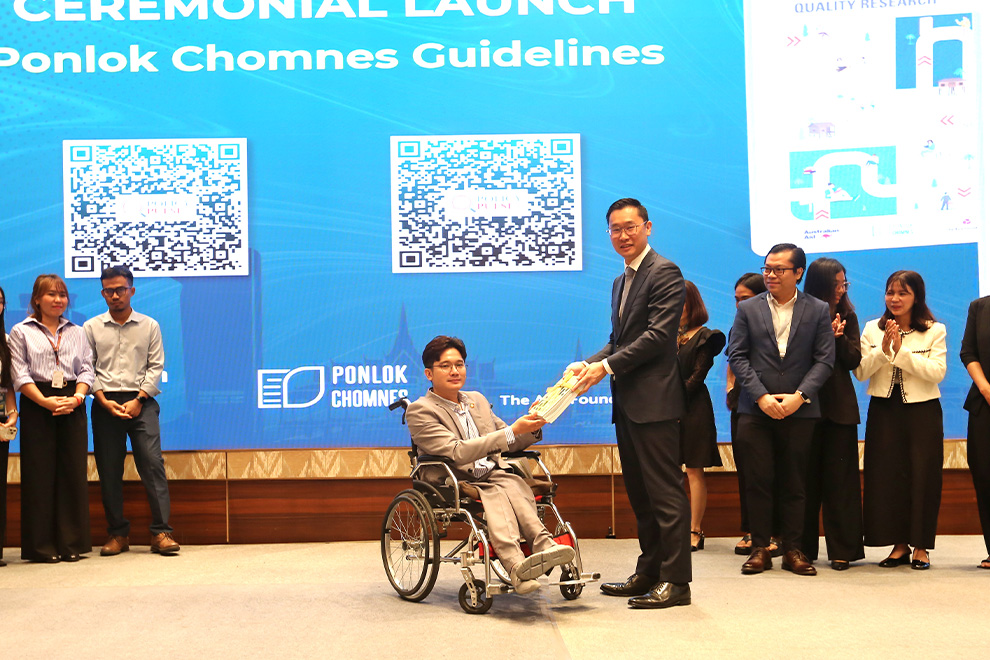
The forum closed with an Inclusive Awards Ceremony, celebrating outstanding contributions in research and policy dialogue.
The launch of new Ponlok Chomnes Guidelines on Research Quality and Inclusive Dialogue also marked a step toward institutionalising good practice.
As Cambodia eyes graduation from Least Developed Country (LDC) status, the stakes are high. Policies that reflect the voices of all Cambodians — not just the powerful — will be critical for sustainable development.
Ambassador Yip summed up Australia’s vision.
“The National Policy Forum is an important platform to deepen connections between policymakers, researchers and civil society and an opportunity to talk strategically about the demand for, and supply of robust evidence,” he noted.
“It is another way Australia is contributing to sustainable development in Cambodia, supporting local leadership, human development, climate resilience and economic growth,” he said.
