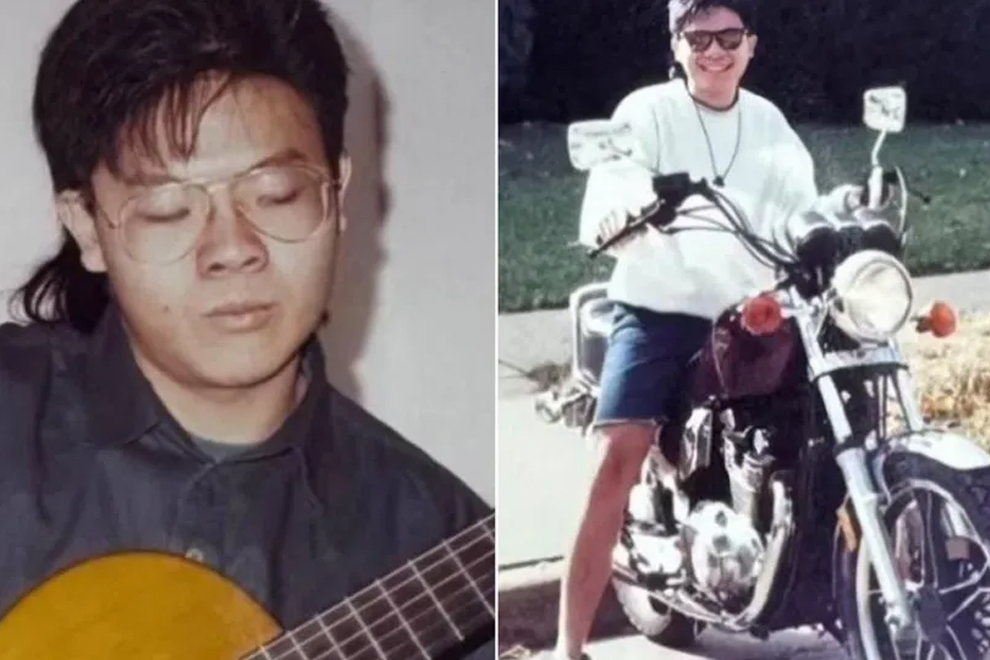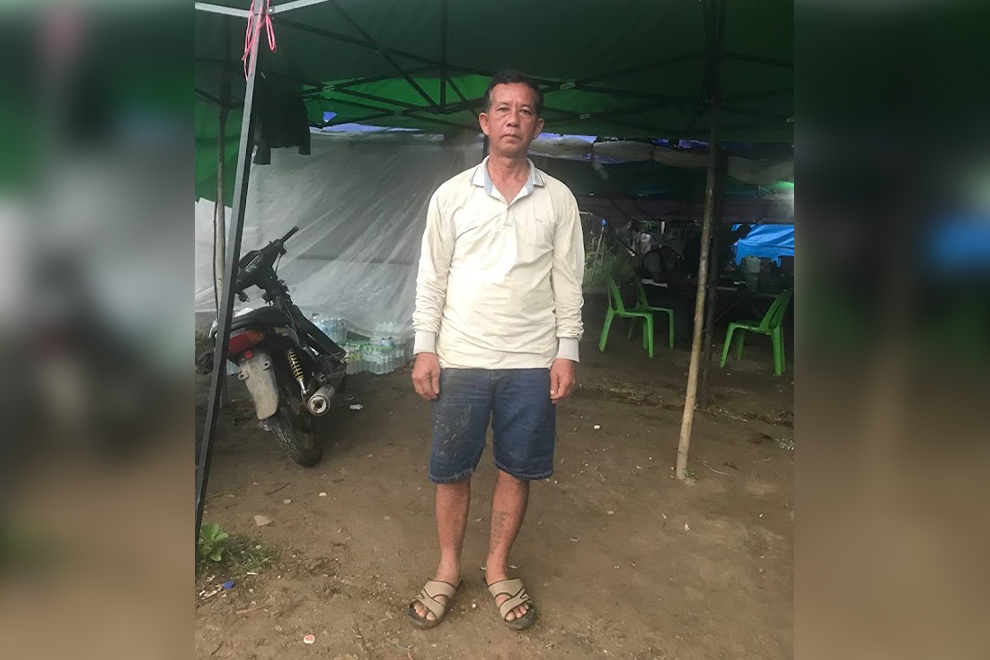
Thong Kimleang, a 55-year-old Cambodian with scars from a turbulent past, stands in Prey Chan village, Banteay Meanchey province, his voice heavy with resolve.
“Thailand disregards international law, measuring borders unilaterally without notice,” he declares, pointing to the razor wire Thai soldiers have strung around his home and those of his neighbours, claiming land he insists is Cambodian.
Kimleang’s life, marked by displacement and survival, now faces a new crisis: Thailand’s attempt to use aggressive use of domestic laws to encroach on Cambodian soil, threatening Prey Chan’s villagers.
Born in Khnach Romeas village in Battambang province, Kimleang’s early years were scarred by loss. His father, a village militiaman, was shot dead by the Khmer Rouge during the People’s Republic of Cambodia, and his mother died of illness soon after. In late 1979, at age nine, Kimleang’s family fled to the Nong Chan Chas refugee camp near the Thai border, driven by hunger and fear of Vietnamese forces.
“We believed Cambodia was unsafe,” he recalls.
The camp, a chaotic sprawl of bamboo huts and blue tarps, housed tens of thousands.
“The air carried the stench of makeshift latrines in nearby bushes,” he says, adding that one night, while relieving himself, someone threw a stick that hit his head, leaving him unconscious, leaving a scar he still bears.
Life in Nong Chan balanced survival with hope. The UN Border Relief Operation (UNBRO) provided rice, mosquito nets and clean water, as “the stream was polluted, unfit for drinking”, he said.
Kimleang did not go to school like other kids, but scavenged snacks like Nom Kroch, a Khmer traditional cake. The camp, just over a square kilometre large, offered a choice: return home or seek a third country. But between 1981 and 1982, Vietnamese forces attacked, forcing Kimleang’s family to a place in Kork Soung.
After a week at Kork Soung, Kimleang’s mother led them to Kon Damrei camp, building a hut to cook while smuggling goods across the border. Relatives sought resettlement abroad, but his mother stayed, collecting supplies at Nong Chan.
In 1982, the family returned to Khnach Romeas. Kimleang served as a soldier until Cambodia’s 1993 election, marrying in 1991. In 1993, his brother-in-law, a police officer, suggested he trade at the Cambodian-Thai border in O’Bei Choan commune and he followed this advice. He bought land in Prey Chan, first near the primary school, then another plot for farming — now encircled by Thai razor wire.
On July 25, 2025, Kimleang’s family evacuated to Channsy pagoda as Thai soldiers demolished Cambodian military posts in Prey Chan and Chouk Chey village, seven kilometres away.
“On August 13, Thai soldiers surrounded my home and five others, plus the farmland of 20 villagers,” Kimleang says.
Thai patrols, including soldiers in black uniforms and police, operate 30 metres from their homes, installing security cameras and paving roads.
“They’re within 40 metres of my house,” he notes, frustration rising. As a former soldier, Kimleang feels this deeply.
“I feel pain, my tears flow,” he says, blaming Thailand’s “internal power struggle” for sparking the conflict to try and seize Cambodian land.
He says Cambodia’s government urges patience, but on rainy nights, villagers get wet and cannot sleep.
Kimleang pleads with Cambodian leaders and the UN to act, decrying Thailand’s violence — using slingshots, tear gas and rubber bullets against Cambodians who refrain from retaliation to honour the ceasefire.
“We endure,” he says, standing firm despite the barbed wire encircling his home, “but for how long?” His scars tell of survival; his voice demands justice.
This interview was originally conducted by the Documentation Center of Cambodia (DC-Cam).