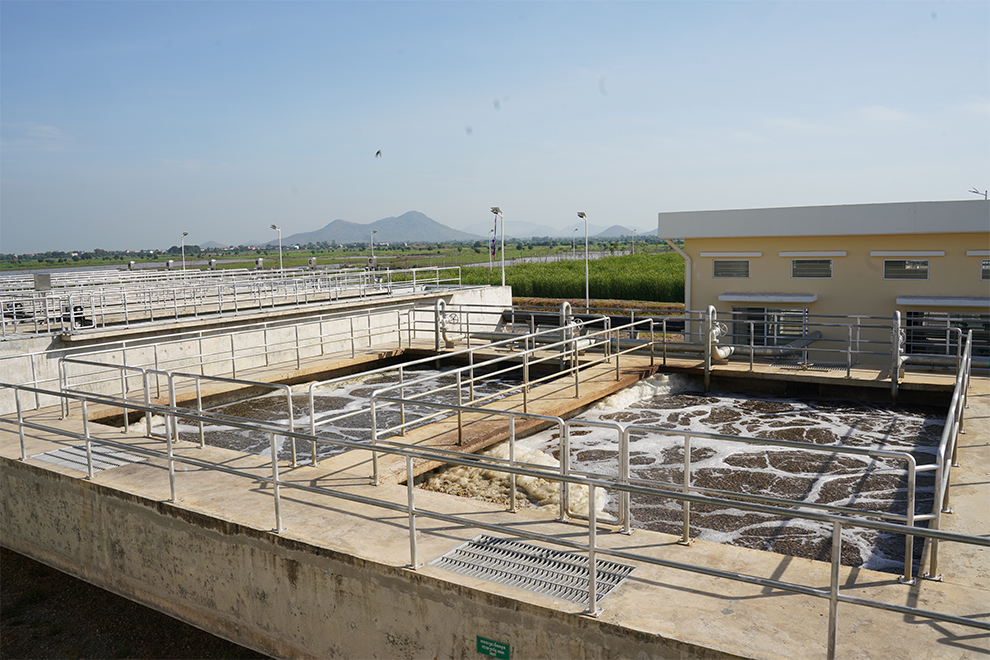
A $19 million wastewater treatment plant in Kampong Chhnang province is emerging as a model for how Cambodia can transform urban sanitation into long-term environmental protection, agricultural productivity and climate resilience.
Built under the Integrated Urban Environmental Management in the Tonle Sap Basin Project in partnership with the Ministry of Public Works and Transport and the Asian Development Bank (ADB), the facility has a daily treatment capacity of 5,400 cubic metres.
But officials say its real value lies beyond numbers — in how it integrates clean technology, renewable energy, farmer benefits and institutional reform into a single system.
Speaking during a press tour of the newly constructed plant, Yasmin Siddiqi, ADB country director for Cambodia, described the project as one of the most exciting investments supported by ADB in the country.
“For me, this is one of the most exciting pieces of work supported by ADB in partnership with the government of Cambodia,” she said, highlighting its environmental, health and institutional benefits.
Construction began in September 2022, and the facility was officially inaugurated on October 10, 2025, marking a major milestone in efforts to protect the Tonle Sap basin.
Unlike conventional systems, the Kampong Chhnang plant offers two connection options for households, including poorer families.
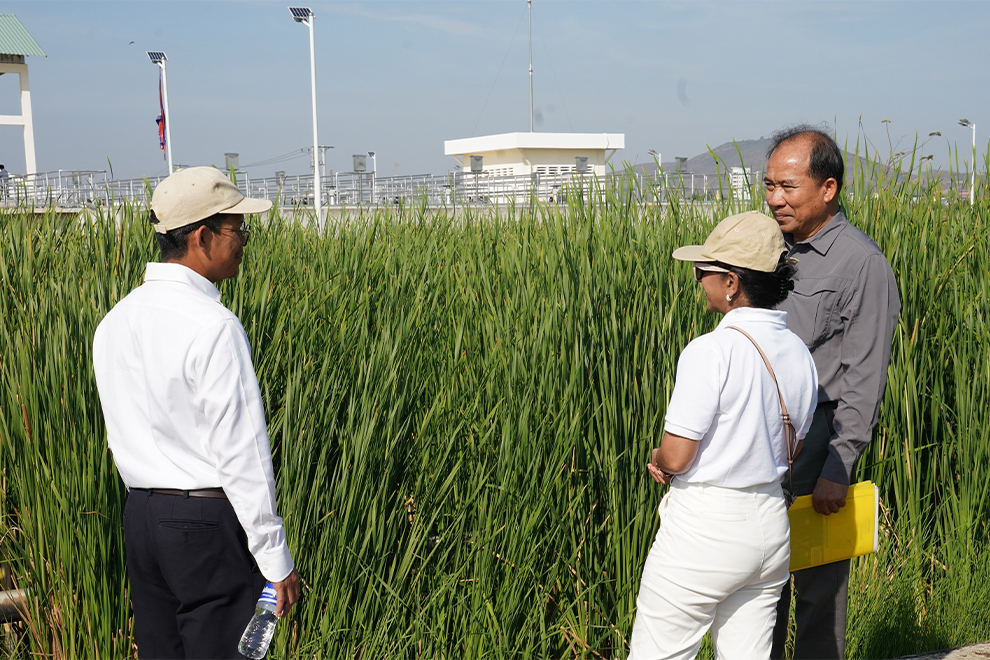

Residents can connect directly to the main sewer network, while households using septic tanks can have sludge collected by vacuum trucks and treated at the same facility. The dual approach ensures broader sanitation coverage across income levels.
The plant also incorporates a nature-based solution through reed-bed filtration systems that naturally treat wastewater before releasing cleaner water back into the Tonle Sap basin.
Siddiqi noted that this approach reduces pollution while protecting Cambodia’s largest freshwater lake.
Environmental protection is only one dimension of the project. Treated effluent from the facility is being reused for agricultural irrigation, turning waste into an economic resource.
“The progressiveness of this plant is that it also has the opportunity to treat that sludge that comes out of the septic tank,” said Siddiqi.
“So that would normally entail a truck with a vacuum, which goes to the household and uses the sludge from the septic tank, brings it here to the sludge treatment point, and then it’s treated again through this plant,” she explained.
She noted that the plant offers a strong learning model for integrating sewerage networks and wastewater treatment, delivering three key benefits: environmental protection through nature-based solutions that return cleaner water to the Tonle Sap, improved public health through better sanitation access and institutional strengthening that enables MPWT to replicate modern, renewable energy-powered systems elsewhere.
According to ministry undersecretary of state Vong Pisith, similar systems in Battambang province have already demonstrated significant gains for farmers.
He said rice farmers previously used about 30 kilogrammes of fertiliser per hectare and harvested between three and five tons per hectare.
With treated wastewater used for irrigation, farmers have eliminated fertiliser use and increased yields to as much as eight tonnes per hectare.
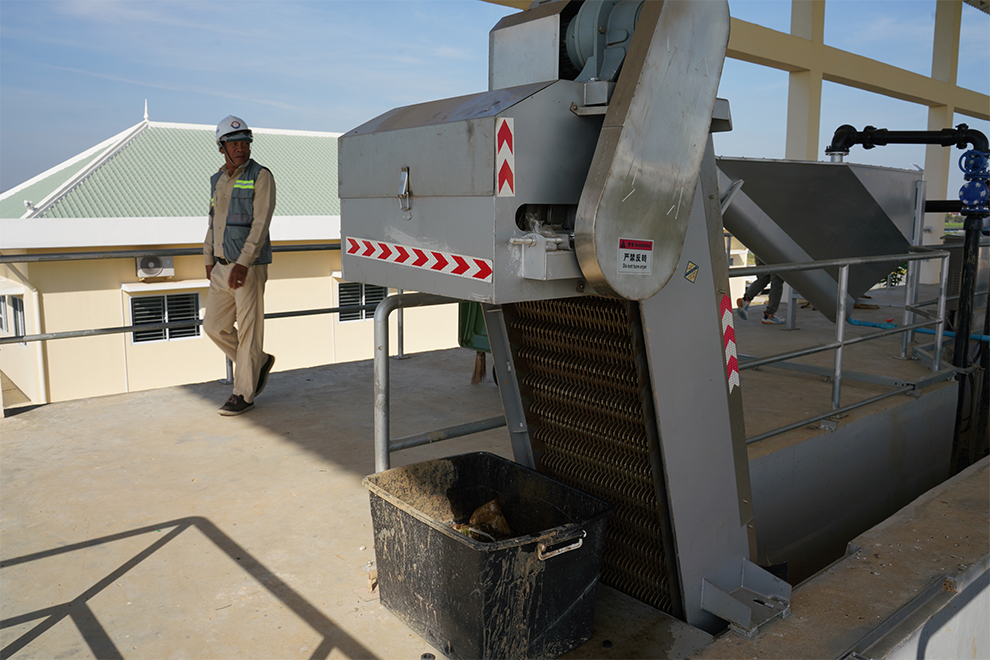
“The water can be used as a parallel irrigation system for rice fields, and its residue is filtered and dried to be used as natural fertiliser,” Vong Pisith said.
However, he cautioned that the nutrient-rich water must be carefully managed. Continuous use every year could reduce productivity, requiring farmers to alternate irrigation cycles.
Demand for treated water has also exceeded supply, prompting authorities to organise farming communities to ensure equitable distribution.
Technically, the Kampong Chhnang system separates sewage from rainwater — a feature absent in Phnom Penh’s drainage network.
By isolating wastewater from stormwater, the plant avoids overloading during the rainy season, reducing treatment costs and improving efficiency.
“In Phnom Penh, there is no separate water separation system. If we don’t separate, during the rainy season we have to filter a lot of water and waste a lot of money,” Pisith explained.
Designed with climate resilience in mind, the entire facility is built above the maximum recorded flood levels of the Tonle Sap.
The elevated ground not only protects the infrastructure during extreme floods but can also serve as an emergency gathering point for local communities.
Renewable energy is another defining feature. Solar panels installed at the site reduce operational costs and improve financial sustainability.
The project also includes a full operation and maintenance contract, ensuring that the facility continues functioning effectively beyond its inauguration phase.
Siddiqi stressed that sustainability depends not only on infrastructure but also on financing mechanisms.
The government is moving toward a joint billing system that integrates sanitation fees into existing water supply bills, allowing steady revenue collection for maintenance.
“There’s a lot of joy when a plant like this is opened, but what’s most critical is that we have the operation and maintenance continued,” she said. “That’s the point that ensures this serves generations.”
Currently, while the plant has a treatment capacity of over 5,000 cubic metres per day, actual inflow stands at around 1,000 cubic metres daily, reflecting gradual expansion of household connections as the sewer network grows.
Beyond its technical functions, the plant has also attracted interest from the local community. Situated in a scenic area overlooking the lake and nearby mountains, the site has drawn visitors curious about the modern facility.
It could also serve as an educational site for schoolchildren to learn about sanitation, environmental protection and sustainable urban management.
The Kampong Chhnang plant forms part of a broader, long-term urban environmental strategy supported by ADB, aimed at improving water supply, solid waste management and wastewater treatment in Cambodia’s major towns and cities.
A similar facility is under development in Battambang, with plans to replicate the model elsewhere.
As Cambodia’s urban centres expand, pressure on waterways and public health systems continues to mount.
The Kampong Chhnang facility offers a practical blueprint: separate sewage systems, climate-resilient design, renewable energy integration, agricultural reuse and a sustainable financing model under one coordinated framework.
More than a treatment plant, it represents a shift in mindset — from viewing wastewater as a liability to treating it as an asset capable of generating environmental protection, farmer income and long-term urban resilience.