Months after fighting ended in Cambodia’s border areas, thousands of displaced families remain in sanctuaries across Oddar Meanchey, Banteay Meanchey, Siem Reap and Preah Vihear provinces, where uncertainty has become part of daily life.
Among the most vulnerable are pregnant women, new mothers and young children whose health risks are rising as displacement drags on.
In response, the German embassy in Phnom Penh has partnered with World Vision International in Cambodia to deliver critical nutrition and newborn care support to families who have yet to return home.
“Valued at EUR 111,111.11 (approximately $129,254), the project targets 2,500 children under the age of five and 1,000 pregnant and lactating women,” according to World Vision Cambodia.
“It also includes the distribution of 200 newborn care kits in displacement sites across the four affected provinces,” it added.
The support builds on assistance provided in September 2025, when Germany first funded emergency nutrition services following the escalation of violence in July that forced many families to flee their homes.
While some communities have begun recovering, a significant number remain in camps with limited access to adequate food, healthcare and essential supplies.
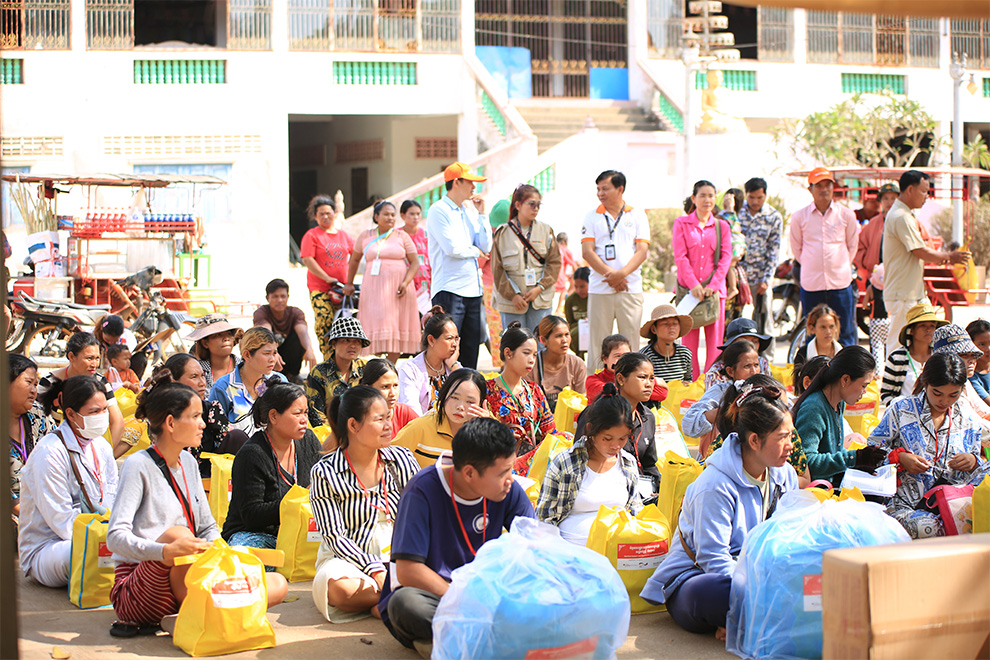
During a recent nutrition kit distribution in Oddar Meanchey province, World Vision Cambodia’s national director Janes Imanuel Ginting witnessed the continued hardship faced by displaced families.
He met three generations of one family whose home, located just three kilometres from the border, was destroyed during the fighting.
Having lost most of their belongings, they are now attempting to rebuild their lives from almost nothing.
“Today, we hope this support will help Sreynoch’s mother and other mothers continue breastfeeding while receiving the essential supplements they need,” Janes said.
“We extend our sincere thanks to the German Embassy in Cambodia and all our partners for standing with families during this difficult time,” he added.
He noted that World Vision remains committed to working closely with camp committees and government authorities to support families as part of its humanitarian mandate, expressing hope that they will soon be able to return home safely or resettle in stable conditions.
The assistance package includes Ready-to-Use Supplementary Food (REMAQ), Ready-to-Use Therapeutic Food (Nutrix), and multivitamin and mineral supplements for pregnant and lactating women.
Postpartum and newborn care kits contain postpartum pads, diapers, blankets and essential hygiene supplies designed to protect mothers and infants during the critical first month after birth.
Health workers on the ground say continuity of care is vital to prevent long-term consequences for both mothers and children.
“Displacement should never interrupt essential maternal health services,” said Pom Theara, a midwife at Tbeng Meanchey Health Centre in Preah Vihear province, adding “When communities, health workers and partners work together, we can ensure antenatal care reaches women wherever they are.”
For families living in temporary shelters, the assistance offers more than nutritional support — it provides reassurance during an extended period of instability.
“We left our home with almost nothing,” said Sreynoch’s mother, a first-time mother currently staying at one of the safety sites.
“The supplements and baby items help us care for our child while we wait for the chance to return safely,” she added.
The project is being implemented in close coordination with Safety Centre Committees, provincial health departments, health centres and local authorities to ensure effective and accountable delivery.
Germany’s contribution underscores its continued commitment to vulnerable communities in Cambodia’s border regions, where displacement has affected not only homes and livelihoods but also children’s growth and early development.
As families remain in limbo, aid agencies warn that sustained support will be essential to prevent temporary displacement from turning into a deeper health and nutrition crisis for the country’s youngest citizens.