Newly built temporary shelters are offering a measure of relief to the thousands of Cambodians displaced by recent border clashes, but humanitarian agencies warn that critical funding shortfalls and escalating risks — particularly for children — are threatening longer-term recovery.
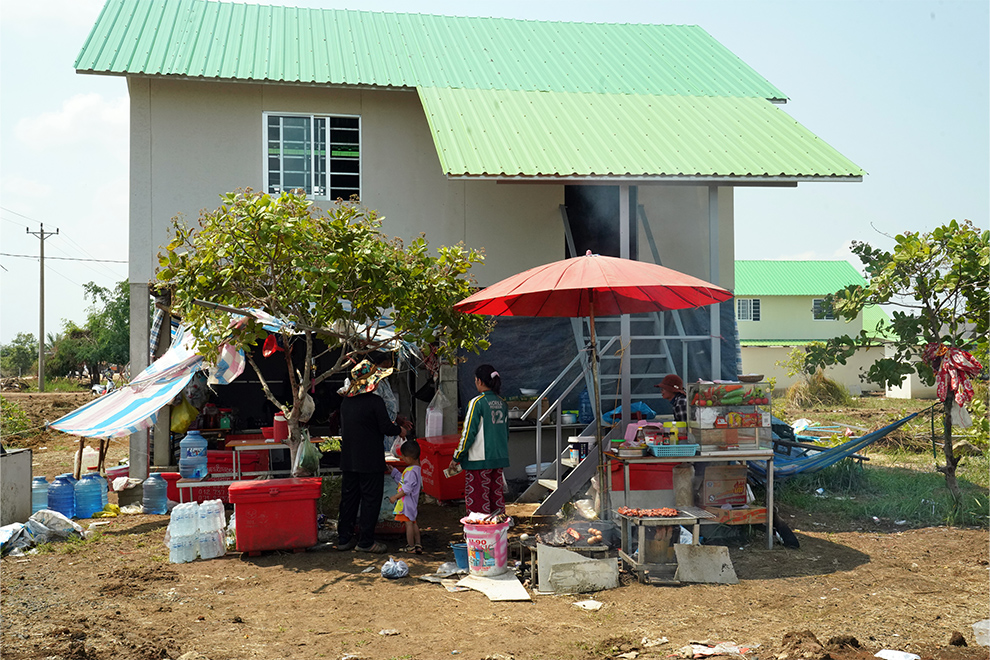
After months in makeshift tents exposed to heat and flooding, families are now being relocated to more durable structures in Banteay Meanchey province’s Svay Chek district, where authorities have begun distributing housing through a phased allocation process.
More than 300 units have already been completed, with plans to reach 3,000 before the upcoming Khmer New Year.
Officials say the sites are equipped with basic services, including water, electricity, schools and health centres, as part of a broader government effort to stabilise living conditions for those unable to return home.
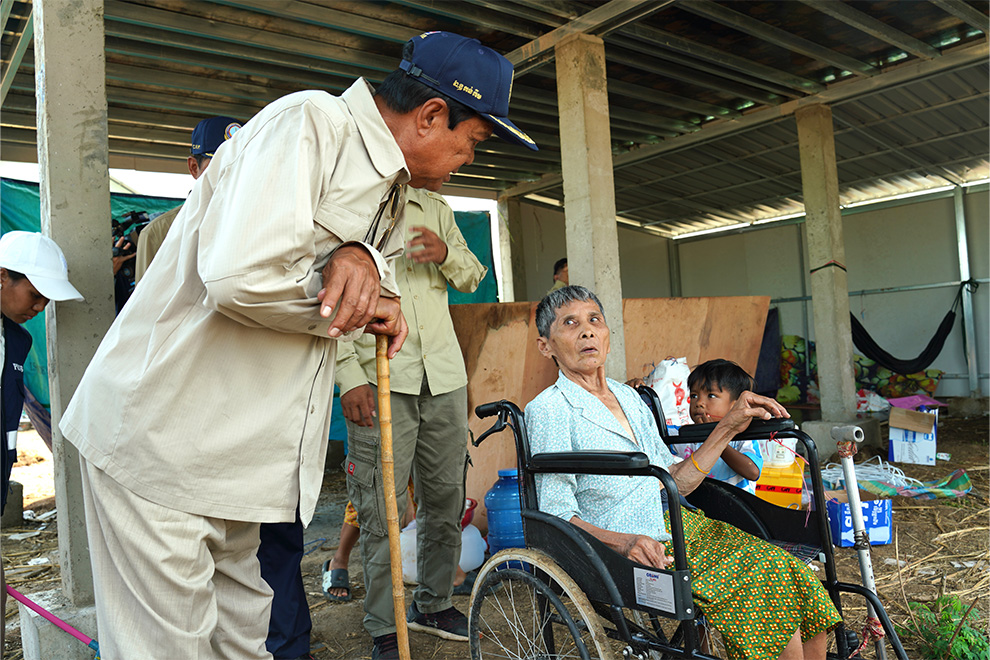

“These improvements reflect strong cooperation between the government, local authorities and humanitarian partners,” said Chum Sivuthin, senior technical specialist for climate change and disaster management at World Vision International Cambodia.
“There are also plans to move beyond temporary shelters toward more dignified, longer-term housing solutions as soon as possible.”
Sivuthin said at present, the most urgent needs include clean drinking water, sufficient food, access to medical care and safe shelter.
In newly established resettlement areas, access to basic services such as electricity is also a critical need to ensure safety, dignity and continuity of daily life for affected families.
However, despite visible progress, humanitarian needs remain acute.
Access to clean drinking water, sufficient food, healthcare and safe shelter continues to top the list of urgent priorities, particularly in newly established resettlement areas where basic infrastructure is still being developed.
Electricity access is also seen as essential for safety and maintaining daily life.
Aid agencies caution that the situation could deteriorate if displacement persists.
“Funding is not sufficient for a prolonged crisis,” said UNICEF representative to Cambodia Dr. Will Parks, warning that a significant gap remains between needs and available resources.
UNICEF estimates that $2.8 million is required to support recovery efforts, but 76 per cent of that funding remains unmet, raising concerns over the continuity of essential services.
As conditions drag on, risks are mounting across multiple fronts.
Overcrowded living conditions and limited access to safe water and sanitation are increasing the likelihood of disease outbreaks, particularly diarrhoeal illnesses.
Children are facing heightened risks of acute malnutrition, as disrupted diets and limited health services make early detection and treatment more difficult.
Education has also been severely affected. With schools damaged or inaccessible, many children have been cut off from learning, prompting efforts to establish temporary classrooms and distribute home learning materials.
Protection concerns are also intensifying. Women and children in displacement sites face increased risks of violence, abuse and exploitation, while mental health challenges are becoming more pronounced as families cope with prolonged uncertainty and loss.
“Prolonged displacement increases risks such as malnutrition, disruption to children’s education, loss of livelihoods and family separation,” Sivuthin told The Post. “There are also heightened protection concerns, particularly for women and children.”
UNICEF and its partners have scaled up emergency support in response.
To date, 58 emergency latrines and four wells have been installed, while more than 17,000 families — made up of over 86,000 people — have received essential water, sanitation and hygiene supplies.
More than 11,000 children have been screened for malnutrition, with hundreds now receiving therapeutic treatment.
Mobile health teams are delivering immunisation, antenatal care and nutrition services across remote sites, while child-friendly spaces and temporary learning centres have been set up to support children’s wellbeing and education.
However, Parks said, these shelters must be continuously improved and maintained to ensure they are safe, dignified, and accessible for women, children, older persons and people with disabilities.
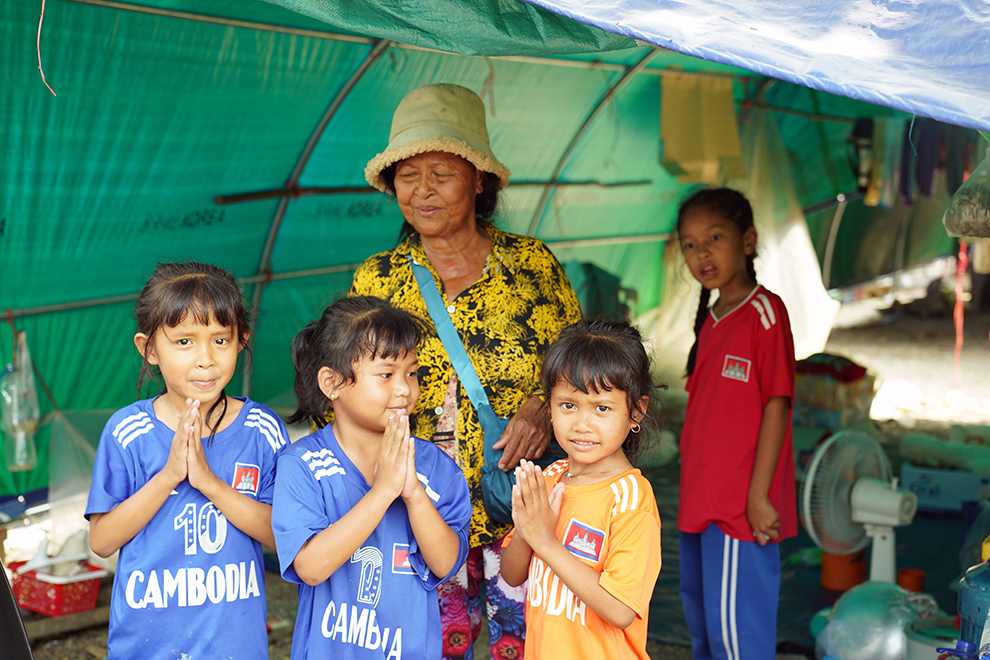
“Temporary shelters are therefore a vital step in a broader humanitarian response that leads toward stability and long‑term recovery,” he told The Post.
Yet for many displaced families, the improvements remain overshadowed by loss.
Inside a small tent at Wat Kandoul camp, 56-year-old Chhou Toch reflected on the home she had completed just weeks before it was destroyed.
“I worked since I was young, almost 60 years, to have a house. Now it’s all gone,” she said.
Although her move to a new shelter offers some comfort, the emotional toll remains, especially as the New Year approaches — a time traditionally spent with family.
“We used to clean the house and the children would play happily. Now, there is nothing,” she said.
Nearby, 10-year-old Oun Sreylak expressed a simpler wish: to return home and go back to school.
Across the affected areas, more than 36,000 people remain displaced, unable to return to villages that are still considered unsafe.
Authorities report that hundreds of hectares of land and over a thousand homes remain under occupation, despite a ceasefire.
The government has explained that the temporary shelters are an interim solution, while continuing diplomatic efforts to resolve the situation and safeguard territorial integrity.
Prime Minister Hun Manet has stressed that providing shelter does not signal any compromise on sovereignty, but is necessary to ensure the wellbeing of affected citizens.
In the meantime, efforts are underway to support displaced communities through the holiday period, including planned Sankranta events aimed at boosting morale.
For Toch and others, however, the priority remains unchanged.
“We don’t just want shelter,” she said. “We want our homes back.”