Kep is charting a bold new course toward becoming one of Southeast Asia’s standout coastal destinations, with plans for an underwater museum, mangrove restoration and inclusive cultural development.
During an October 30 media briefing in Phnom Penh, Kep West founder Jef Moons presented an expanded ecological and cultural blueprint for Kep’s coastline — a vision that blends environmental regeneration with sustainable architecture and public engagement.
“I have demonstrated that real commercial success stems from bold ideas and deep respect for those stakeholders involved,” Moons said, underscoring the connection between Kep’s future potential and its commitment to climate and community resilience.
The plans form part of the broader Art for Kep initiative, a cultural program redefining Cambodia’s southern coast as a space where environmental stewardship and artistic expression converge.
The initiative is supported by both local and international partners from the art, marine science and cultural sectors.
“Our goal is to create a coastal community where creativity doesn’t simply accompany nature — it restores and protects it,” said Peter Brongers, Managing Director of Art for Kep, during the official season launch.
“Through collaboration between artists, scientists, cultural leaders and the local community, we are building a movement that will redefine Kep as a regenerative cultural landscape,” he explained.
Central to that future is the proposed 1.5-hectare underwater museum, combining 3D-printed marine-safe sculptures with coral habitats.
Designed as both an educational space and a marine recovery zone, the project is awaiting environmental approval, with Moons affirming it will create “an exceptional experience” that links art directly with conservation.
Community-based rewilding and a plastic-free Kep beach
Kep is also pushed forward with a 25-hectare mangrove forest restoration project, approved in partnership with authorities and local residents.
“This is a project that the community must benefit from, where government and private sector come together,” Moons said, declaring that the aim is long-term ecological and social resilience.
In parallel, a 500-metre beachfront area managed under Kep West will aim to become “most likely 100% plastic-free”, featuring accessible public spaces, cultural events, and sports and wellness facilities — part of a broader effort to regenerate Kep’s coastline without compromising its character or ecosystems.
Construction milestones and a broader coastal vision
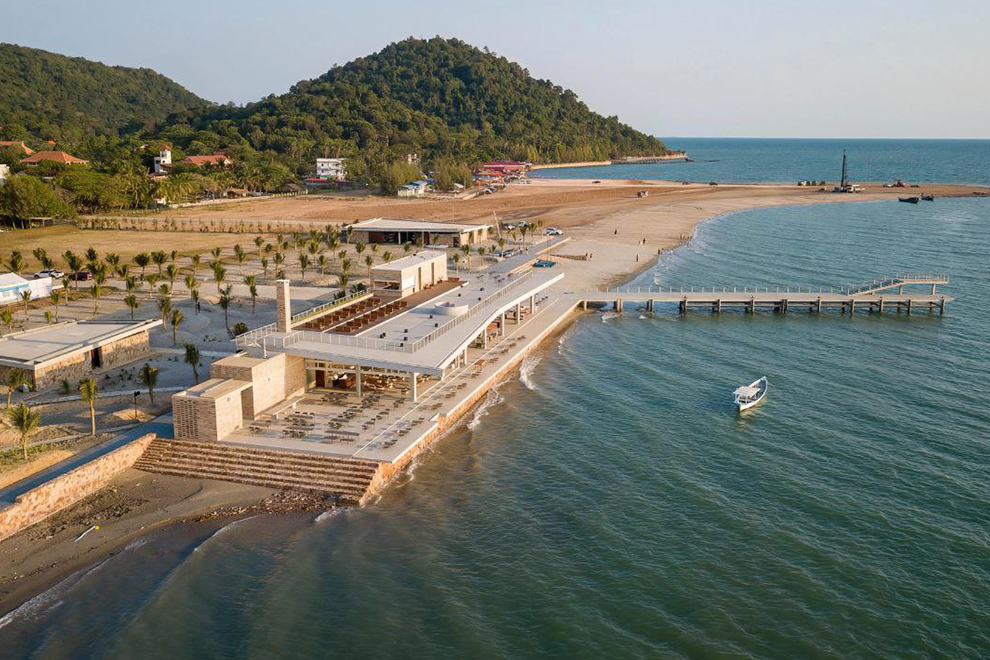
The multi-phase development includes the Kep Exhibition Plaza with its flagship Lighthouse, as well as new creative and community-focused spaces.
Construction of public seawalls and the lighthouse base is underway, with the opening expected in late 2027.
“Kep is different. It delivers a distinct character and atmosphere, unlike Kampot and Sihanoukville,” Moons noted, adding that coastal upgrades like waste management systems, road elevation and cycling infrastructure are being rolled out in parallel by the government.
Moons laid out the collective ambition behind the works: “Together, these initiatives will elevate Kep into one of Southeast Asia’s new coastal destinations”.
With art residencies, marine conservation and a sustainable architecture agenda driving this transformation, Kep’s rise is being framed not as another beachfront tourism investment — but as a regenerative model for development in a rapidly changing region.