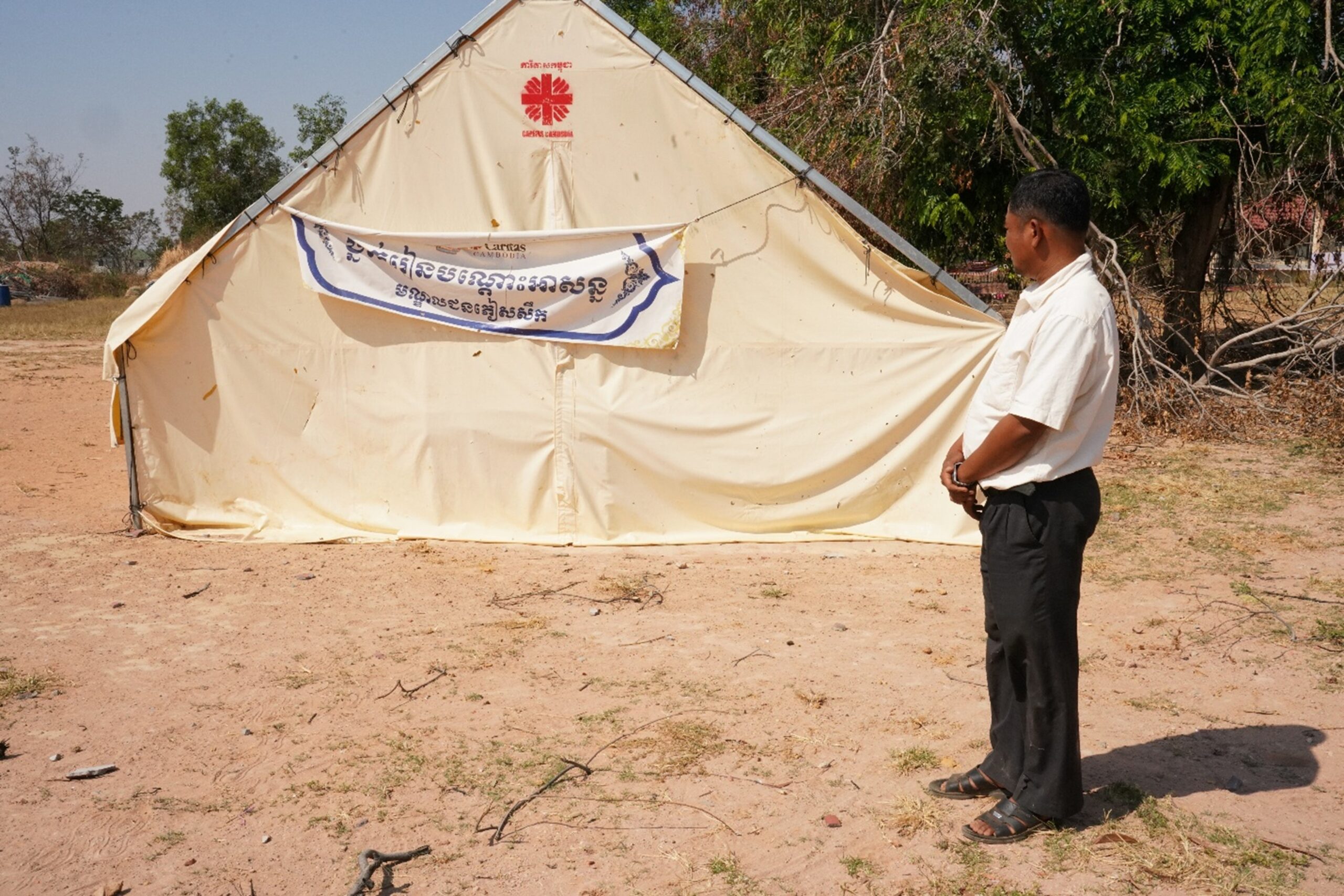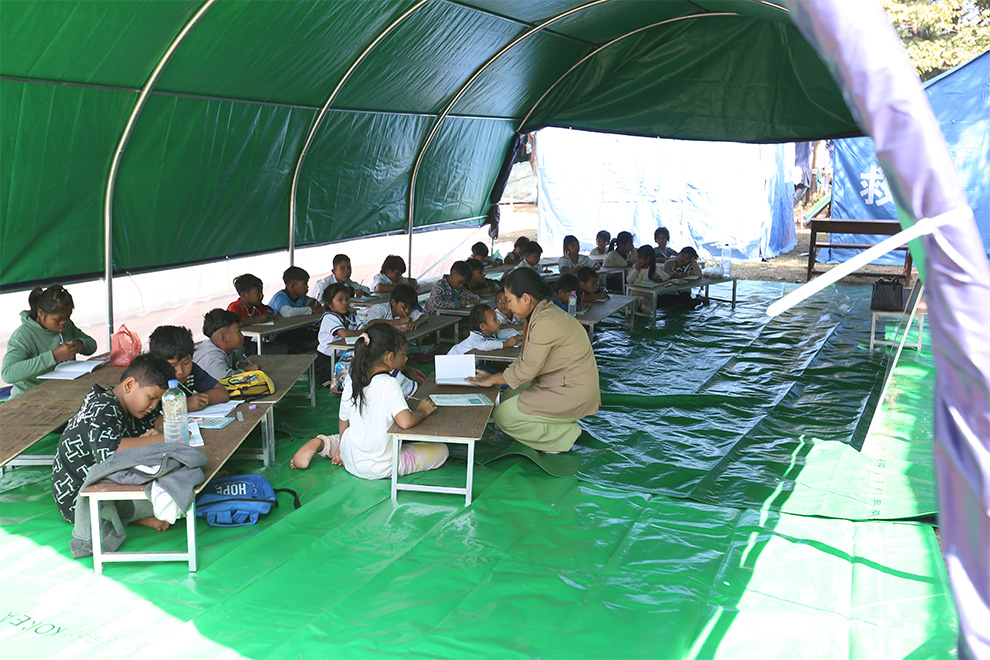
Inside a tent converted into a classroom at the Wat Kandoul Safety Center in Banteay Meanchey province, dozens of children recite their lessons while seated on simple mats — a fragile substitute for the schools they were forced to abandon when conflict erupted along the Cambodia–Thailand border.
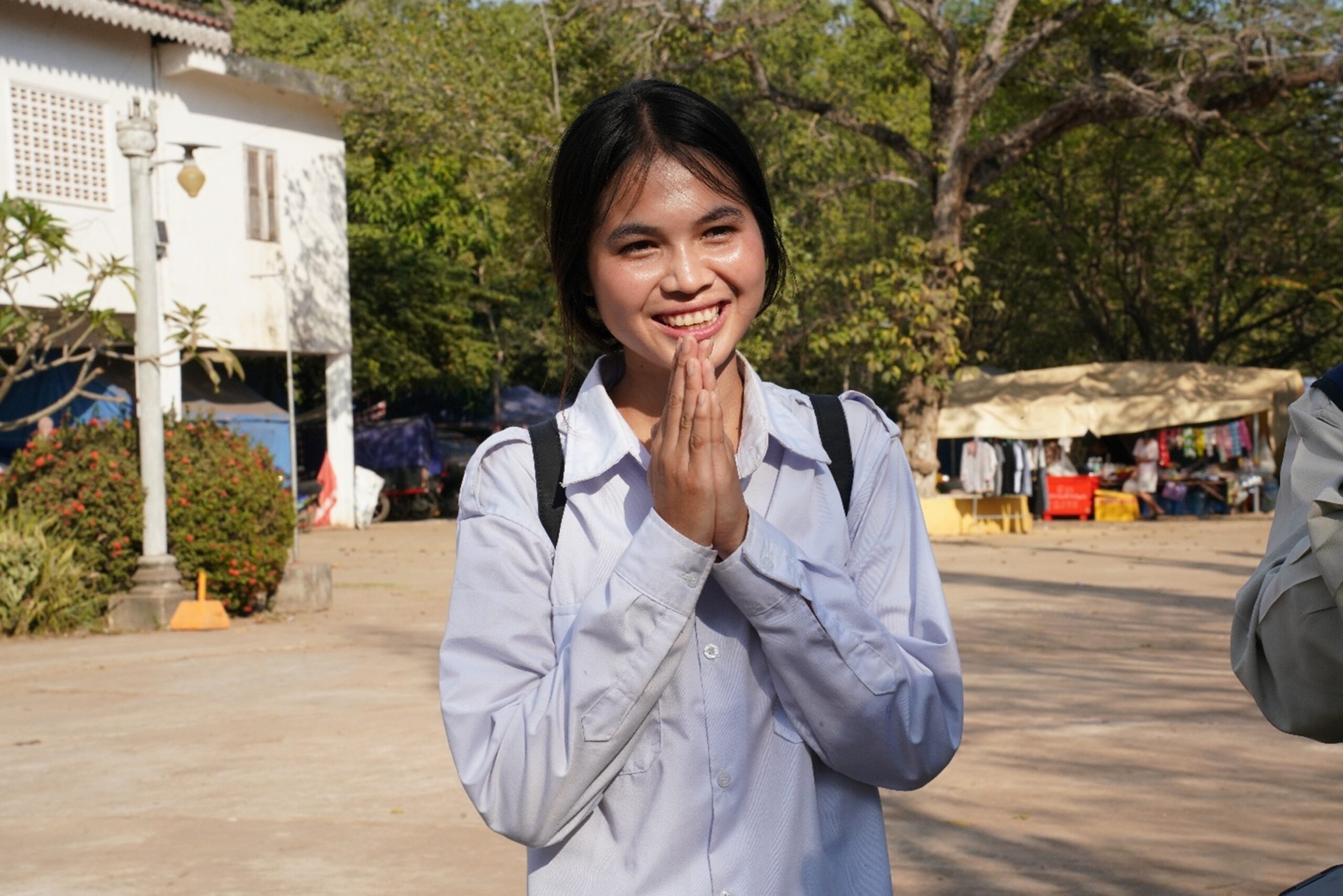
Among them is Heak Nita, a sixth grader from Boeung Trakuon Primary School, now studying at the shelter while worrying about falling behind.
“It is easier to study at home than at this centre because at school there are comfortable tables and chairs,” she said.
“When I went home, I meet my family, eat, and have a comfortable place to sleep,” she added.
The temporary shelter offers little sense of normal childhood.
“It’s not fun at the temporary shelter because there’s no money,” she added.
“When I’m at home, I just go out and pick vegetables and sell things to make money,” she explained.
Like many families, Nita’s fled with almost nothing as shelling intensified. She said she misses her grandmother’s photo most — a reminder of the home they had no time to pack.
At Wat Kandoul alone, tented classrooms now serve about 680 students from kindergarten to Grade 6, while roughly 40 secondary students from Chouk Chey and Prey Chan villages continue their studies at Kop High School, more than a kilometre away.
Although authorities have reopened several schools across Banteay Meanchey after security improved in some areas, villages still considered unsafe remain excluded, forcing children to rely on emergency learning spaces.
Lay Phalla, principal of Tamone Senchey Primary School, recalled that the school was first struck on July 27, 2025, when artillery shells were fired during a Thai military incursion.
After a ceasefire between the two armies, the school committee — supported by partner organisations and local leaders — prepared to welcome students back. But in December 2025, a second attack destroyed buildings and caused further damage.
In Oddar Meanchey province, Phalla said 14 schools remain closed because they were targeted during the conflict.
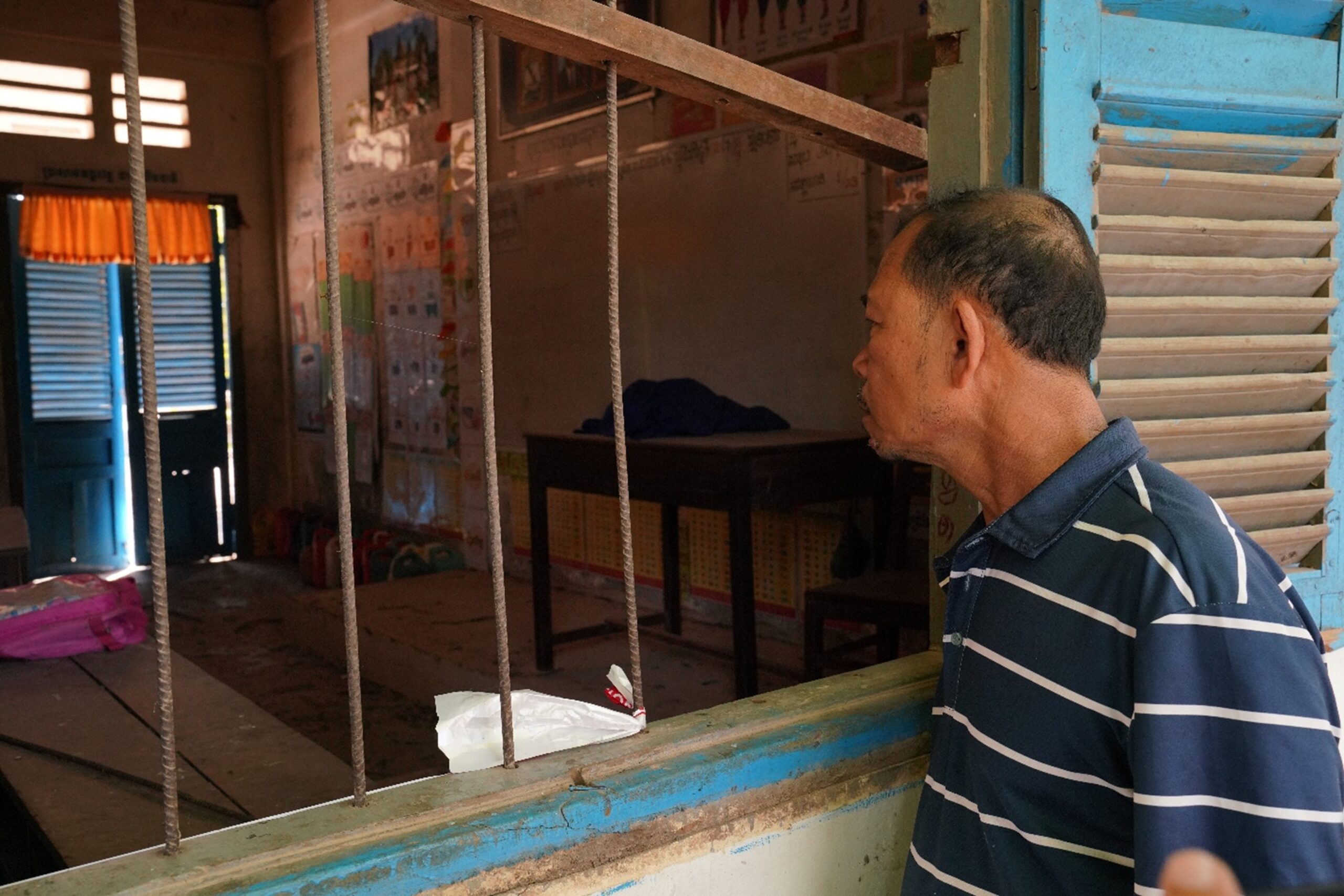
Tamone Senchey Primary School alone, which once hosted more than 200 students across six classrooms, suffered extensive destruction.
The violence has left lasting psychological scars.
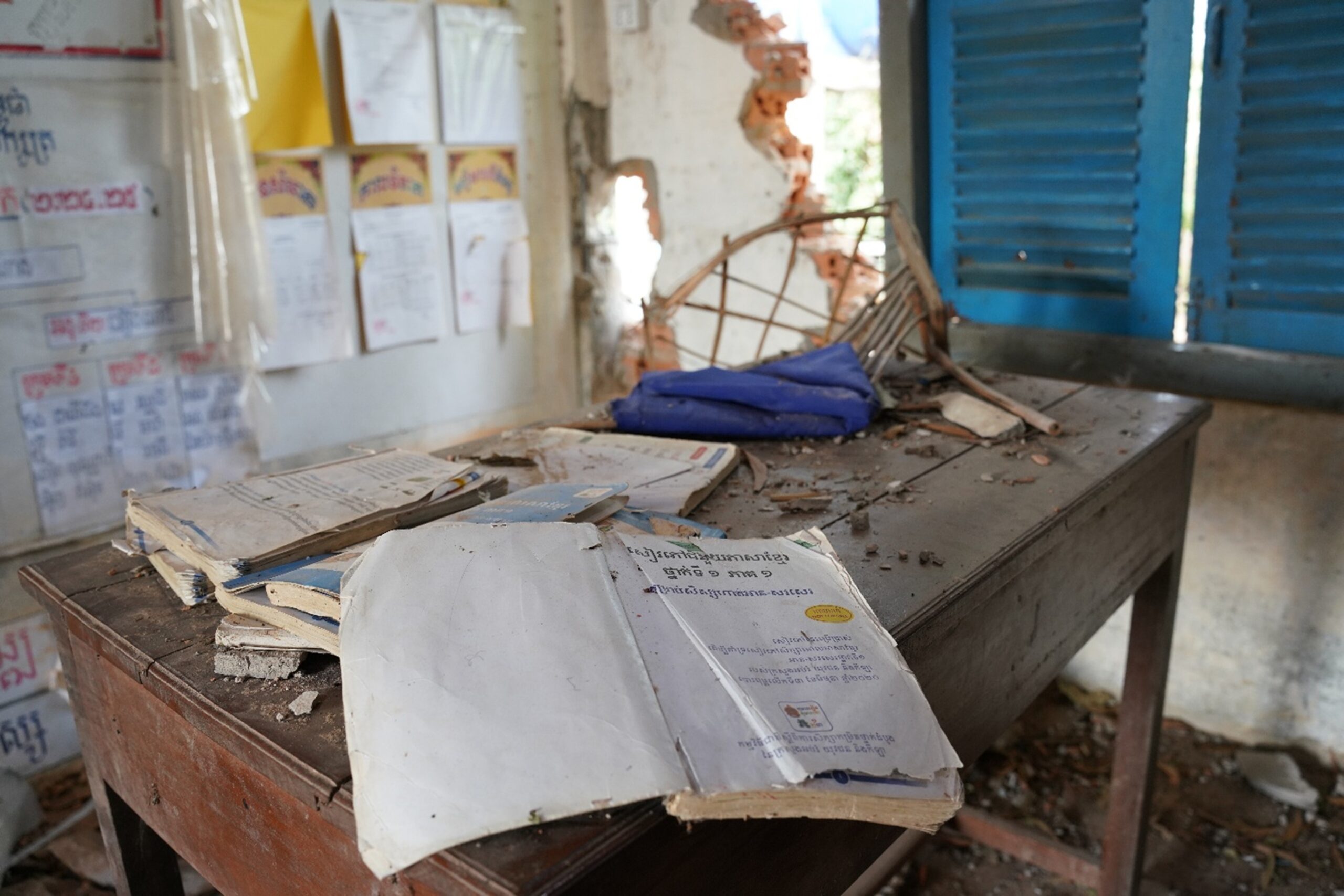

On the morning of December 8, 209 students and nine teachers at Wat Kork Prasat Primary School were saluting the national flag when the roar of fighter jets and shelling shattered the ceremony.
Terrified children ran home, some leaving their school supplies behind.
Doen Sna, the school’s principal, recounted the chaos during an interview on February 5, 2026.
“Before they could finish singing the national anthem, we suddenly heard Thai planes firing shells,” he said.
Students fled to camps including Bat Thkao, Srei Snam and Kralanh, and many have yet to return because the school was damaged and the area remains unsafe.
“The Thai military shelled Kok Prasat Primary School on December 13 at 4.30pm with four 155mm shells,” Sna explained.
Although some lessons continue in displacement camps, he acknowledged they are irregular.
“The places where they study are very chaotic. The children always ask, ‘Teacher, when will school reopen?’ I always tell the teachers that we must follow our students wherever they go. Some of them are also teaching online,” he noted.
He said his greatest hope is for lasting peace so all students can return to their classrooms.
The two Thai incursions in 2025 left widespread destruction, damaging schools, temples, health centres, homes, roads and bridges beyond the border provinces.
According to the Ministry of Education, more than 100 schools remain closed and at least 25 have been damaged following the clashes, leaving thousands of displaced children without regular schooling and prompting calls for sustained mental health and learning support.
As of early January, 113 of the 1,311 affected schools in Banteay Meanchey, Preah Vihear, Oddar Meanchey and Pursat provinces were still shut, pushing many students into makeshift classrooms with assistance from NGOs distributing books, food and scholarships.
For some students, however, access to education — even under harsh conditions — offers a measure of hope.
Bun Insu, a ninth grader from Prey Chan village, enrolled at Kop High School on January 5 after repeatedly fleeing to the Chansi sanctuary.
“My house is almost completely surrounded by the Thais,” she said. “But in this camp, I have the opportunity to continue my education. I hope to return home and study with my old friends,” she said.
Humanitarian groups have stepped in to address both educational and emotional needs. More than 11,400 children displaced by the conflict have received psychosocial support through a joint response led by the Swiss Agency for Development and Cooperation and World Vision International.
The programme, operating in Preah Vihear, Oddar Meanchey and Siem Reap provinces, prioritises vulnerable groups — particularly children and women — with trauma-informed services and cash assistance to help families cover urgent needs such as food, medicine and shelter.
Protecting children remains central to relief efforts as families navigate prolonged uncertainty.
UNICEF Cambodia has also launched a one-year initiative targeting children under five, primary school pupils and caregivers in evacuation sites and host communities.
The programme provides nutrition screening, treatment for malnutrition, home-learning kits and early childhood development materials, while strengthening child protection measures to prevent sexual exploitation and abuse.
“Even short disruptions to nutrition and learning can have long-term consequences for a child’s development,” said Will Parks, UNICEF Cambodia representative.