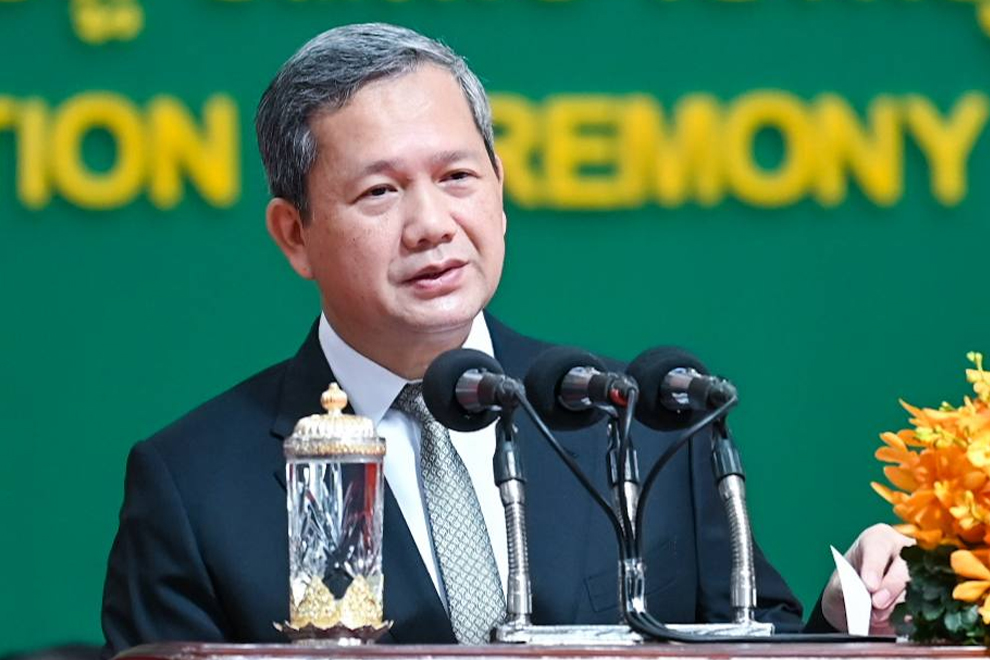
In the face of adversity, Cambodia did not remain silent but actively sought to prevent the conflict with Thailand from escalating and worked towards ending it, ultimately leading to the ceasefire of July 28. These efforts were not easy, according to Prime Minister Hun Manet.
Speaking at the official inauguration ceremony of Techo International Airport, the Prime Minister acknowledged the frustration of citizens regarding various Thai activities following the ceasefire agreement, while explaining the government’s quiet efforts to assist the people.
“We are continuing to help the citizens who were affected in Chouk Chey and Prey Chan villages; we have not abandoned them. Unfortunately, several families were impacted, and we continue to support them. However, we must also contain the situation. If we didn’t, it wouldn’t be just a few houses, but the entire village,” he said.
“Could those villages remain, with thousands of houses? Could the conflict have even reached the people of Poipet, if we hadn’t contained the situation?” he added.
Regarding criticisms that the government did not respond to Thailand’s actions, Manet reiterated that war cannot end war. Instead, Cambodia must protect what belongs to Cambodia, such as its territory and the lives of its citizens, and find peaceful solutions.
“We do not desire anyone’s land, but we cannot lose our land to anyone either. We must resolve issues together, leaving behind hundreds of years of history. The Franco-Siamese treaty was signed 70 years before I was born, but as I lead the country now, I must face these issues and resolve them,” he said.
Manet recalled that on July 28, when Cambodia signed the ceasefire agreement with Thailand, no one had confidence that it would be last. However, due to international pressure, the agreement became effective. Since another agreement was signed on August 7, the ceasefire has continued.
He noted that over the past three months, the situation has been fragile, but explained that Cambodia has responded calmly, with the participation of the International Observer Team (IOT), the involvement of the ASEAN chair and meetings at the military commander level.
He urged citizens to be patient, as Cambodia must adhere to international law and engage with the international community, even if the results are not as quick as desired. What Cambodia wants is a return to normalcy.
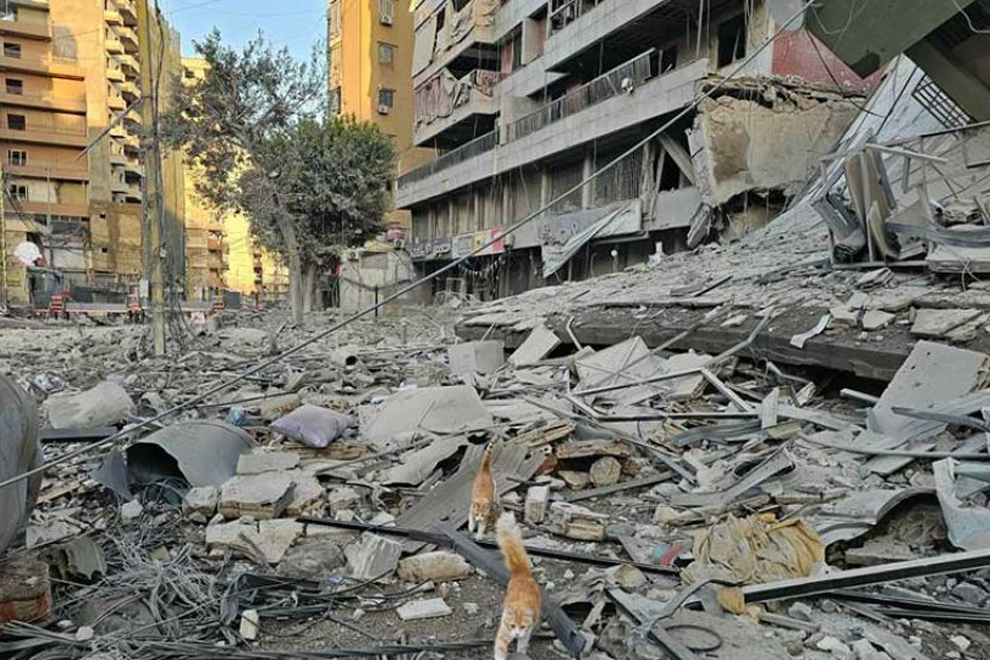
“We can assess what happened and the immense value of what did not happen, the worst-case scenario, which we often overlook. We can measure how many died, how many were injured, how many became refugees, how much farmland was destroyed by landmines and falling shells, how many houses were ruined when fighting occurred for five days and five nights. But you cannot measure the 30 days without fighting,” he said.
“Thanks to the ceasefire, we ended the fighting. Do we not see the value off that? If there was no ceasefire on July 28, how many more would have died or been injured in the past three months? This is the true value of the ceasefire,” he added.
He also reiterated that Cambodia has not relinquished territory in exchange for peace.