The Mekong member nations and Indonesia have called for strengthened cooperation in mobilising innovative financing and technology sharing to accelerate a clean energy transition across Southeast Asia, warning that the region’s energy ambitions cannot be achieved without closing the funding gap.
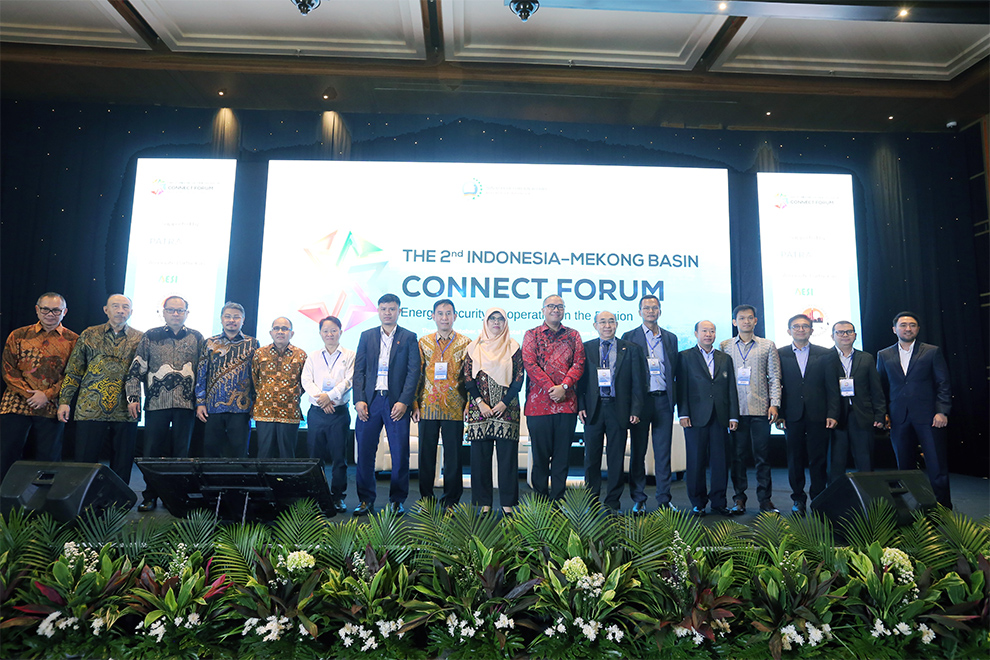
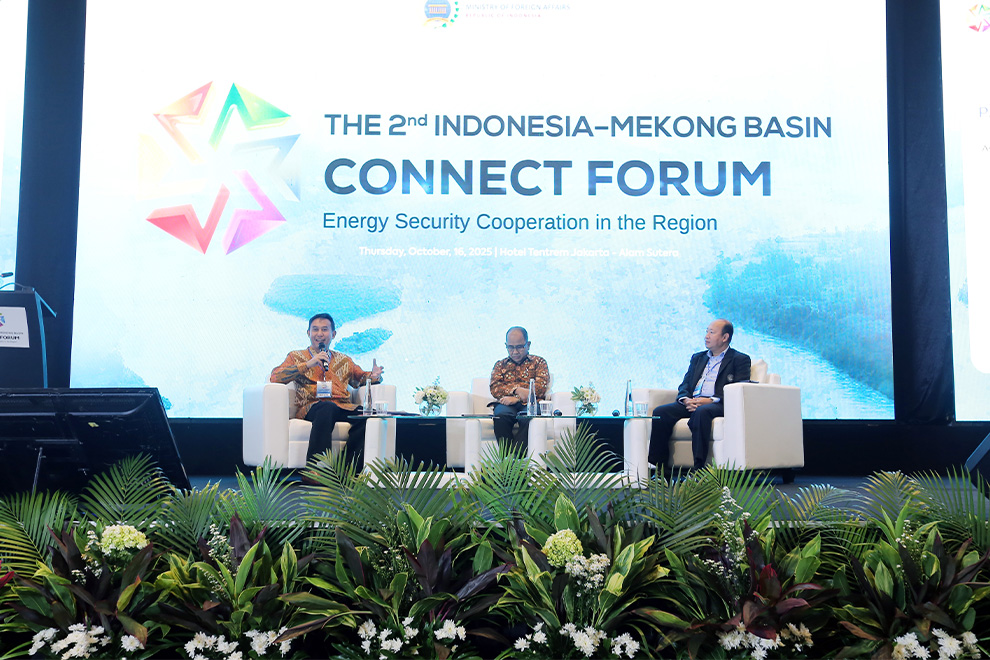
Speaking at the opening of the 2nd Indonesia–Mekong Basin Connect 2025: Energy Security Cooperation in the Region, held in South Tangerang on October 16, Indonesian Deputy Foreign Minister Arif Havas Oegroseno said that while Southeast Asia has no shortage of ideas or technology, it faces a serious lack of financing to make its energy transition a reality.
“Any discussion on renewable energy or climate change will mean nothing if we don’t discuss finance,” he said.
“The energy transition is expensive. Indonesia alone needs about one trillion US dollars by 2060 to transform its energy system. Our government budget can only fund a fraction of that. This is why innovative and alternative financing are essential,” he explained.
He underscored that the region must work together to explore mechanisms such as carbon credits, green and SDG bonds, and other creative financial instruments to fund the shift toward clean energy.
Indonesia, he said, has already begun experimenting with such tools, issuing green and coral reef bonds to support climate mitigation programmes.

Havas also called for stronger collaboration in developing regional solar panel production centres, noting that Southeast Asia’s abundant sunlight and raw materials provide an ideal foundation for renewable industries.
Indonesia, he said, holds 43 per cent of the world’s nickel reserves and over 300 million tonnes of silica sand — key materials for solar panels — while neighbouring Mekong countries have growing energy needs and technological potential.
“We cannot continue sending all our raw materials abroad to be turned into solar panels,” Havas said.
“It’s time to build part of that industry here in Southeast Asia, together with our partners in the Mekong Basin,” he added.
The forum, organized by the Indonesian foreign ministry, brought together public and private stakeholders from Laos, Thailand, Vietnam, Myanmar and Cambodia, along with international institutions including the Mekong River Commission Secretariat (MRCS), the Asian Development Bank (ADB) and the Asia Pacific Energy Research Centre (APERC).
From the Indonesian side, Eniya Listiani Dewi, director-general of New, Renewable Energy and Energy Conservation at the Ministry of Energy and Mineral Resources, highlighted the government’s firm commitment to achieving net-zero emissions by 2060 and its plan to add 100 gigawatts of solar power to the national grid.
“Our President’s vision is clear — energy security and renewable transformation go hand in hand,” she said.
“We are expanding investments in geothermal, biomass, hydrogen and carbon capture, while phasing down coal use and improving energy efficiency. This is not only Indonesia’s agenda — it’s a regional one,” she continued.
She added that Indonesia’s next Nationally Determined Contribution (NDC) will include a stronger emphasis on energy transition, carbon storage and electrification initiatives such as clean cooking and digitalised power grids.
Representing the MRCS, Sophearin Chea, chief river basin planner, stressed the importance of balancing energy development with environmental protection.
He outlined ongoing MRC studies on floating solar and pump storage hydropower — technologies that can reduce the strain on the Mekong River while supporting member countries’ renewable energy goals.
“All Mekong countries have targets to achieve net-zero emissions by 2050 or 2060,” said Chea.
“The MRC plays a vital role in helping them integrate water, energy and food security policies, and in promoting data-sharing and climate adaptation across the basin,” he added.
A “Business Talk on Energy Security” was also held as part of the forum, featuring energy firms and institutions from across the region, including Électricité du Laos, PT Indo Tambangraya Megah (Banpu Group, Thailand), CT Group (Vietnam), Maxpower Group (Myanmar), and representatives from Council for the Development of Cambodia.
The session concluded with a business matching programme to explore potential investment opportunities in sustainable energy projects.
The Indonesia–Mekong Basin Connect Forum, now in its second year, has become an important platform for regional energy diplomacy, linking the economic, environmental and social dimensions of energy transition in Southeast Asia.
“The goal,” Havas concluded, “is not just renewable energy for the sake of being renewable, but renewable energy that achieves balance — between growth, social responsibility and environmental protection.”