The Ministry of Environment has claimed that in January, it prevented the discharge of more than two million cubic metres of wastewater from industrial sources in Cambodia, largely thanks to the legal measures it has enforced.
The ministry reported that approximately 70,875 cubic metres of polluted liquid waste per day — equivalent to more than 2 million per month — from factories and enterprises were intercepted and prevented from polluting the environment. Specifically, in January, a total of 2,197,125 cubic metres of wastewater from factories and enterprises was prevented from being discharged, thanks to the installation of automatic monitoring equipment and wastewater data management systems.
Khvay Atitya, ministry spokesperson, noted that in 2025, the measures imposed by the ministry prevented more than 20 million cubic metres of untreated wastewater from being discharged into public waterways. The ministry has pursued legal measures against companies which do not meet the requirements of the Kingdom’s Environmental and Natural Resources Code.
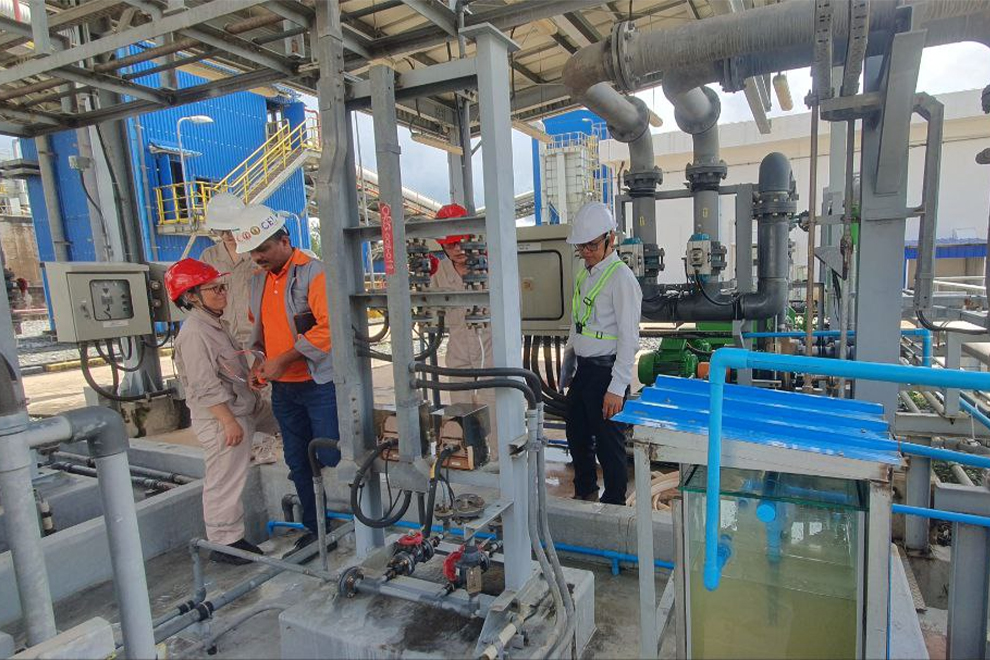
“Factories, enterprises, and companies with high pollution potential from liquid waste discharged from their premises — such as laundry factories, dyeing facilities and factories producing semi-finished products using chemical raw materials — have installed automatic monitoring equipment and wastewater data management systems in recent years,” he explained.
He added that as of January 2026, a total of 55 companies nationwide had installed the systems. The benefits include the ability to effectively and remotely monitor wastewater treatment processes and the quality of discharged effluent, without requiring officials to conduct on-site inspections at factories or enterprises.
This helps improve the effectiveness of law enforcement, reduces environmental pollution (to water, soil and air) and decreases the need for inspections by officials, which could potentially disrupt investors. Technical officers are thus more able to more effectively prevent wastewater discharges that exceed standard limits and stop leakage or illegal discharge of wastewater from factories and enterprises.
The data provided by the system are scientific, accurate and acceptable to all relevant stakeholders, added Atitya.
The owners of production sites, businesses, or service facilities whose waste discharges pose a high risk of environmental pollution are required to implement self-monitoring of environmental pollution at their premises, under Article 178 of the Environmental and Natural Resources Code.