



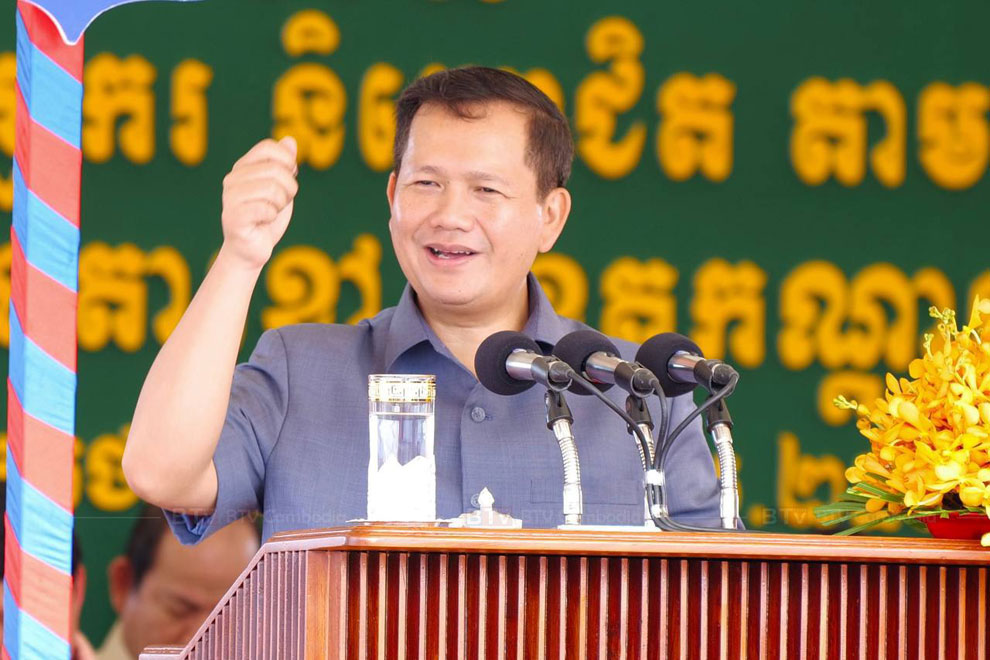
Prime Minister Hun Manet has suggested that his government will revise its policy on appointing advisors and assistants to the prime minster, deputy prime ministers, senior ministers and ministers, by instructing them to choose between the rank of their new appointment or the retention of the rank they hold at their individual government institutions.
Speaking to more than 18,000 workers in Kandal province’s Takhmao town on the morning of September 1, Manet noted that in recent days, there has been many discussions on social media which criticised the appointment of advisors and assistants to government leaders.
Responding to these comments, Manet explained that it is necessary for the government to maintain a clear management structure.
“Some have people attacked us over the appointments, but let me give an example. A snake without a head will not move forward, but a snake with a weak head will find it hard to crawl forward too. We need to establish a clear leadership structure for each institution. The appointment of officials such as advisors and assistants has been based on our immediate needs for many mandates already,” he said.
He said the majority of the new appointees have served the government for many years and deserve their new roles as a result of their virtue, efficiency and past achievements.
He instructed all ministries ensure that all new appointments were based on the qualifications and capacity of the candidates, and reminded them of the importance of maintaining unity in order to achieve their goals.
“Some people suggested the new government has new ministers, but the officials at the ministries are the same faces. What positions should we post them to if they have been at our sides since the most difficult times? We must let them retain their jobs as advisors and assistants. This is called virtue in work appointments,” he said, adding that it required a balance of sentimentality, experience and effectiveness.
The prime minister accepted that there may have been flaws in some appointments regarding the ranking of advisors and assistants to the governments, noting that one deputy district governor has been appointed as a government advisor with a rank equivalent to that of a minister.
He explained that such cases will be resolved through a new Royal Decree which will be released shortly. When it is issued, the ranking of all advisors and assistants will be removed if they also hold ranked positions at their respective institutions. If they wish to keep their institutional position, they may only be appointed as unranked advisors and assistants.
He said this would avoid any conflicts that may arise when officials with low ranked positions at state intuitions are awarded higher authority in other posts.
“Advisors and assistants for the prime minster, deputy prime ministers, senior ministers and others, will continue to be drawn from the ranks of all civil servant and members of the armed forces, but they will have to choose one of two options. If they want a rank such as secretary or undersecretary of state, they will have to relinquish their other rank,” he said.
Individuals who do not hold state positions or military ranks may accept a ranked advisor or assistant position.
“The Royal Decree will give them six months to decide which one they want to choose,” said Manet.
“If any new appointee wishes to keep their new rank and leave their position at another institution, they are welcome to do so,” he added.
