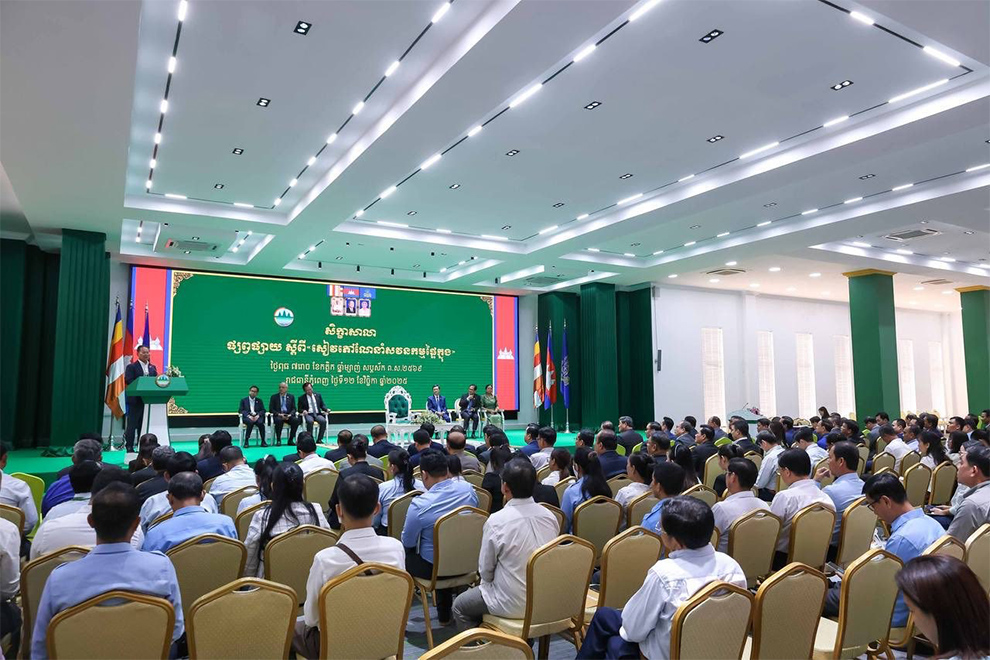
The Ministry of Environment officially launched the “Internal Audit Guidebook” on Wednesday, November 12, describing it as a key tool and strategic framework to ensure transparency and accountability in environmental management and administrative operations.
Speaking at the launch, held at the ministry headquarters, environment minister Eang Sophalleth said the new publication would serve as an important strategic instrument that will guarantee “transparency” in environmental governance, referring to it as part of Cambodia’s ongoing “Environmental Integrity” initiative.
The minister encouraged all ministry officials to be active in their use of the new guidebook, noting that it serves not only as an internal control mechanism, but also as a strategic measure to promote transparency, accountability and good governance in all environmental activities.
He explained that the guidebook integrates internal audit processes with the ministry’s broader efforts to implement the “Environmental Integrity Framework”, which is built on three core pillars: cleanliness, greenness and sustainability.
Sophalleth also reaffirmed the ministry’s strong commitment to improving Cambodia’s environmental landscape — including ensuring that major roads and public spaces across the country remain clean and free from scattered plastic waste. From cleanliness, he noted, comes greenness, which drives more structured environmental actions supported by monthly performance reports highlighting both achievements and existing gaps, helping to steer progress toward Cambodia’s strategic goals under phase one of the Pentagonal Strategy – the government’s national standard for performance measurement.
“Only the work that we have done in the past can serve as data for review and evaluation,” he said.
“This evidence-based approach reflects the tangible outcomes of our daily work and demonstrates genuine transparency,” he insisted.
In his conclusion, the minister offered three key recommendations for ministry officials to ensure success in implementing their duties: learn continually, apply what is learned and strive for constant improvement.