



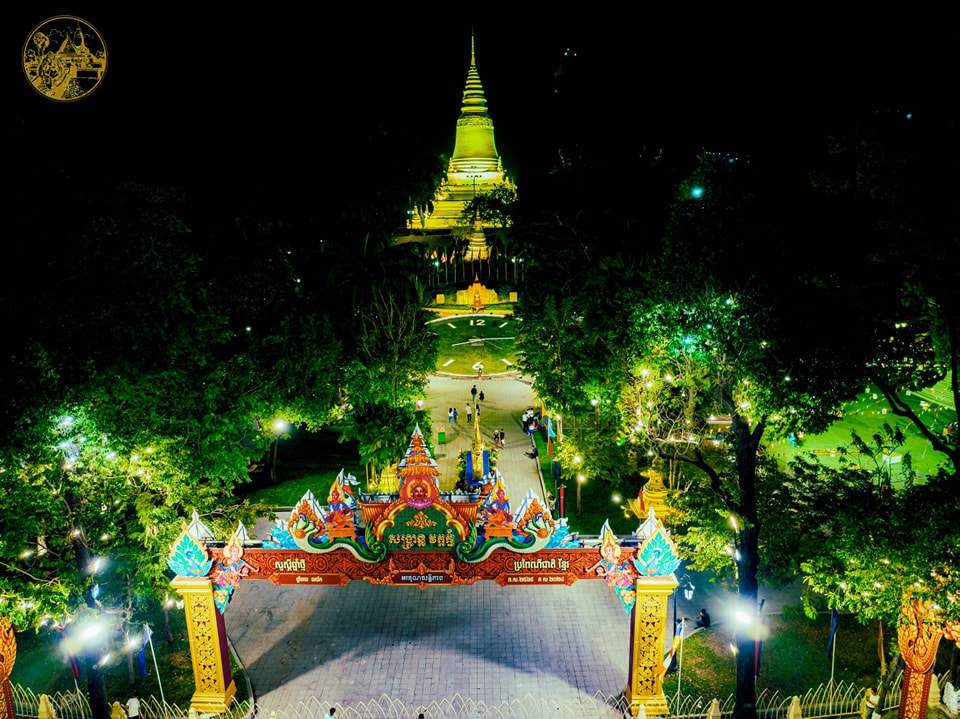
The Cambodian capital is preparing to host the six-day “Nokor Sangkranta” celebration, from April 14 to 19, to mark the Khmer New Year. The event will take place despite fragile security conditions along the border and the fact that almost 70,000 displaced people are yet to return home.
Speaking at a March 2 meeting with the Ministry of Information, Hun Many, Minister of Civil Service, said the celebration is not merely about festivities but about reinforcing national identity at a time of external aggression and uncertainty.
“Celebrating the Khmer New Year is not just about observing tradition,” he said.
“It is about strengthening national identity, especially in times of invasion, and using this opportunity to reinforce the spirit of the great Khmer family, while also contributing to economic recovery,” he added.
Many acknowledged that despite the December 27 ceasefire, the situation remains delicate.
He is widely known for leading the Angkor Sangkranta celebrations in Siem Reap, a large-scale Khmer New Year celebration that was first launched in 2013.
He noted that public debate has centred on whether it is appropriate to hold celebrations at a time like this.
“Although there has been a ceasefire, the situation remains fragile. Our armed forces and tens of thousands of citizens have not yet returned home. Can we really celebrate in such circumstances?” he asked.
While some question the timing, others argue that commemorating the traditional New Year does not mean forgetting displaced families or frontline troops.
Many stressed that Cambodians must learn to live with the current reality, even as the country seeks a return to normalcy nearly a year after tensions escalated on May 28, 2025.
“This year, more than ever, we must highlight our national identity,” he said.
“It is not about mere enjoyment, but about strengthening national pride and the uniqueness of our culture,” he added.
He expressed hope that the Prime Minister, the Ministry of Culture and Fine Arts and the Ministry of Information would provide guidance to ensure that traditions are upheld and economic participation encouraged — without neglecting soldiers or displaced civilians.
The event is expected to be held at multiple locations across Phnom Penh, including Wat Phnom, the Chaktomuk Walk Street, to the Night Market, Wat Botum area, Bassac Lane and Tuol Tom Poung Market.
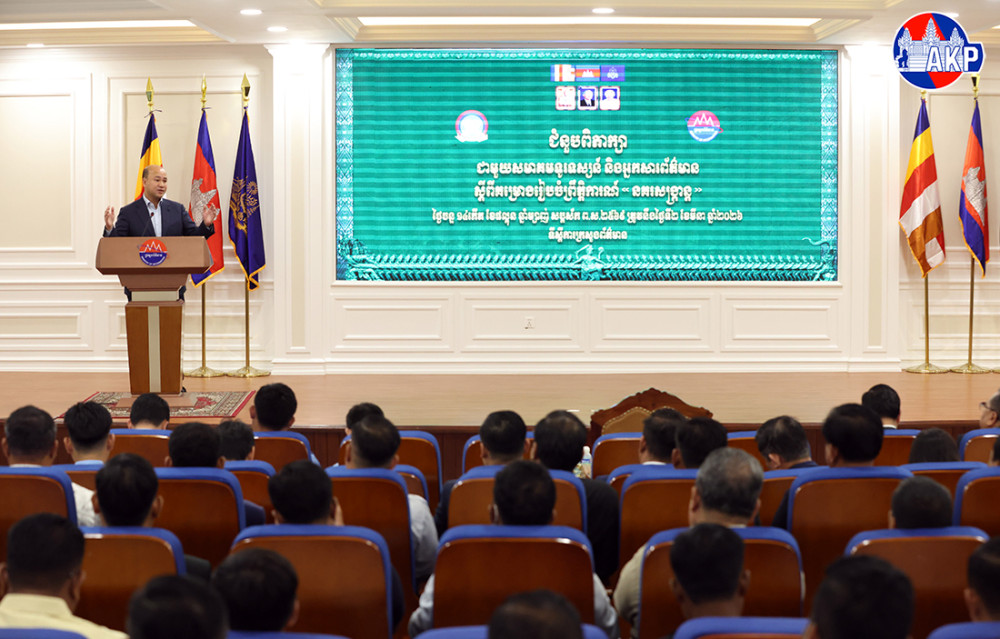
Sok Sabayna, head of Youth Movement, Partnership and Public Relations for the Union of Youth Federations of Cambodia (UYFC), said planned activities include a cultural village, traditional games, classical dance performances, Khmer martial arts, giant chess competitions, Buddhist processions, tug-of-war events, concerts and commercial zones.
He said the programme will directly support frontline troops and displaced communities. Profits from mascot sales and portions of booth revenues will be donated to displaced families.
“The ‘10,000 Krama’ campaign will symbolise solidarity from the public, while greeting cards and traditional foods such as ansom cake and roasted sticky rice will be sent to troops stationed at the border,” explained Sabayna.
“Artistic performances depicting the heroism of frontline forces and New Year gatherings at displacement camps are also planned,” he added.
Neth Pheaktra, Minister of Information, described Nokor Sangkranta as more than an entertainment event, calling it a platform to showcase national identity, youth unity and the vibrancy of Phnom Penh.
He underscored the role of the media in reporting the border situation accurately and amplifying Cambodia’s voice internationally.
Hun Many also praised the information ministry and media outlets for publicising what he described as foreign aggression and advocating for justice on the international stage, referring to Prime Minister Hun Manet’s recent international engagements and interviews with major global news organisations.
Nokor Sangkranta is being framed as a cultural statement affirming that Cambodia continues to preserve its traditions and unity despite ongoing challenges.
Many expects the event to boost domestic tourism and economic activity, while sending a clear message that the nation does not forget its frontline troops or the tens of thousands of displaced citizens.
He added that if millions of Cambodians and foreign visitors take part in New Year festivities, it would also serve as proof of confidence in the country’s safety, countering what he described as a neighbouring country attempt to portray Cambodia as insecure.
