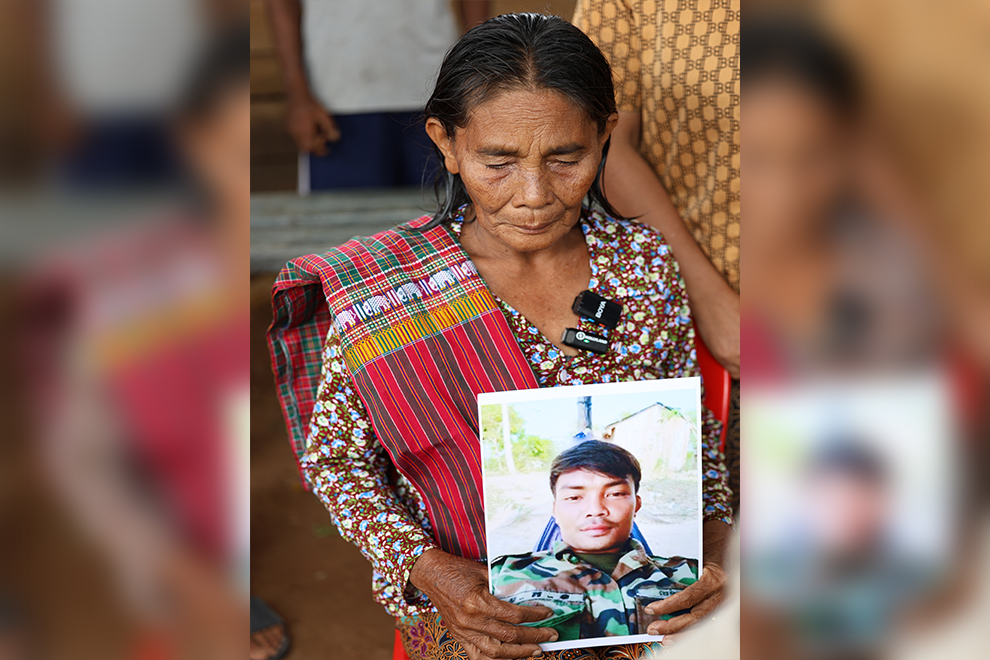
For 35 days, 18 Cambodian soldiers have been detained by Thai forces. They were captured by Thai forces the day after the July 28 ceasefire, allegedly while greeting their former opponents for a photo opportunity.
The Thai military claim they illegally crossed into Thai territory, later classifying them as prisoners of war. Several analysts have concluded that their ongoing detention suggests that Thailand has displayed no willingness to reconcile with Cambodia.
They believe Thailand’s continued refusal to release the men stems from a lack of genuine intent to reconcile or pursue peace with Cambodia, nor to de-escalate tensions and return to normalcy.
“Thailand has not yet shown sincerity in upholding the ceasefire, especially as the 18 Cambodian soldiers have not been returned after being illegally detained. I believe they abducted them to use as leverage,” said Yang Peou, secretary-general of the Royal Academy of Cambodia.
He added that Thailand’s unwillingness to reconcile with Cambodia is not only reflected in the continued detention of the soldiers but also in actions such as the erection of razor wire barricades around the homes of several Cambodian villagers’ homes.
He also noted that some Thai ultranationalists have attempted to commit escalatory acts. One of them even brought sewage trucks to the border, announcing his intent to spray Cambodian civilians with the contents of the vehicles.
“If Thailand wants to resume constructive dialogue, it must fulfil its obligations under international law. This includes respecting the ceasefire, returning the 18 Cambodian soldiers, and adhering to international treaties, the Franco-Siamese Treaty, and the 2000 MoU,” said Peou.
Pa Chanroeun, president of the Cambodian Institute for Democracy, also believed that Thailand’s refusal to release the soldiers indicates a lack of commitment to respecting the ceasefire, as well as other agreements that were made after it.
He explained that, as a general principle, even if the Cambodian soldiers were considered prisoners of war or captives, Thailand should have released them long ago, as there is currently no armed conflict between the two countries.
“It seems Thailand is using the 18 Cambodian soldiers as hostages, or leverage, in resolving border disputes. In reality, releasing the 18 Cambodian soldiers is not only Thailand’s obligation under international law but also a gesture which would demonstrate that Thailand is a civilised nation that values humanity,” he added.
“Their release is a necessary step toward reconciliation and building peace together after the outbreak of conflict,” said Chanroeun.