Cambodia’s push to modernise upper secondary education is entering a deeper phase, as the Asian Development Bank (ADB) and the Ministry of Education, Youth and Sport scale up nationwide reforms aimed at strengthening science and technology learning and narrowing long-standing quality gaps.
At the centre of the effort is the Science and Technology Project in Upper Secondary Education, known as STEP UP, which has already supported 259 high schools through infrastructure upgrades, teacher training and new standards designed to improve STEM outcomes.
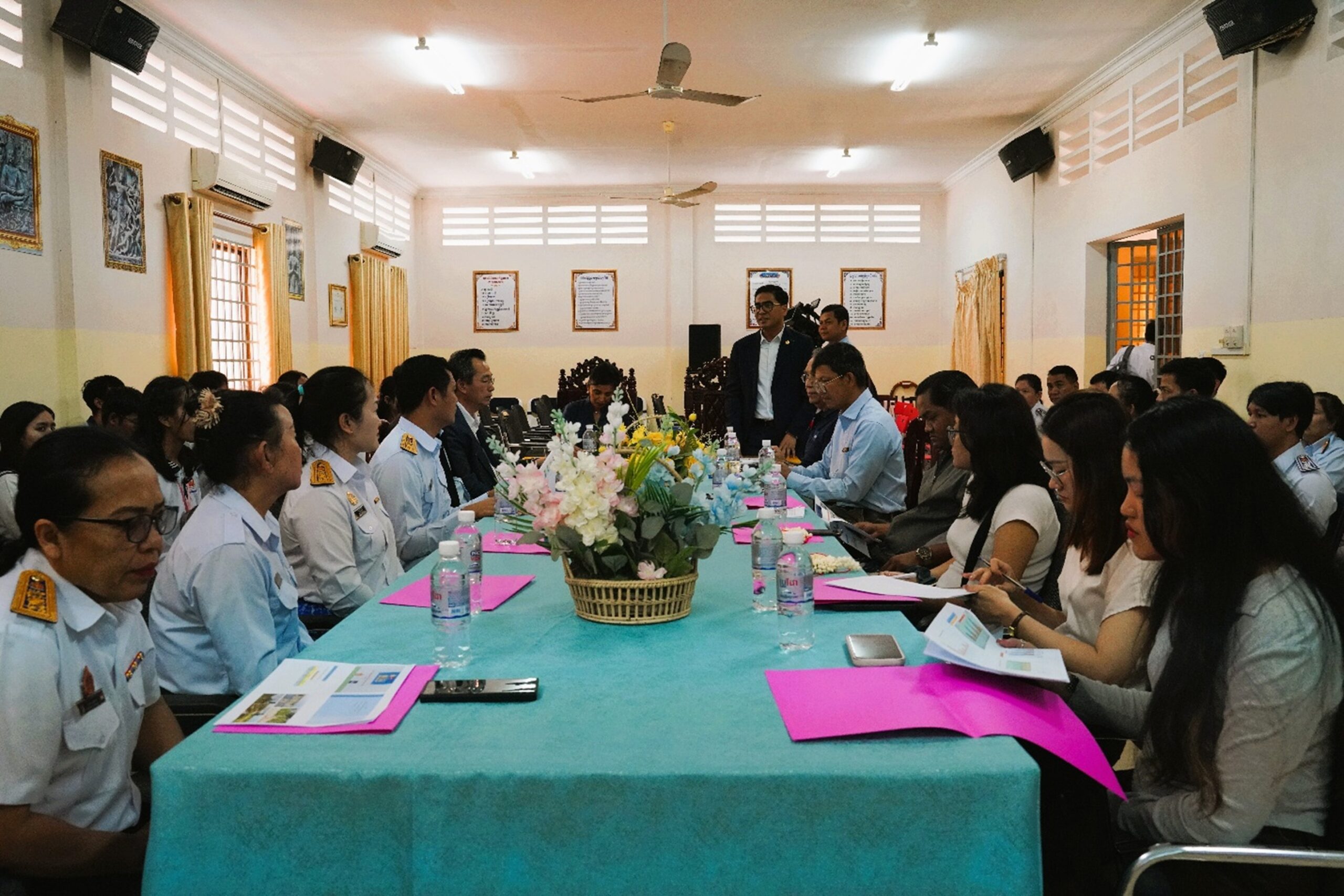
During a recent visit to Net Yang Upper Secondary School — designated as a Secondary Resource Centre (SRC) — ADB country director for Cambodia Yasmin Siddiqi explained that upgraded facilities are translating into more meaningful learning experiences.
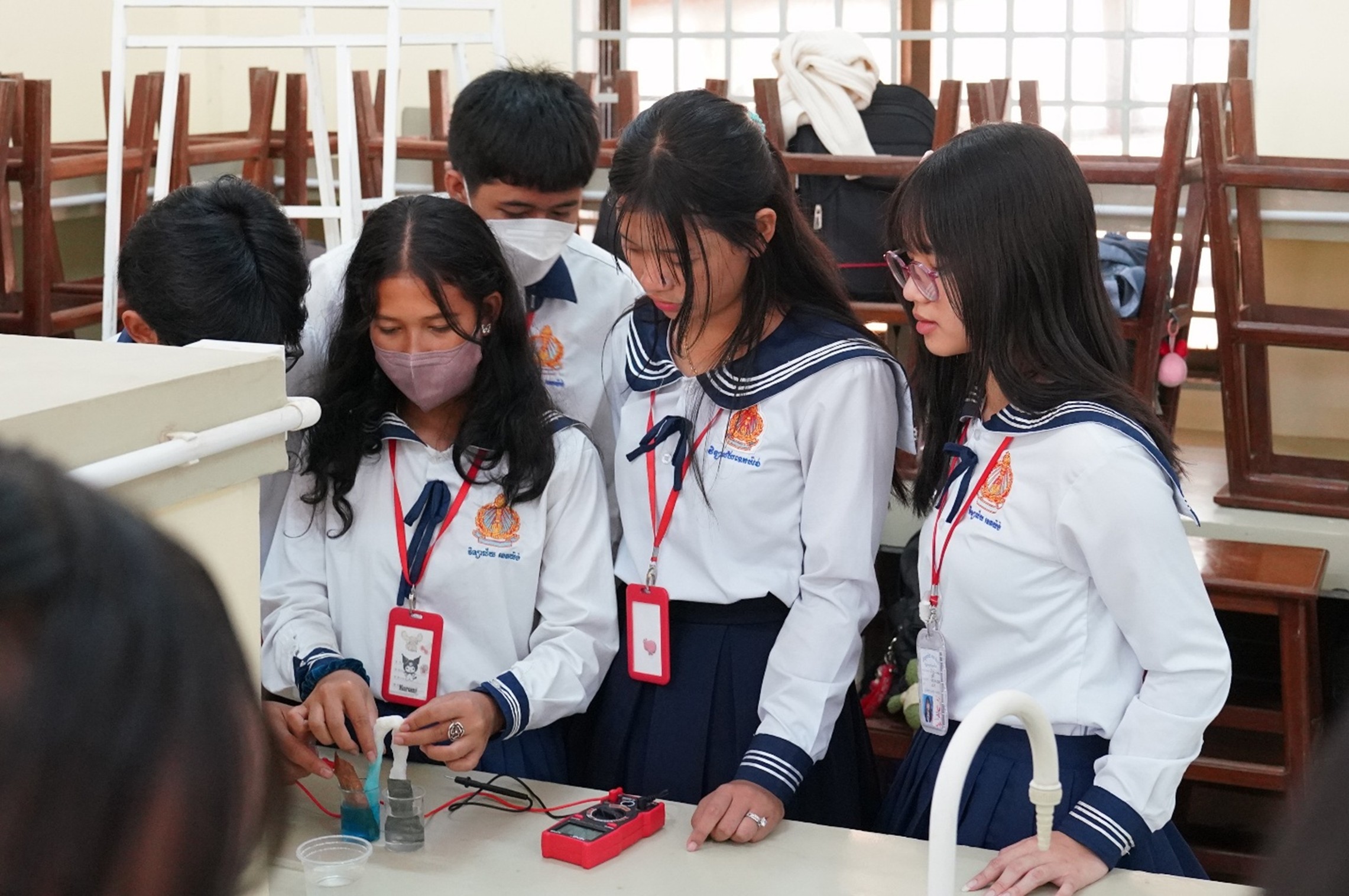
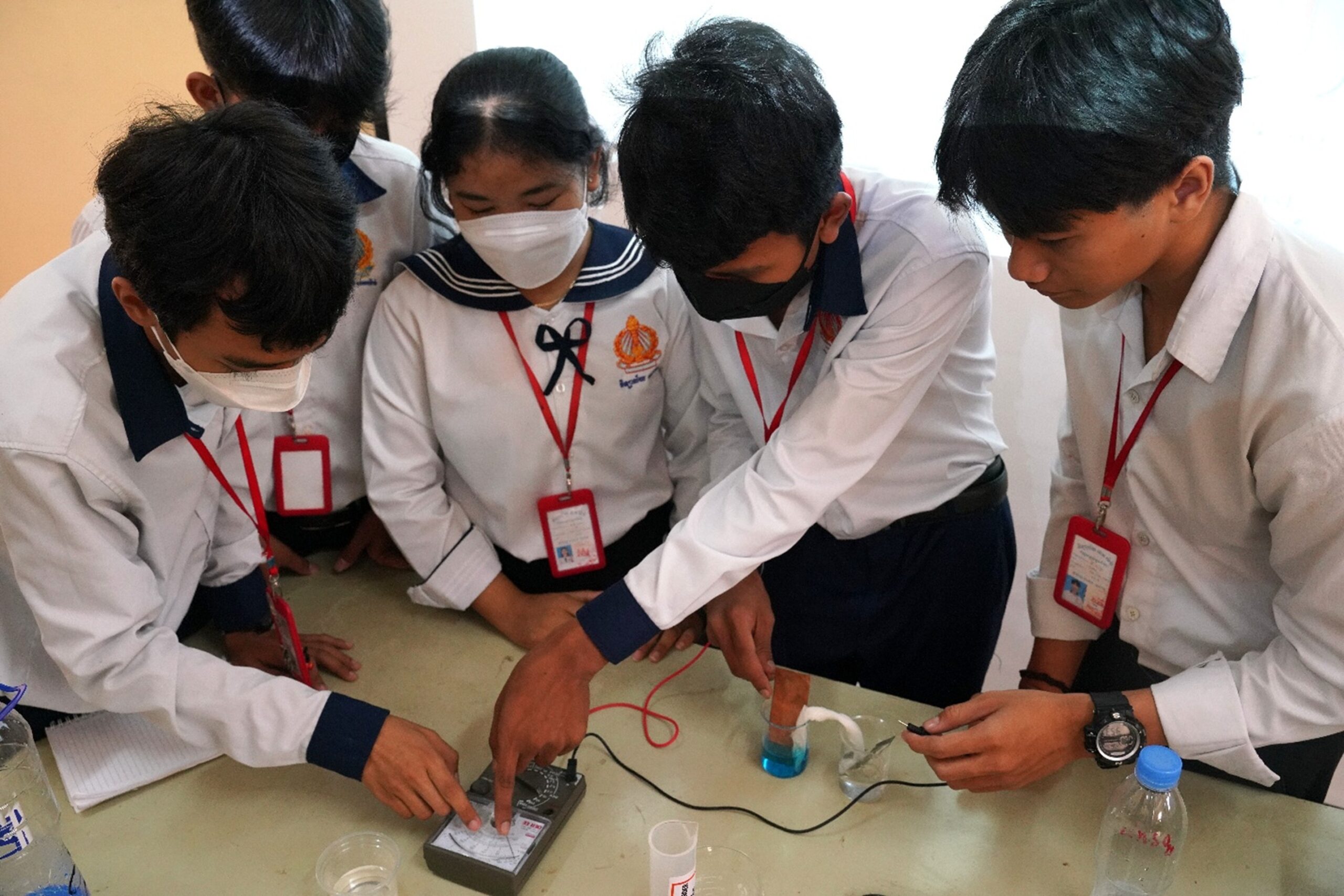
“The Secondary Resource Centres provide fully equipped science laboratories that enable hands-on experiments in physics, chemistry and biology,” she said.
“This improves students’ conceptual understanding and practical skills,” she added.
Net Yang’s computer lab, equipped with 25 computers, allows both teachers and students to access digital learning tools and multimedia resources, while a newly upgraded library provides conducive study space for independent research.
Starting in 2026, minimum service standards for upper secondary schools will be rolled out nationwide, aligning facilities and STEM equipment with uniform benchmarks.
Continuous professional development for teachers ensures that the upgraded infrastructure is used effectively, integrating educational technology and innovative teaching approaches into daily instruction.
Deputy director-general of policy and planning Dy Khamboly said ADB’s financing has supported both “hard” and “soft” components of reform.
“In the past few years, ADB has supported 259 high schools across the country through multiple interventions,” he said.
“The hard components include renovating classrooms into science labs, 21st-century libraries, multipurpose classrooms and computer labs. The soft components focus on improving teaching methodology and teacher capacity,” he continued.
He noted that curriculum revision is one of 15 national reform priorities, alongside school governance improvements, community engagement, extracurricular development and digital education expansion.
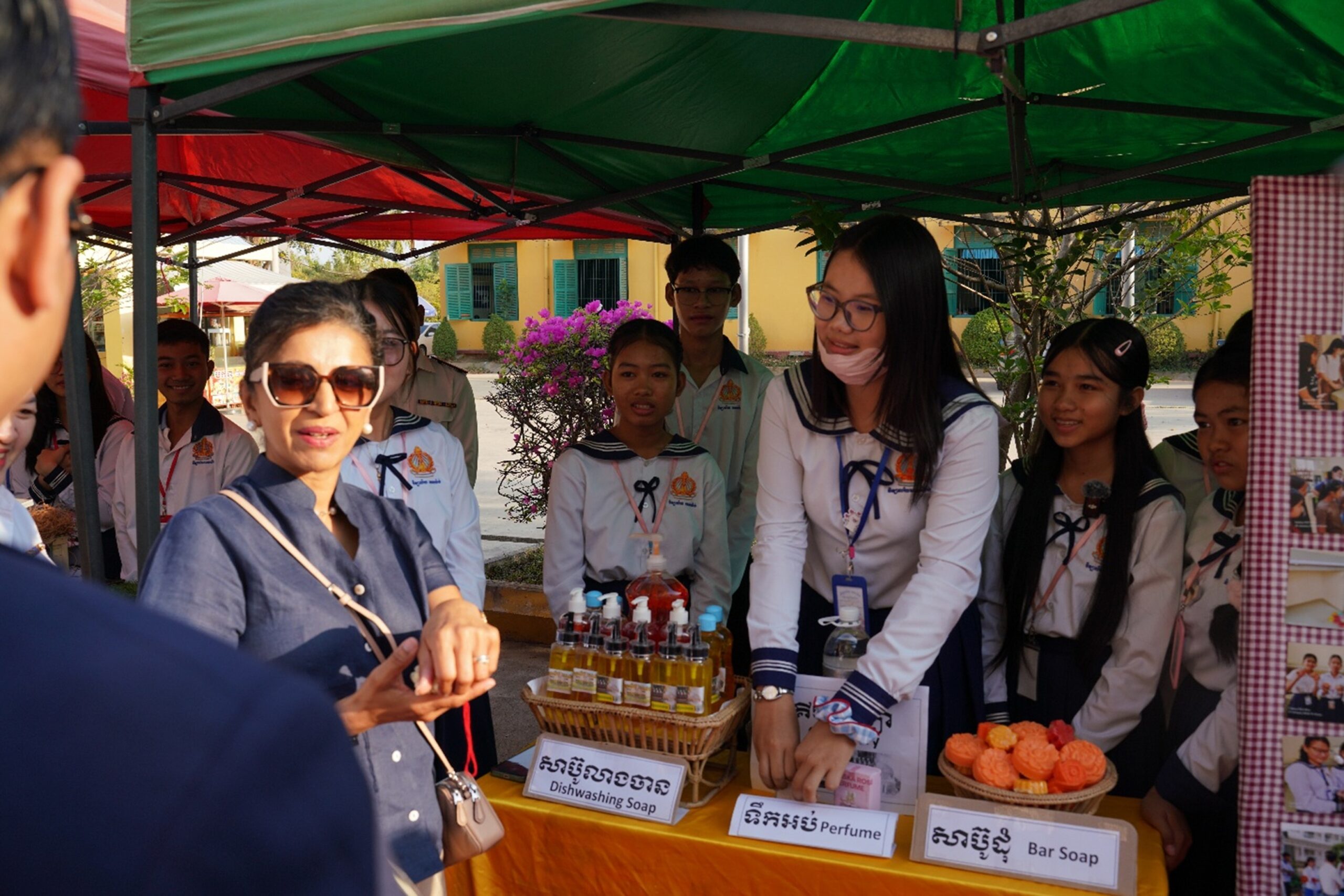
“The projects developed by students are linked to real life and to the future job market,” Khamboly said, referring to exhibitions where students present applied STEM projects.
Beyond facilities, STEP UP is designed to align education more closely with Cambodia’s labour market needs.
Siddiqi said the project expands labour market-driven technical and vocational opportunities for upper secondary students and strengthens competency-based STEM assessments to ensure graduates possess stronger problem-solving skills.
Cambodia’s first national Science and Technology Centre is expected to be established in 2028. It will serve as a hub connecting schools, teacher training institutions, universities and industry — forming what officials describe as a coordinated STEM pipeline.
“A better prepared workforce will support Cambodia’s shift toward a broad-based, industrial and technology-oriented economy,” Siddiqi said.
“Over time, improved STEM capacity can expand employment opportunities, strengthen innovation and enhance national competitiveness,” she added.
A key element of the reform is reducing disparities between urban and rural schools.
The project is upgrading classrooms in 122 schools, including several technical high schools outside major cities.
SRCs such as Net Yang provide shared laboratory and ICT access to 10 surrounding cluster schools, extending resources to students who would otherwise lack such facilities.
Minimum service standards due in 2026 aim to ensure consistent benchmarks nationwide, including in underserved areas.
ADB will measure long-term progress through new competency-based STEM assessments designed to evaluate practical and problem-solving skills rather than rote memorization.
A strengthened national data system and a new STEM School Framework will track how 50 designated “centres of excellence” influence broader improvements in teaching quality and student outcomes.
Challenges remain, particularly capacity limitations at school, provincial and national levels during early implementation.
Khamboly said the project addresses this through institutional strengthening, including planning and management reforms at the ministry, training 50 education specialists — 40 per cent of them women — and issuing updated school management and public-private partnership guidelines approved in 2025.
The private sector has also been engaged through internships, mentoring, study tours and on-the-job training programmes in fields such as electricity, computer coding, agriculture and accounting.
“Education quality depends on the involvement of all parties,” Khamboly said.
“The private sector is an important partner in improving education reform,” he added.
Gender equity is being tracked closely under STEP UP.
Schools such as Net Yang report female enrolment of 50.3 per cent, while teacher upskilling programmes ensure significant female participation.
Gender-disaggregated data and upcoming competency-based assessments will systematically monitor differences in performance and participation.
Beyond infrastructure, ADB monitors outcomes including enrolment rates, dropout rates, the number of students graduating in STEM subjects and teacher training progress.
Particular attention is given to gender-disaggregated data to ensure girls are increasingly participating and advancing in science streams.
“We always look at male and female enrolment and dropout rates,” Siddiqi said, adding “It is vital to see more girls engaged in STEM and moving into STEM professions.”
“They inspire me to build a creative plan for our brighter future and to see the world differently,” said Grade 11 student Ny Mariyana, referring to the upgraded learning environment. “We can also experience things with our own hands.”
Grade 12 student Rith Reaksmey said practical experiments in chemistry classes have strengthened his understanding of scientific concepts, allowing students to move beyond theory.
The integration of technology has also improved inclusivity. Upgraded laboratories, computer rooms and libraries provide multimodal learning environments that support differentiated instruction for students with disabilities.
Digital tools allow learners to access materials at their own pace, while teacher training includes inclusive and innovative pedagogy.
Siddiqi said ADB’s broader planning direction emphasises resilience and empowerment, particularly for disadvantaged groups.
“Ensuring equitable access to skills development and education is essential to empower communities, create jobs and reduce poverty,” she said.
Under the broader STEP-UP framework, ADB is also upgrading 103 general upper secondary schools by converting three existing classrooms into two modern science classrooms and one library, equipped with updated STEM materials and digital tools.
Smart classrooms, e-libraries, improved sanitation facilities in selected schools and voltage stabilizers in areas with unstable electricity supply are also part of the package.
“Don’t ever think small. Only when you dream really big can you achieve. And don’t let anyone ever say to you, you cannot do it,” she told students, encouraging them to pursue ambitions in science and technology fields.