



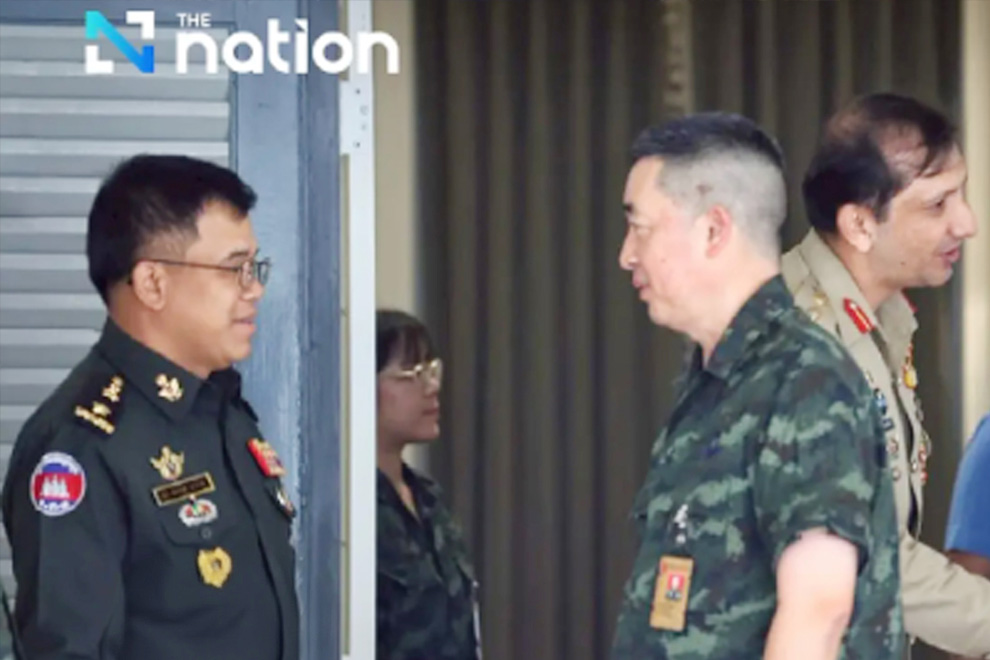
In the latest development in the ongoing border tensions between Cambodia and Thailand, on July 22 the Royal Thai Army briefed diplomatic representatives and military attachés from 47 nations, including Cambodia’s Brigadier General Hom Kim, about the July 16th landmine explosion that injured three Thai soldiers, as accusations swirl over Cambodia’s involvement.
The already tense situation has intensified, thanks to accusations by Thailand that Cambodia planted landmines on its territory.
While Thai authorities have called the event a deliberate violation of sovereignty, Cambodia has denied the accusations, providing evidence of Thai troops’ unauthorised entry into Cambodian territory, which is known to be contaminated with war-era mines.
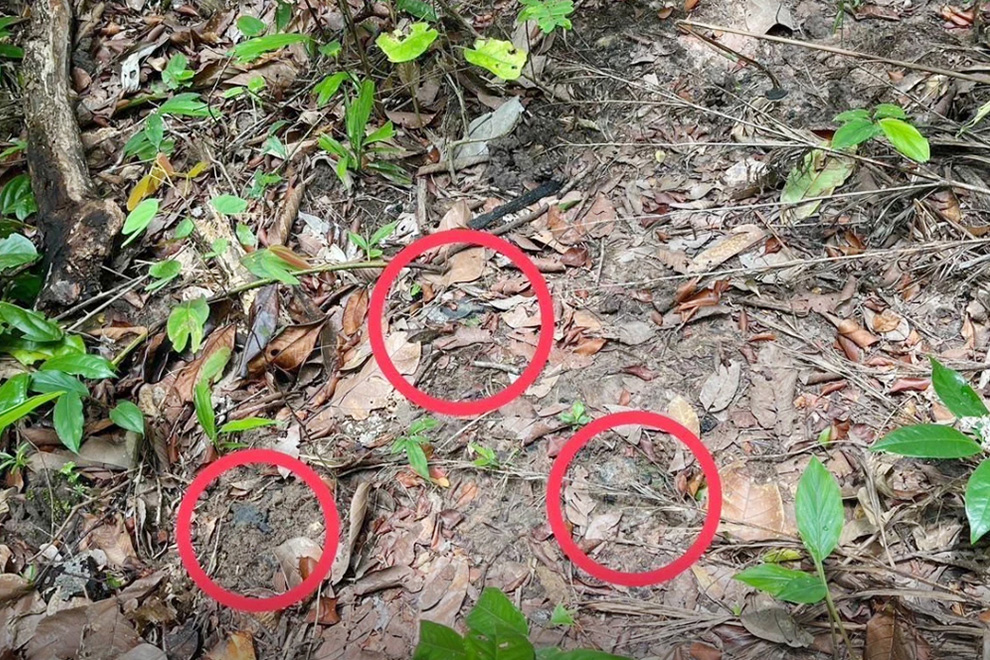
Thailand’s Ministry of Foreign Affairs and the Thailand Mine Action Centre (TMAC) have ramped up their campaign to remove landmines and build infrastructure in disputed areas, seemingly as a means to put pressure on Cambodia.Thailand claims the mines found were newly planted, further fuelling the accusations.
Cambodia has steadfastly denied this, asserting that the landmine in question was a remnant from past conflicts and that Thai troops had unlawfully entered Cambodian territory, triggering the incident.
“The Royal Government of Cambodia categorically denies these baseless and unfounded allegations,” said Cambodia’s foreign ministry, in a July 21 statement.
Thailand’s claims: Landmines and violations
The Royal Thai Army (RTA) briefed military attachés from 47 countries on the situation, asserting that new landmines were planted within Thai territory, in clear violation of the Ottawa Convention, according to Thai media.
A total of 20 military attachés, including the Cambodian military attaché to Thailand, attended the briefing.The Thai foreign ministry claimed that the mines were recently laid and not part of Thailand’s arsenal.
Army spokesperson Major General Winthai Suvaree claimed that the mines were found within Thai sovereign territory, further reinforcing accusations that Cambodia was responsible for placing the landmines.
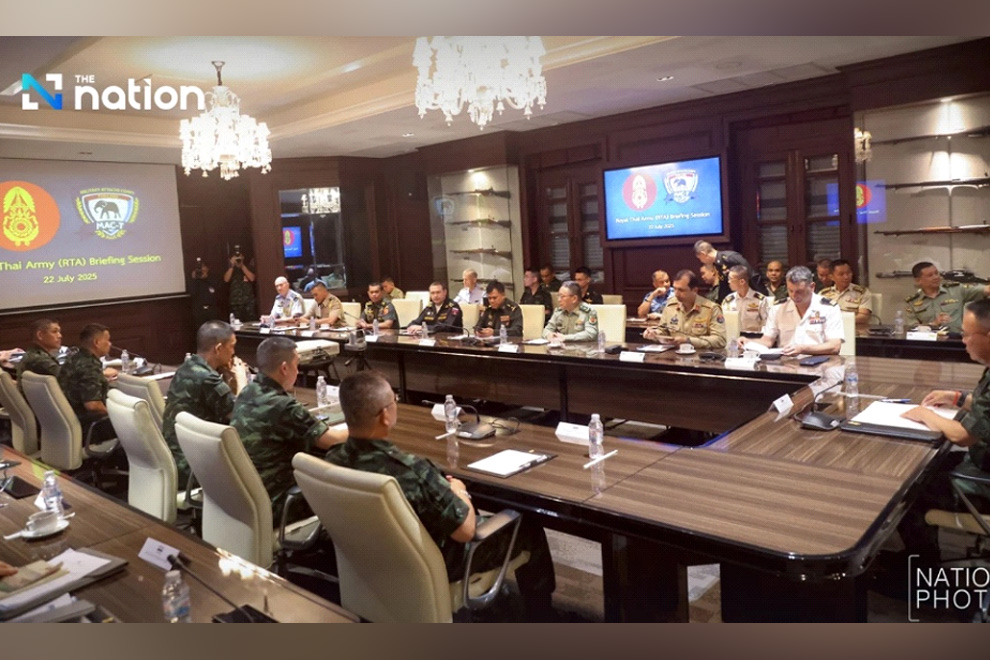
The Nation Thailand cited Suvaree as saying that “the atmosphere was positive, with most attendees listening attentively. Some questions were raised, as many had already received information from other sources”.
“The Cambodian representative did not offer any clarifications or raise any questions,” said the Thai media outlet.
As head of a government body but with no jurisdiction over the military in the Second Army Region, The Nation said Winthai clarified that it remains the responsibility of the units in the field, which he described as “focused on patience, restraint and peaceful solutions”.
Winthai added that the units in the field are responsible for assessing the situation, and urged that people not assume the worst.
“The Second Army Region has consistently stated it is ready to respond through lawful and appropriate means,” said the Thai outlet.
“Meanwhile, the Ministry of Foreign Affairs has provided evidence to each of the represented countries,” it continued.
Cambodia’s denial and fact-based rejection of the accusations
Cambodia has explained that the regretful incident was caused by a remnant of past conflicts.
The foreign ministry confirmed that the incident occurred in Techo Morakot village, an area within Cambodia’s internationally recognised territory. The ministry clarified that the landmine was not a result of any recent Cambodian actions.
Cambodia emphasised its commitment to the Ottawa Convention, which prohibits the use of anti-personnel mines, and reaffirmed its ongoing efforts to clear such remnants from its land.
“As a state party fully committed to the spirit and letter of the Ottawa Convention, Cambodia strongly refutes any suggestion that it has violated its obligations under the Convention,” said a ministry statement.
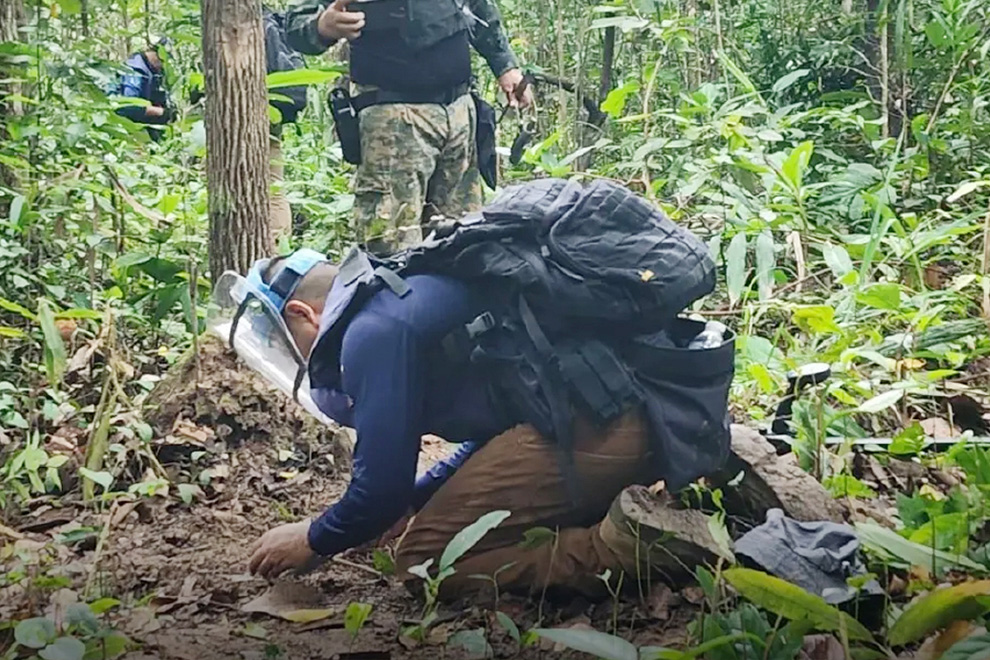
The Cambodian government pointed to the country’s significant progress in clearing landmines and its active role in UN demining operations.
Furthermore, Cambodia rejected Thailand’s claims of having cleared the area, noting that no demining operations had been conducted by Thailand within Cambodian territory.
Prime Minister Hun Manet responded to the escalating situation by warning Thailand not to cross a “red line” in the disputed areas.
He also denounced what he described as misleading information coming from Thai media, accusing them of spreading “fake news” to distort the facts surrounding the incident.
In a social media statement, Manet affirmed Cambodia’s right to defend its sovereignty and vowed to take all necessary steps to protect its territory from any violations.
Cambodia highlighted the growing challenges of fake news and disinformation at the 20th Asia Media Summit (AMS), held in Siem Reap from July 21 to 24.
Notably, Thailand did not participate this year. Minister of Information Neth Pheaktra, in a July 21 press conference, criticised Thai media for spreading “propaganda” to mislead the international community.
“The opposing side [Thailand] often spreads fake news, distorts facts and exaggerates reality to confuse the world about Cambodia,” he said.
“We must respond with truth and accurate information so the world can clearly see what is really happening,” he explained.
Pheaktra also announced that Cambodia will push for a “Declaration on Countering Fake News 2.0” at the summit, focusing on issues like AI and digital media trends.
“It is critical to eliminate disinformation and provide the public with credible, verifiable content,” he added.
This marks Cambodia’s second time hosting the AMS, with Pheaktra describing this as reinforcing the Kingdom’s commitment to responsible journalism.
The foreign ministry said the government has called on Thailand to cease such actions and has urged both nations to seek a peaceful resolution through the International Court of Justice (ICJ).
