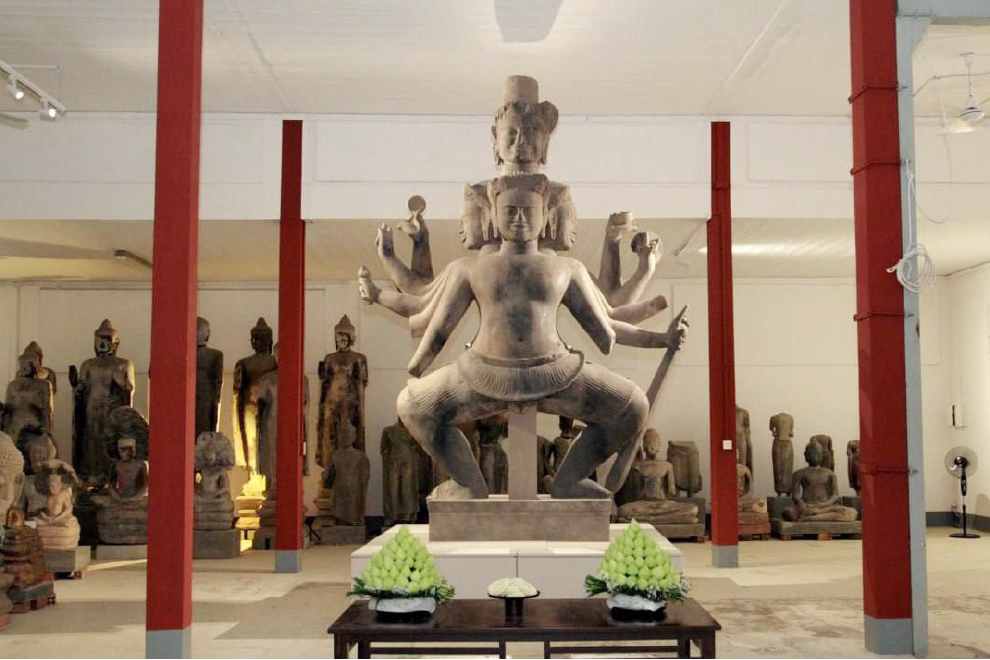
A remarkable piece of ancient Khmer heritage has been brought back to life with the restoration of Cambodia’s largest known statue of the dancing Shiva. Standing about 5 metres tall, the statue is once again wowing visitors, after years of restoration work.
The statue, which features two tiers, five faces, and ten arms, dates back over 1,000 years to the 10th century, and originated from Prasat Krahom in the Koh Ker Temple complex. It was discovered in a severely damaged state, having been broken into more than 10,000 fragments, largely due to looting during the civil war.
The restoration was carried out by specialists from the Preah Vihear National Authority and Trance’s École française d’Extrême-Orient (EFEO), in collaboration with the Angkor Conservation Office and the APSARA National Authority, with support from the ALIPH Foundation.
The fragments of the statue were first collected and catalogued in 2012, before undergoing a meticulous restoration process. Each stage of the reconstruction was carefully reviewed and approved by a committee to ensure adherence to conservation ethics and long-term structural stability.
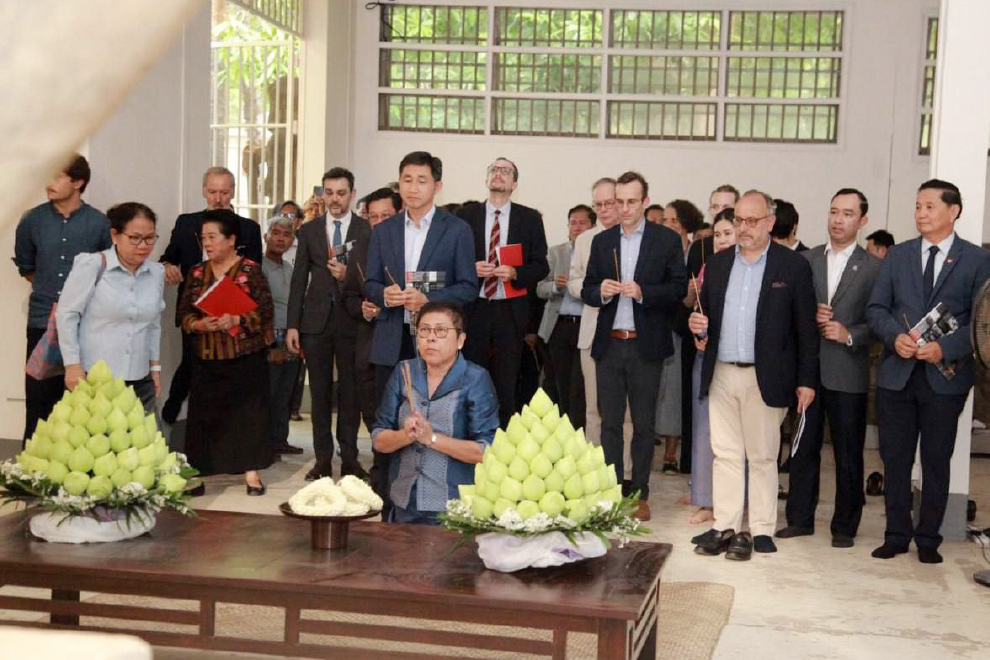

Now fully reassembled, the statue is temporarily housed at the Angkor Conservation facility in Siem Reap, where a celebration ceremony was held on the evening of March 18, presided over by Minister of Culture and Fine Arts Phoeurng Sackona.
Sackona expressed her appreciation to all of the specialists and partners who were involved in the restoration, highlighting the effort to revive a priceless cultural treasure from Cambodia’s past.
“This statue is the largest of its kind in Cambodia and is believed to be one of the largest in Southeast Asia. Its restoration and reappearance breathe life and belief back into our heritage, reconnecting Cambodia’s glorious past with the present,” she said.
She expressed her hope that the statue will eventually be returned to its original location at Koh Ker Temple, where it will once again serve as a sacred object of worship and help attract more visitors to the historic site.
The minister described the restoration as marking a significant achievement in preserving Cambodia’s cultural legacy and showcasing the enduring craftsmanship of the ancient Khmer civilization.