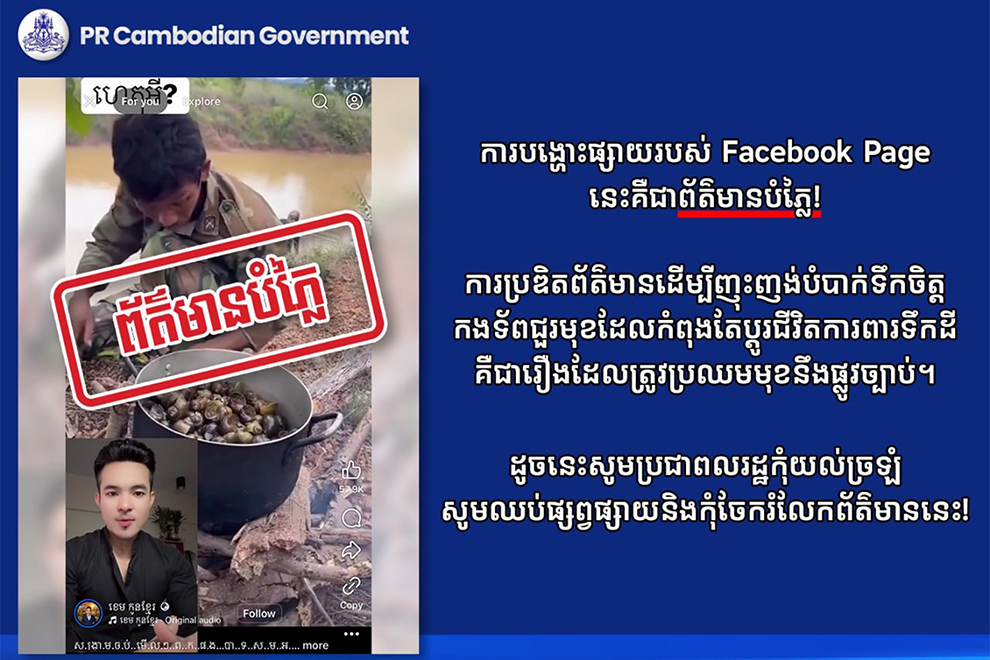
The spread of false information on social media platforms has stirred public confusion and fear, and most worryingly, has disrupted military and police investigations. This has even extended to alerting the enemy to the capture of their own intelligence operatives, warned Cambodia’s Anti-Cyber Crime Department.
The department observed the severe consequences of disinformation during the recent conflict with Thailand.
To prevent further negative impacts, the department has issued guidelines to the public about what kinds of information are appropriate to share and what should be avoided.
Information that should be shared includes official announcements from the Royal Government and military institutions, government and authority-issued guidance, humanitarian aid updates and messages that promote unity and morale among the public.
Information that should NOT be shared includes, fake news and disinformation, rumours or unverified information without clear sources, inflammatory or inciteful content and private details about individuals or families, especially victims or military personnel.
Additionally, the public is strongly advised not to reveal military positions, troop movements, key infrastructure or operations.
They should not share photos, videos or technical details of weapons or military bases – even seemingly harmless images may inadvertently expose sensitive information. They should not livestream or post from active conflict zones, spread unverified reports of casualties or military documents, speculate or repost leaked military information and never discuss specific military units or force types.
Government spokesman Pen Bona echoed this warning during an August 4 press conference, which focused on the current ceasefire. He called on the public to remain vigilant against false or unclear information that could destabilise the situation or manipulate public sentiment.
“To ensure the public receives reliable news, please follow official communications from government spokespersons, press conferences like this one, or the official pages of national leadership,” he said.
These include Prime Minister Hun Manet’s official page, Senate president Hun Sen’s official page, the websites of the Ministry of National Defense, the Ministry of Foreign Affairs and International Cooperation, the Ministry of Information and the Royal Government Spokesperson Unit, as well as other official government pages.
All of these are recognised official sources for accurate and timely government information, he explained.