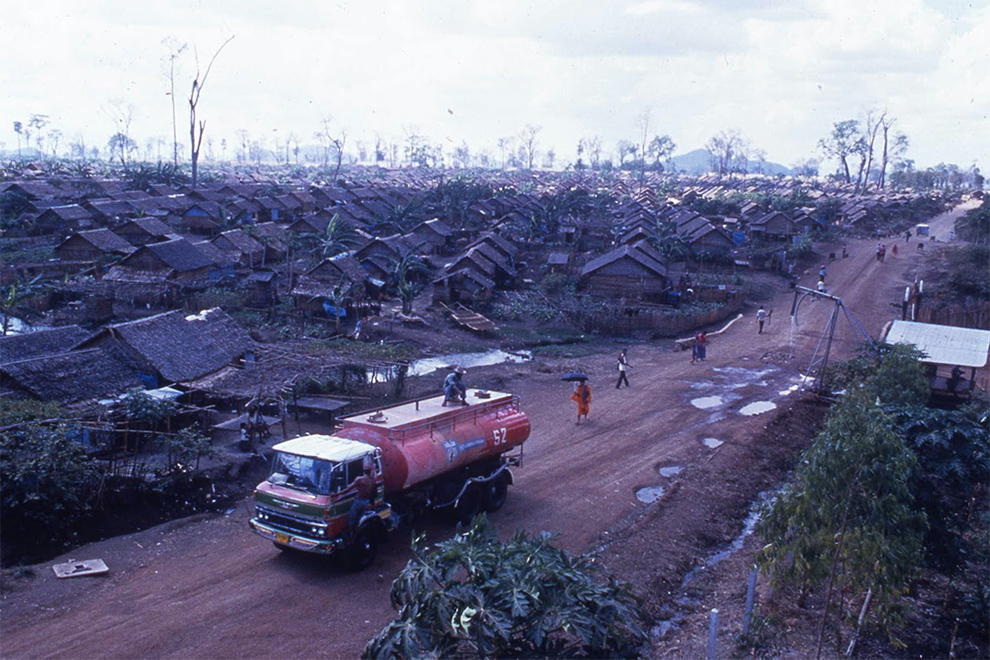
Ros Narith, 59, carries the weight of her memories like the red dirt roads that once crisscrossed the Nong Chan refugee camps along the Cambodia-Thai border. For her, these camps — etched into her life from 1979 to 1992 — are not just places of survival but undeniable proof of Cambodian sovereignty.
Thailand’s claim that Nong Chan and its surrounding areas belong to them is a narrative Narith fiercely rejects, rooted in her lived experience and the scars of a war-torn past.
Narith’s story begins in the dense jungles of Cambodia’s Region 5, where the old Nong Chan camp stood during the Khmer Rouge era.
“This location is situated within our Cambodian territory,” she tells The Post, recalling its original name, O Bei Choan. The camp, about 7 kilometres from the Thai border fence, was a haven for Cambodians fleeing internal conflict.
“The distance from this camp to the Thai border fence was about 7 kilometres. I noticed that the Nong Chan camp was on Khmer land because of the distance… it was quite far,” she says.
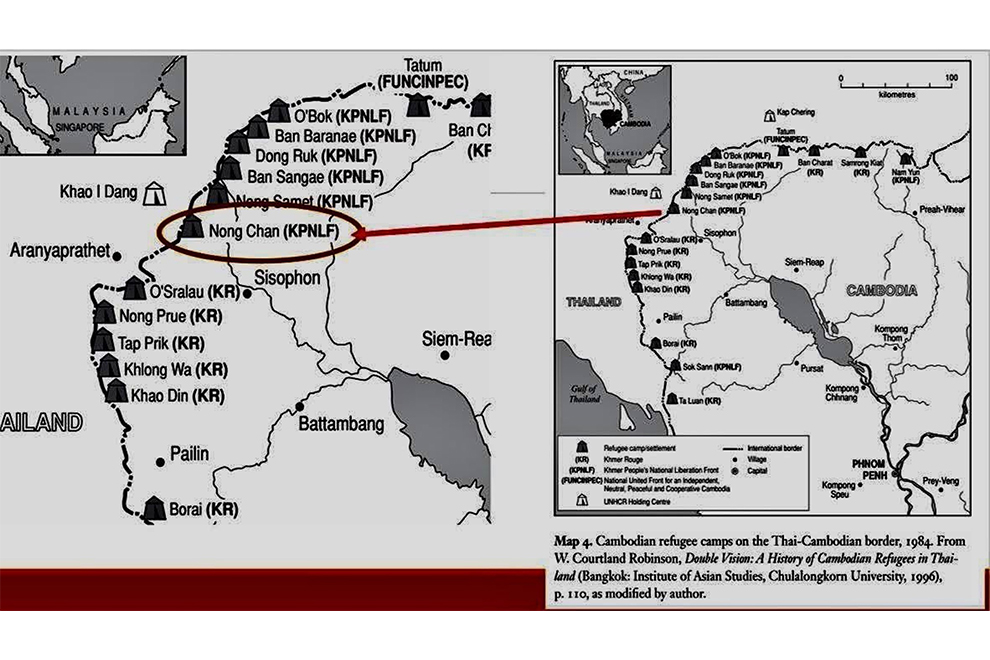

In 1984, a Vietnamese attack destroyed the old Nong Chan camp, forcing Narith to flee to Kruos Krahorm on Thai soil before settling in Site 2, which included the new Nong Chan camp. Site 2 comprised seven camps— Rithisen, Nong Chan, Ampil, Phnom Dangrek, Samlot Chhnoeng, O Bok and Nam Yuen—all, she insists, on Cambodian land.
“All these camps were located within Cambodian territory and had no connection to Thai soil,” Narith states firmly.
She added that UN hired Thais to clear the forested land, and then Thai soldiers used Cambodians as a buffer against Vietnam during their ongoing conflict.
“They used Cambodians as a shield. The bitterness outweighed any cooperation by about 70 per cent,” she recalled.
Life in the camps was marked by hardship and fear. Narith vividly recalls Thai soldiers guarding the border fence, ready to shoot.
“I was furious — I saw it with my own eyes. Thai soldiers shot three or four Cambodians stuck in the canal near the fence,” she recounts.
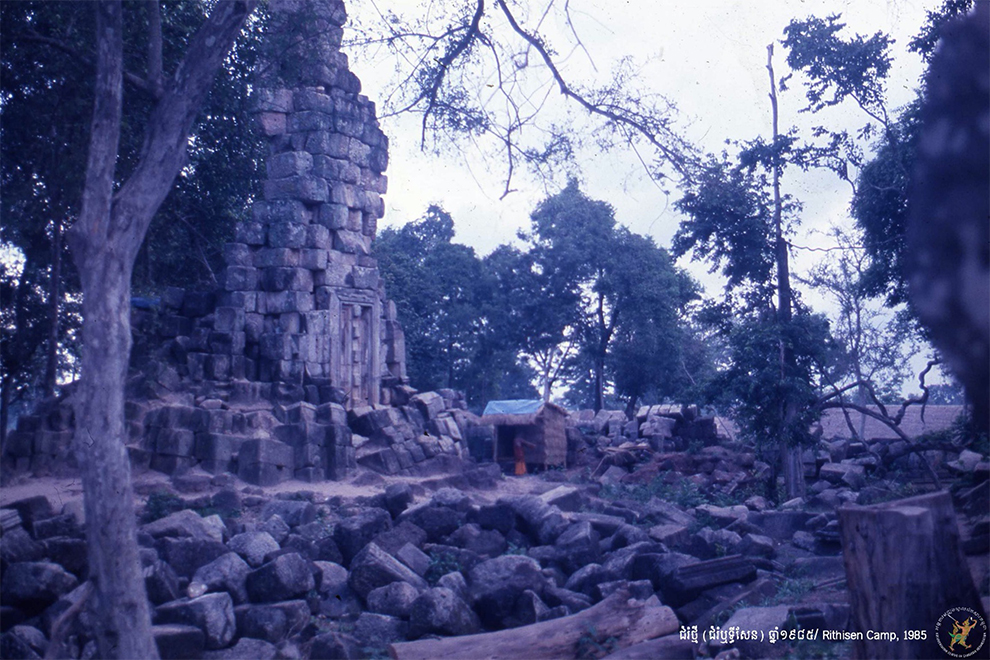
The camps, surrounded by fences on Cambodian soil, restricted movement, preventing residents from gathering food. Worse, she remembers the violence against women.
“Sometimes, young women were raped outside the fence, and we found them completely naked,” she recalls.
When Narith repatriated to Phnom Penh in 1992, she noticed Thailand’s swift encroachment.
“As soon as Cambodians were repatriated, Thai people immediately came to claim the land,” she says.
By 1995, visiting O Bei Choan, she saw new Thai roads cutting into Cambodian territory, with sugarcane fields replacing the jungles where her people once lived. Thailand’s claim to Nong Chan, Narith argues, is a fabrication.
“This is purely Cambodian land, covered with Cambodian jungles. Thailand’s claim that the current Nong Chan area belongs to them is something I absolutely reject,” she said.
Narith’s plea is urgent. She points to the Cambodian Mine Action Centre’s efforts to clear mines from the area, where many lost limbs. Thailand’s push to register land titles for its citizens in these areas, she believes, is a deliberate strategy to seize Cambodian territory.
“I urge the government to address the issue of this land,” Narith says.
For her, Nong Chan is not just a memory — it’s a testament to Cambodia’s resilience and rightful claim, a land her people cleared and defended, never to be surrendered.