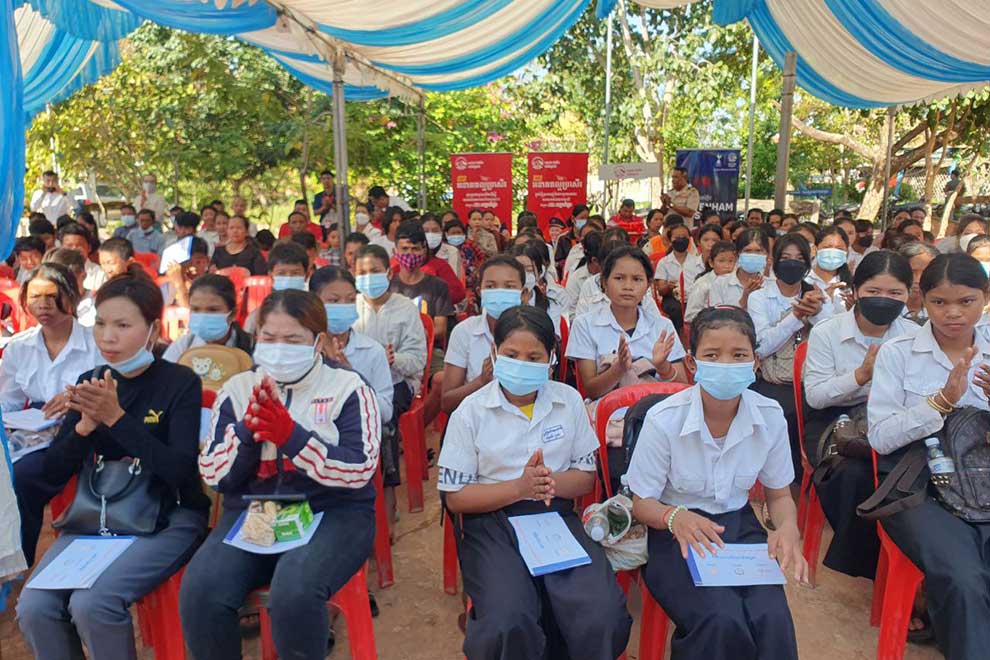
Cervical and breast cancer are two of four non-communicable diseases (NCDs) that are currently on the increase in Cambodia, a senior official from the Ministry of Women’s Affairs said during a recent campaign to raise awareness about the cancer, nutrition and financial knowledge in Siem Reap province.
Ministry secretary of state San Arun said that cancer-caused deaths accounted for more than half of all deaths in Cambodia and the mortality rates of women were higher than that of men.
“We predict that the number of these deaths will rise further as a consequence of changing lifestyles and changes to the environment, including foods,” she said.
She continued that the problem of acute and chronic malnutrition among women and children was still significant and that it seriously affected the development of their health and spirit in subsequent stages of life, such as inability to work due to illness and disability, gender-based violence, poverty and increased spending on healthcare for women and their family members.
Siem Reap provincial deputy governor You Sophea said the campaign was conducted to increase awareness about all of these problems.
“We aim to provide people with knowledge so that they will know to check for breast cancer on their own and to go in for timely treatment at health clinics as well as gain understanding of nutrition and change their habits to begin eating healthy foods,” she said.
She continued that the campaign would largely benefit women and their family members and would also hopefully contribute to a reduction in the death rate of Cambodians due to NCDs.
She said the action plan focuses on two-important points – preventing people from developing NCDs and mitigating the seriousness of the condition of patients who already carry NCDs so that they will not become disabled or die prematurely.
“We could prevent 80 per cent of NCDs if we had more effective interventions. And the patients already dealing with NCDs could maintain better health and live normal lives with their families,” Sophea stated.
She said people must take care of their health through a combination of primary healthcare and self-management in order to reduce the risk of NCDs from sources such as alcohol, tobacco, salty and fatty foods, and that they must also exercise regularly.
She noted that cervical cancer is caused by the human papillomavirus (HPV) and therefore all women are at risk of developing it unless they are vaccinated against HPV.
The World Health Organisation (WHO) estimates that, globally, cervical cancer is the fourth most frequent cancer in women with an estimated 604,000 new cases in 2020. Of the estimated 342,000 deaths from cervical cancer in 2020, about 90 per cent occurred in low- and middle-income countries.