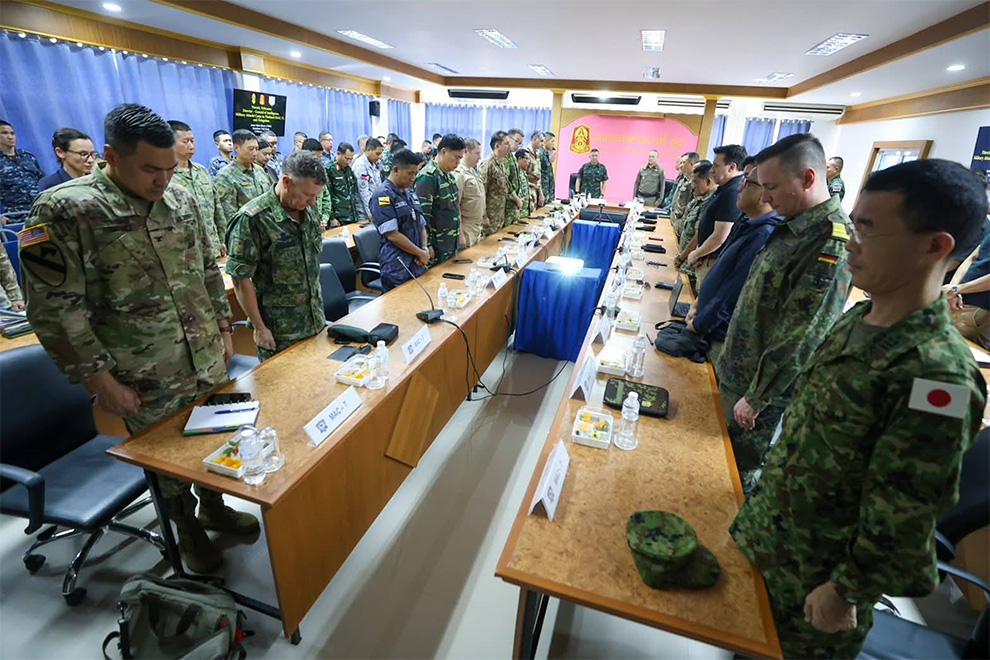
On February 2, Thailand’s military intelligence chief led a highly publicised tour to the Thai–Cambodian border, bringing foreign military attachés from approximately 20 embassies together with officers of the US Federal Bureau of Investigation (FBI). Thai authorities presented the visit as an “open house” briefing, alleging that compounds across the border — including locations near O’Smach — were linked to large-scale scam operations targeting victims worldwide.
Transnational fraud is a serious regional challenge. Criminal networks operating across borders cause real harm, and cooperation among states is necessary. The issue, however, is not whether crime exists. The issue is whether criminal allegations can be used to justify military coercion against the sovereign territory of another state.
Under international law, suspected crime does not suspend sovereignty, does not expand jurisdiction and does not permit force.
The O’Smach area toured by Thai authorities, foreign embassy military personnel and FBI officers is Cambodian territory. Cambodia maintains that Thailand seized and continues to occupy this territory by force. Thailand has not returned it.
Crime Claims, Military Cover
If Thailand’s objective were genuinely law enforcement, lawful mechanisms already exist: mutual legal assistance, extradition, joint investigations and civilian judicial cooperation.
These are the only legitimate frameworks for addressing transnational crime. Criminal jurisdiction is territorial. Enforcement inside another state requires consent and lawful process.
Allegations of scams do not give any country the right — under Cambodian law, Thai law or international law — to enforce its domestic criminal laws inside Cambodia. No state may invade, occupy or militarise another state’s territory under the guise of “anti-scam enforcement”.
Invasion cannot be law enforcement.
This Is Invasion
Thailand’s actions are not policing. They are armed aggression. Cambodia has characterised Thailand’s sustained military operations deep inside Cambodian territory as a war of invasion, incompatible with any claim of legitimate enforcement.
Credible reports confirm military activity affecting multiple Cambodian provinces, including:
Aerial bombardments in Battambang Province around Phnom Sampov;
Airstrikes in Srei Snom District, Siem Reap Province, near the Angkor temple complex;
Military activity near the Preah Vihear Temple, a site of exceptional cultural and historical importance.
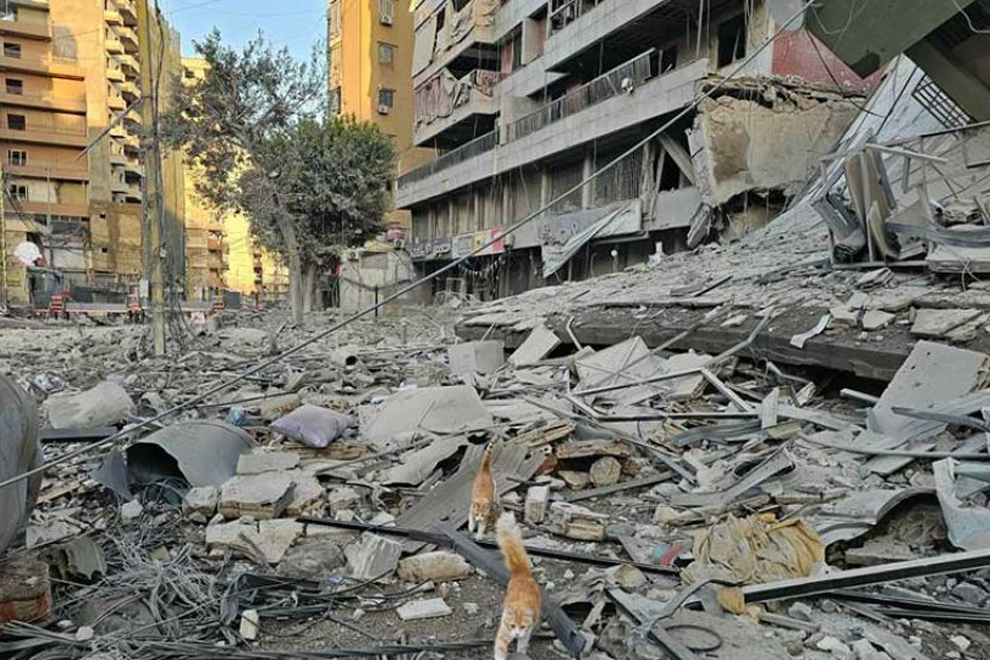
Airstrikes near civilians and protected heritage sites are not law enforcement. They are warfare and grave violations of sovereignty.
Cluster Bombs and Gas Poisoning Attributed to Thai Forces
Cambodia’s Mine Action Centre (CMAC) and other public reports have raised grave concerns regarding the weapons used during hostilities. CMAC has documented unexploded cluster munition remnants inside Cambodian territory, demonstrating the indiscriminate nature of the force employed.
Reports have also alleged the use of toxic or incapacitating gas during engagements. Such conduct is irreconcilable with any claim of policing.
The use of heavy military force and indiscriminate weapons confirms that this was never an “anti-scam” operation. It was armed aggression consistent with a war of invasion.
No Right to Invade
International law is unequivocal: Criminal allegations do not grant the right to use force. No doctrine permits invasion or occupation on the basis of suspected crime. The UN Charter prohibits the threat or use of force against the territorial integrity of any state. The lawful response to crime is cooperation and judicial process — not bombs, occupation, or coercion. Force is not law enforcement. Invasion is not justice.
Diplomacy as Theatre
The delegation was led by Thailand’s military intelligence leadership and included foreign embassy military attachés alongside officers of the US FBI. This was not neutral observation. It was political theatre.
Criminal justice is pursued through civilian institutions, not military tours staged on contested territory. When foreign officials are brought into such a spectacle, the purpose is strategic signalling, not lawful cooperation.
Occupation cannot be legitimized by international attendance.
No Sovereignty, No Peace
Territorial sovereignty is the foundation of international order. Each state has exclusive authority within its borders. No accusation from across a border diminishes that rule.
Non-intervention is equally binding. States may not interfere in another state’s domestic affairs through force, intimidation, or military pressure. Crime prevention cannot be used to normalise occupation or coercion.
No Closure
While active hostilities arising from Thailand’s invasion of Cambodia ceased in late December 2026, sovereignty, accountability and legal responsibility remain fully engaged. The end of fighting does not erase the consequences of invasion.
Thailand’s claimed focus on scams cannot justify invasion, occupation or armed force against a neighbouring state. Criminal allegations confer no lawful basis for territorial intrusion.
Law enforcement operates through consent and law. Aggression operates through force. One cannot lawfully be disguised as the other.
Non-Interference on Trial
As ASEAN members, Cambodia and Thailand are bound by commitments to sovereignty, non-interference and peaceful settlement of disputes.
Cambodia remains a sovereign state with functioning institutions capable of addressing criminal activity within its jurisdiction. Scam allegations do not diminish Cambodia’s legal status, and they cannot justify unilateral military pressure, occupation or invasion.
No Pretext for Invasion
Transnational scams require coordinated regional responses. But sovereignty is not negotiable, and international law does not permit militarisation to be justified by suspected crime. If Thailand claims its actions were about scams rather than confrontation, that claim collapses in the face of invasion, occupation, bombardment and coercion.
Aggression cannot be framed as law enforcement. No border tour, no enforcement narrative and no criminal allegation can erase the fundamental truth: sovereignty cannot be occupied, and invasion cannot be legitimised by spectacle.
Panhavuth Long is founder and an attorney-at-law at Pan & Associates Lawfirm. The views and opinions expressed are his own.