



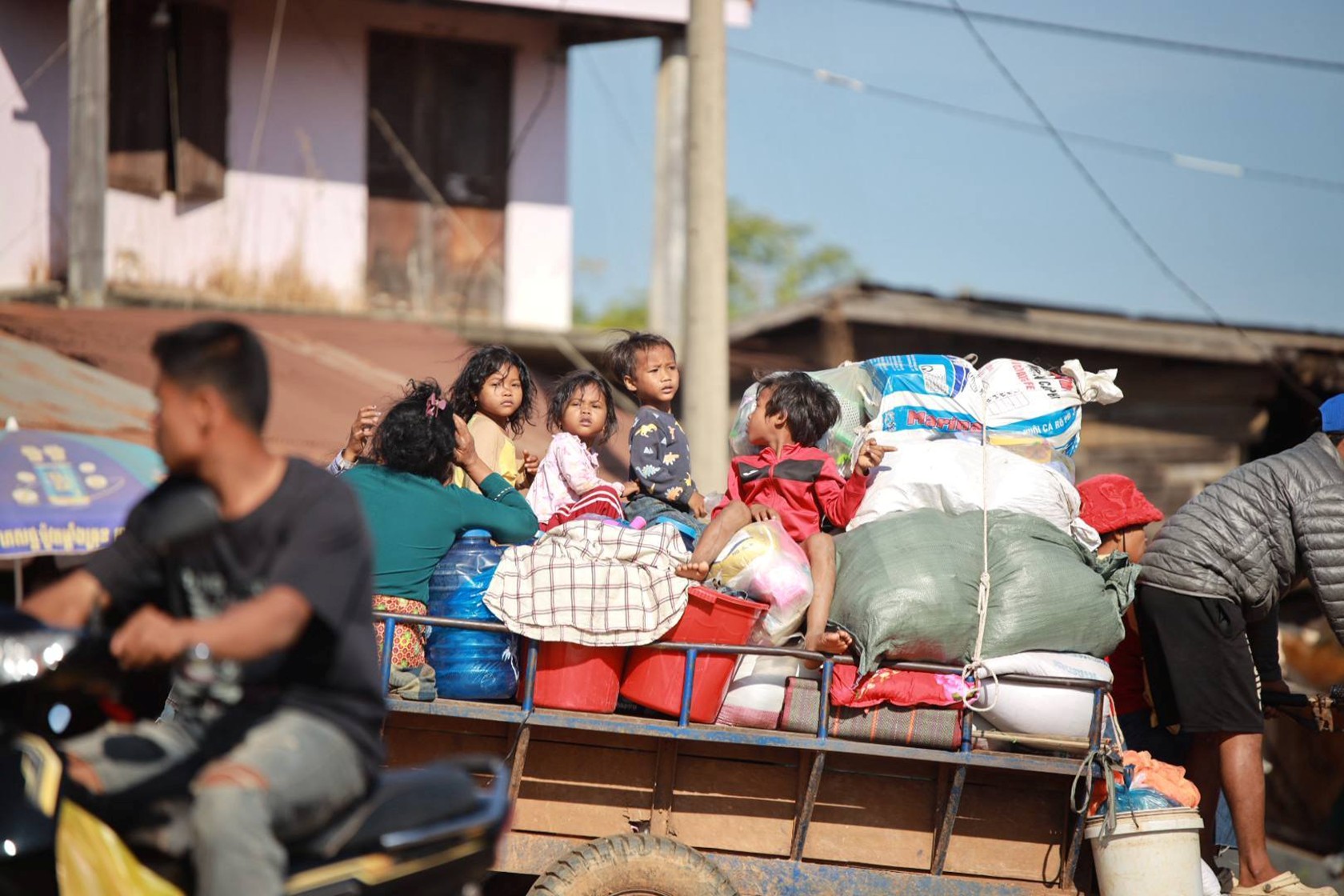
I have lived through one of the darkest chapters in my country’s history. During the Cold War, Cambodia became an unwilling battleground as superpowers tested their weapons and ideologies. From 1970 to 1993, countless lives were lost, families shattered and a nation traumatised. That ordeal left a deep mark on me, and I fear the younger generation may face similar horrors if the lessons of history are forgotten. Today, more than ever, ASEAN leaders have a responsibility to ensure that peace endures and that the region remains a space of stability, prosperity and harmony.
The contemporary world, however, presents new and complex challenges. The strategic competition among the US, China and Russia is no longer limited to diplomacy or trade — it is increasingly shaped by the deliberate creation of overlapping buffer-zone chains. These zones, once intended to reduce friction between powers, now function as militarised frontlines, designed to project influence, deter rivals and control strategic corridors.
For Russia, buffer zones such as Ukraine, Eastern Europe and parts of Central Asia are considered essential defences against perceived encirclement by NATO. For the US, global alliances — from NATO to security partnerships in the Middle East and Indo-Pacific — form a layered defence network, including the “island chain” strategy in Asia:
• First Island Chain: From Japan through Taiwan, the Philippines, to Borneo, forming the immediate line of defence against China and securing critical maritime routes.
• Second Island Chain: From the Ogasawara Islands through Guam and the Northern Mariana Islands to Palau, serving as a secondary layer to distribute forces and complicate adversary movements.
• Third Island Chain: From Alaska through Hawaii to New Zealand, representing the outermost perimeter of US strategic interests.
China, rising later as a global power, views Taiwan, the Korean Peninsula, the South China Sea and parts of mainland Southeast Asia as vital buffers to safeguard its coastline, trade routes and political system. Beijing’s approach combines infrastructure development, maritime presence, military modernisation and diplomatic influence.
Across these three powers, buffer zones are increasingly militarised with advanced weapons systems, cyber and space capabilities, and frequent provocative military exercises. What is often presented as deterrence can easily escalate into coercion, narrowing the space for diplomacy and increasing the risk that local disputes become international crises.
Southeast Asia is particularly exposed. Situated at the crossroads of maritime and continental power corridors, the region risks becoming a contested buffer zone if ASEAN unity falters. Political fragmentation, alignment with one power over another, or failure to maintain strategic neutrality could transform our home into a theatre of great-power rivalry, with consequences far beyond our control.
For ASEAN, neutrality is not just a principle — it is a survival strategy. A united, non-aligned and diplomatically central ASEAN can preserve regional autonomy, foster economic prosperity and protect future generations from the devastation I witnessed in Cambodia. ASEAN must remain a bridge, not a battleground. Dialogue, restraint and collective agency are our strongest shields against the spillover of global confrontation.
I write this letter with a personal plea and a shared hope: may ASEAN safeguard lasting peace in Southeast Asia, ensuring that the ordeals of the past never repeat themselves, and that young generations can grow up in a world of stability, cooperation and mutual respect.
Tesh Chanthorn is a Cambodian who longs for peace, The views and opinions expressed are his own.
