



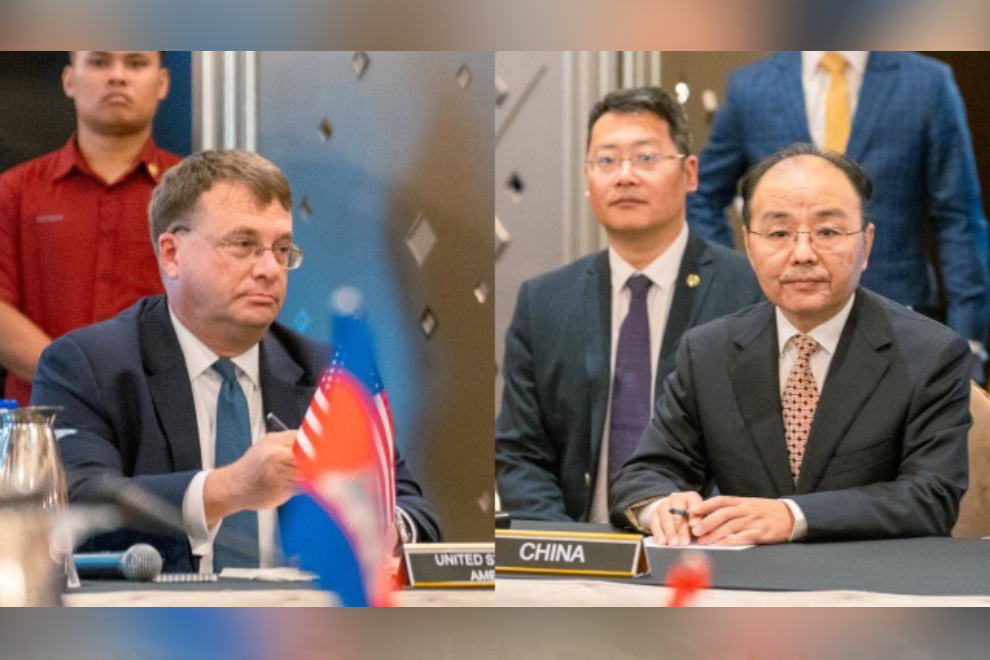
The Cambodia–Thailand border conflict is complex. It has resurfaced time and time again and it will be a long time before it is solved. The origin of the conflict does not only involve overlapping border claims but also concern the issues of the colonial legacy in the past. The issue is also driven by Thailand’s domestic politics, military actions and its constant change of leadership as well as the ineffectiveness of the current international mechanisms for conflict prevention and resolution.
The Cambodia-Thailand border conflict is not a new case to ASEAN. Thai government, military and royalist groups have often used border disputes as a symbol of national security and loyalty to the monarchy. Recalling the 2008 clash between Cambodia and Thailand over the Preah Vihear Temple and the 2011 flighting over the Preah Vihear Temple area, it is reasonable to say that Cambodia won when the Preah Vihear Temple was once again declared as Cambodian territory by UNESCO World Heritage. In 2013, the International Court of Justice again accepted that the Preah Vihear Temple areas belonged to Cambodia, although there were some exceptional areas left unsettled.
Recently, the two sides have confronted each other again in the undemarcated border areas. The five days of fighting from July 24 to 28 had a negative impact on both countries, with at least 43 killed and many injuries, as well as the displacement of hundreds of thousands of people.
Additionally, the trade between the two countries fell to almost zero due to the border closure. Domestic political instability, weak leadership from the Pheu Thai Party and the quest for power by some minor groups gave the green light to the military to play an important role in the 5-day conflicts with Cambodia.
Cambodia needs peace
Cambodia – as a small and developing country – has taken a defensive military stance to defend its own sovereign territory from Thailand’s invasion. The government of Cambodia has made it clear that Cambodia wants peace and development, but it will not fail to take the last resort to defend its territory even through military confrontation.
Cambodia’s stance has been very clear since the beginning.
It wanted to end the conflict via the peaceful resolution, as evidenced by its effort to seek regional and international mediations from ASEAN, the US and China.
Notably, US President Donald Trump intervened diplomatically to de-escalate the situation. Trump used the carrot and stick approach to ensure that both sides are disciplined by using trade negotiations as a means to bring them to the table.
In the meantime, even though China called both countries to remain calm and bring the issue to negotiation, Thailand did not stop its aggression toward Cambodia. Eventually, Thailand and Cambodia agreed to an immediate and unconditional ceasefire on July 28, 2025, following five days of deadly border conflict.
The ceasefire was agreed in Malaysia, hosted by Prime Minister Anwar Ibrahim, who serves an ASEAN chair. The ceasefire agreement was also facilitated by both the US and China.
A few days after the ceasefire, Trump approved a significant reduction in import tariffs on Cambodian goods, slashing the reciprocal tariff rate from 36% to just 19%. Thailand received the same rate.
Is Cambodia getting closer to the US?
In addition to the zero tariffs on US import, which was announced by the Cambodian government in response to the Trump administration’s reciprocal tariffs, the Kingdom also showed its appreciation by nominating Trump for the Nobel Peace Prize, despite some criticism by international journalists and analysts. Trump expressed his sincere gratitude, noting in a letter to Prime minister Hun Manet that “Now we can focus on prosperity for our two great countries”.
The statement by the US president has shown that Cambodia is not forgotten in the international affairs and that its voice matters. This episode seems to suggest that Cambodia is now getting closer to the US. Is this true?
Despite the latest developments in favour or Cambodian-US relations, Cambodia now must uphold its independence in decision making and engage with both US and China.
China has positioned itself as a potential major influencer in Southeast Asia and beyond. Wang Yi, Chinese foreign minister, told the ASEAN Foreign Ministers’ Meeting, on July 11 in Kuala Lumpur that “Beijing was prepared to uphold an objective and fair position and play a constructive role for the harmonious coexistence between Thailand and Cambodia” and that China stands ready to assist.
This clearly shows that China has chosen a neutral and ambiguous position in this matter with diplomatic efforts which has seen less effective outcome in this recent border conflict. The US, on the other hand, by using the pressure which was initiated by President Trump, contributed to the quick ceasefire agreement. The effort from Trump may overshadow China’s diplomatic efforts. A recent meeting between Cambodian and Thai top diplomats, hosted by the Chinese vice foreign minister on July 30, reflected China’s desire to stay engaged.
Cambodia’s diplomatic diversification
This diversification is very important for Cambodia in terms of economic engagement. Cambodia has made a smart move which does not just benefit US exporters but also presents a significant economic opportunity for Cambodia’s energy sector and overall economy.
Given that fuel prices in Cambodia exceed $1 per litre — far higher than in the US, where prices are generally around a quarter of that — eliminating import tariffs on American oil will allow Cambodia to reduce domestic fuel costs substantially. Cheaper energy translates into lower production costs across industries, encouraging increased manufacturing, agricultural output and services growth.
However, while the prospect of closer trade ties with the US is lucrative, Cambodia must remain cautious amid the fluid nature of American trade policy. Recent US court rulings on tariffs highlight the unpredictability and complexity inherent in US economic policymaking.
Washington’s approach under President Trump — and continuing thereafter — has been highly transactional and occasionally inconsistent, with tariffs, sanctions and trade negotiations shifting rapidly based on domestic political considerations and global strategic interests. Such volatility means that Cambodia cannot afford to rely too heavily on any single external partner, no matter how financially attractive the relationship may appear.
Cambodia’s pragmatic foreign policy
Prime Minister Hun Manet’s participation in the Shanghai Cooperation Organisation summit was a clear signal of Cambodia’s commitment to engaging with regional multilateral platforms and maintaining dialogue with Beijing. Although Cambodia’s stance toward China has been moderate to some extent, reflecting wariness over China’s assertiveness and the recent border conflict with Thailand, the overall relationship remains foundational.
It is worth recalling one of the most famous Chinese proverbs, “Cat Theory”, which was quoted by Chinese leader Deng Xiaoping who was known as the main driver of economic reform in China. He said that “it doesn’t matter if a cat is black or white. If it catches mice, it’s a good cat”.
Thus, Cambodia’s foreign policy reflects a sophisticated balancing act — one that acknowledges the economic benefits and strategic importance of deepening ties with the US while preserving the invaluable partnership and economic interdependence with China. This pragmatic approach ensures that Cambodia remains open to the Western world without alienating its traditional partners in the Eurasian sphere.
Cambodia’s zero-tariff policy toward US imports is a forward-looking step to invigorate its economy through more affordable energy and strengthened trade links. At the same time, careful management of unpredictable US trade policies and continued engagement with China ensures Cambodia’s foreign relations remain resilient and multifaceted.
This nuanced approach equips Cambodia to navigate the evolving geopolitical landscape, securing sustainable growth and promoting peace in the region.
Sokphal Chan is a freelance journalist with a focus on diplomacy and security issues. The views and opinions expressed are his own.
