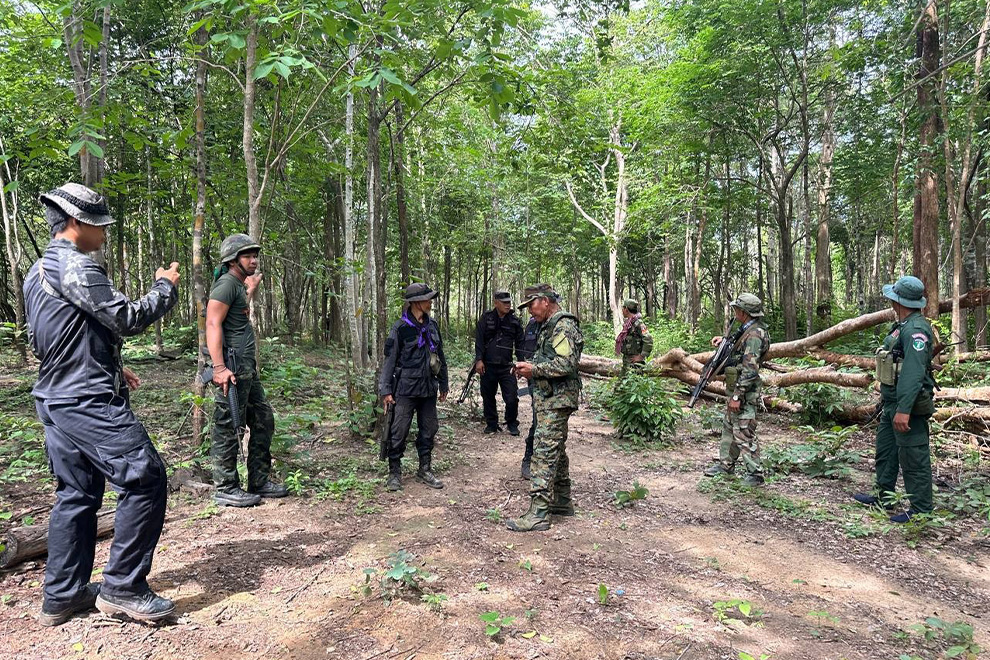
The Thai military’s recent allegations — especially those made by Lt. Gen. Boonsin Phadkhang of the 2nd Army Region — that Cambodia deliberately laid new landmines resulting in injuries to Thai soldiers, are not only unfounded but recklessly irresponsible. These allegations, echoed by Thailand’s acting defence minister, are not rooted in any credible forensic evidence but appear to be a politically motivated attempt to shift blame, provoke hostility and unjustly tarnish Cambodia’s international image.
According to the Thai commander’s statement, the official investigation supposedly concluded that “new Cambodian landmines” were planted on Thai soil, and Thailand now intends to take the matter to the UN. But let us be clear: no credible investigation has been made public, no transparent evidence has been presented and the Cambodian side — who should have been a party to any genuine inquiry — was never involved. This is not a search for truth; it is a staged narrative with ill intentions to hide their provocation.
The Cambodian Mine Action and Victim Assistance Authority (CMAA), along with director-general Heng Ratana, have already refuted these false claims. Cambodia has long been committed to mine clearance under the 1997 Ottawa Convention, also known as the Mine Ban Treaty. Article 5 of this treaty outlines each state party’s responsibility to clear mined areas under their jurisdiction and control. If landmines were found inside Thailand’s territory, then by international law, Thailand bears the responsibility to investigate, secure and remove them — not to blame its neighbour without proof.
Even more damning for the Thai narrative is what’s happening on their own social media platforms. Numerous Thai users have circulated videos and images implicating Thai troops themselves in planting landmines. These are not claims from Cambodia — they are from within Thailand. Despite this, there is no indication that Thai authorities or affiliated demining organisations have launched any credible investigations into this possibility. Instead, they have chosen the route of accusation over accountability.
If Thailand truly believes this issue is serious enough to merit UN attention, then let it take the proper route. Let us jointly submit the matter to the International Court of Justice (ICJ) — a legitimate arm of the United Nations tasked with resolving such disputes. There, facts will matter. Forensic analysis will matter. The truth will matter.
Cambodia does not fear international scrutiny. Our record on demining, peacekeeping and post-conflict recovery is well-respected globally. What we oppose is the manipulation of facts and the weaponisation of border tensions for political gain. We will not sit silently while our country is falsely labelled an aggressor, especially by a neighbour who has its own deep-rooted challenges with military transparency and human rights.
In truth, this landmine incident — and Thailand’s response to it — says less about Cambodia and more about the desperate tactics of a Thai military establishment seeking to stoke nationalism at home while dodging international responsibility.
If Thailand seeks peace, let it act with integrity. If it seeks justice, let it cooperate through legal channels to ICJ. But if it continues with this path of lies, Cambodia and the world will expose it for what it is: a dangerous provocation based on falsehoods, not facts.
Roth Santepheap is a geopolitical analyst based in Phnom Penh. The views and opinions expressed are his own.