



Peace is always a hard-fought condition, and while we should celebrate any milestones in securing it, we must also be mindful that peace is fragile and requires constant vigilance.
It is routinely said that in times of peace you must always prepare for war, and while there is some truth to this statement, there are other tools that are also necessary in supporting peace and preventing war.
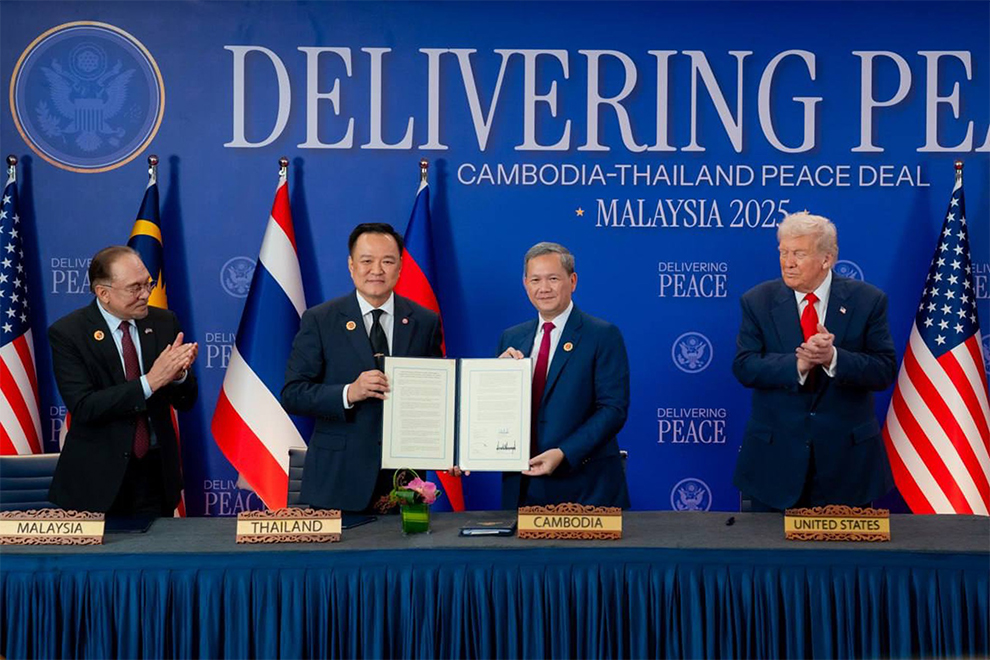
With a peace agreement now in place, Cambodia needs to continue its commitment to its borders, the military and the development of its human capital with research, resources and education.
To this end, Cambodia must invest in developing a military history education programme. All conflicts are intertwined with history, but history is perhaps even more important in this conflict because Thailand’s chief claims to the territory are wrapped within a deep-seated historical revisionism. The future for sustained peace can only be secured by confronting this history, which begins with research and the development of a comprehensive programme.
Military history, however, is not enough. Cambodians need to also learn the history of its neighbours and Cambodia’s relationship with the region and the world.
For how can Cambodia truly become a strategic partner with its neighbours and the world if it doesn’t understand the history that informs the regional and global political economies? Strategic leadership requires not only a strong understanding of oneself and country but also all other countries.
In addition to learning more about history, there must be resources committed to the nation’s borders. Cambodia can look to the US as one example of how to prioritise border security. Cambodia’s borders must be more than abstract lines on a map. Cambodia’s defence of its territory depends on a multifaceted approach. Military presence, economic development and political commitment are the key factors that will demonstrate Cambodia’s sovereignty over all its land. Lacking any of these factors invites future challenges and conflict.
Finally, what is the use of land without people? Consistent with Prime Minister Hun Manet’s Pentagonal Strategy, Cambodia must continue to build up its human capital, not only in cities but in remote areas like Cambodia’s borders. Cambodia’s peace with its neighbours has been greatly strengthened by the US-brokered peace agreement, but we must remain vigilant by continuing to invest in research, resources and education that will enable peace for the future.
Youk Chhang is director of the Documentation Center of Cambodia (DC-Cam). The views and opinions expressed are his own.
