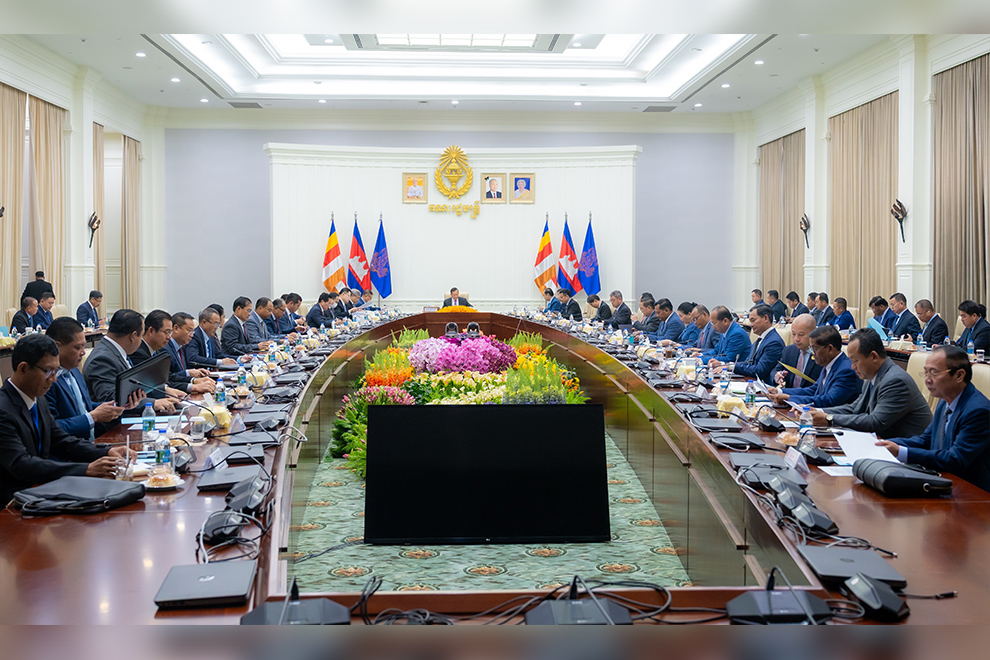
In the face of a rising tide of transnational cybercrime, Cambodia has become a regional frontrunner in the global fight against online scams — a threat that transcends borders, exploits vulnerable populations and undermines the international rule of law. What began as a decisive initiative during the sixth legislative mandate has now evolved into a national security imperative under the bold and reform-driven leadership of Prime Minister Hun Manet.
A recent directive from the Royal Government of Cambodia marks a watershed moment in this campaign. Far more than a policy document, it is a national call to arms — mobilising every sector of government to eradicate online scam networks, protect victims and restore integrity across our digital and physical landscapes.
A Legacy of Leadership: Foundations Built in the sixth Mandate
Cambodia’s anti-scam journey did not begin overnight. Under the sixth mandate, the government laid critical foundations: dismantling scam compounds, rescuing victims — many of them foreign nationals — and launching formal cooperation with embassies, UN agencies and regional partners. Law enforcement operations, once reactive, became increasingly strategic and intelligence-led. What was once seen as a domestic concern quickly came to be recognised as a global responsibility.
These early actions earned Cambodia recognition not just for intervention, but for transparency. The Kingdom did not hide the problem — it confronted it.
The seventh Mandate: A Whole-of-Government Mobilisation Under Hun Manet
Under the seventh mandate, Cambodia has elevated its efforts to a national offensive — with the prime minister leading from the front. The recent directive outlines a comprehensive, enforceable strategy that leaves no room for ambiguity or inaction:
1. Unified Government Action: Inter-ministerial coordination — spearheaded by the Ministries of Interior, Labour and Justice — ensures high-level enforcement across casino zones, tech hubs, business complexes and high-risk border areas.
2. Local Leadership Accountability: Provincial governors and local authorities are no longer passive observers; they are empowered and held directly accountable for monitoring, reporting and dismantling scams within their jurisdictions.
3. Human-Centred Rescue and Recovery: Cambodia has prioritised the humane treatment of rescued victims — ensuring safety, psychological support and legal protection, regardless of nationality.
4. Targeted Prosecution: Authorities are pursuing perpetrators at all levels — from front-line recruiters to top-tier syndicate leaders. There is no tolerance for impunity.
5. Public Education and Global Coordination: Public awareness campaigns are expanding nationwide. Simultaneously, Cambodia continues to share intelligence and operational cooperation with ASEAN, INTERPOL and other international allies.
This strategy reflects the maturity of a state that has moved from reactive enforcement to proactive leadership. Cambodia’s message is clear: We are not a safe haven for criminal syndicates. We are the front line of resistance against them.
Facing the Critics: Cambodia Is Doing the Work
In some international media and forums, Cambodia has been unfairly mischaracterised as complicit or complacent. Yet the reality on the ground tells a profoundly different story.
Thousands of victims from more than 20 countries have been rescued. Hundreds of suspects — foreign and local — have been arrested and prosecuted. Cambodia has opened its doors to cooperation, allowed in international observers and worked hand-in-hand with affected governments. We have matched words with action — and results. Rather than being lectured, Cambodia deserves to be supported.
A Global Challenge Needs Global Partnership
The scourge of online scams cannot be solved by one country alone. This is not just Cambodia’s burden — it is a shared threat to the digital economy, to cross-border security and to human rights.
The Kingdom urges its international partners to shift from criticism to collaboration, from suspicion to solidarity.
Prime Minister Hun Manet has set the tone unequivocally: “Cambodia will not tolerate criminal operations that exploit its territory or its people”.
This is not political posturing. This is a governing doctrine. Under his leadership, Cambodia is no longer merely responding to a threat — it is helping lead the global counteroffensive.
Much work remains. Scam operations will continue to mutate, rebrand and relocate. But Cambodia has made its stance clear: we will not retreat. The Kingdom will continue expanding its enforcement capacity, tightening cross-border legal mechanisms and working with the international community to ensure that no criminal syndicate finds sanctuary within our borders.
Cambodia is standing up not just for itself — but for a safer region and a more just world.
Roth Santepheap is a geopolitical analyst based in Phnom Penh. The views and opinions expressed are his own.