



In conflicts, the first casualty is often truth. When artillery starts flying and governments trade blame, the public is left with two competing stories and no trusted referee. That is why satellite imagery matters. It cannot replace diplomacy, but it can narrow the space for propaganda, reduce the incentive to escalate and help mediators hold both sides to their own promises.
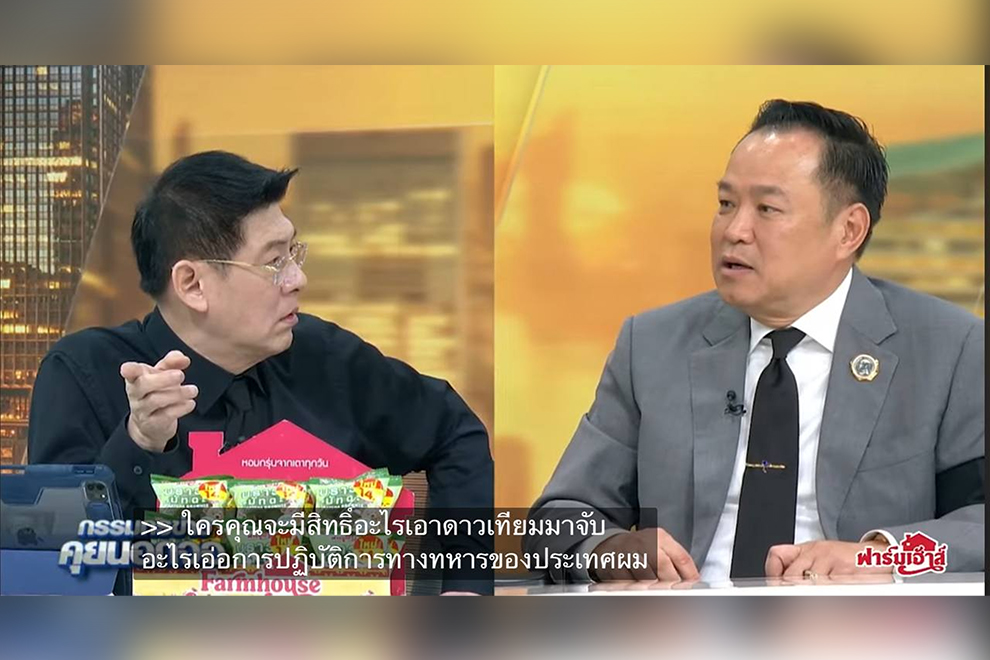
That is also why Thai Prime Minister Anutin Charnvirakul’s December 15 television interview should concern anyone who still believes this renewed Cambodia-Thailand conflict can be contained through ASEAN norms and international mechanisms. During the interview, responding to Cambodia’s proposal that the US and Malaysia use satellite imagery to verify who fired first on December 7, Anutin pushed back sharply and effectively saying: “who are you and what right do you have to use satellites to scrutinize my country’s military operations?”
This is not a minor rhetorical flourish. It is a window into a deeper problem, a growing gap between the language of peaceful settlement and the behaviour of a state that increasingly treats accountability as an intrusion.
Malaysia, as ASEAN chair, has tried to build a path back from the brink. Prime Minister Anwar Ibrahim has urged both sides toward restraint and proposed an ASEAN observer mission, supplemented by US satellite surveillance to strengthen monitoring and compliance. Cambodia’s Prime Minister Hun Manet has publicly welcomed satellite verification to help establish who opened fire first, precisely because each side insists the other started it.
Then, as ASEAN prepared to convene foreign ministers to address the crisis, the special meeting originally scheduled for December 16 was postponed to December 22, at Thailand’s request. In any fast-moving conflict, delay has consequences. Postponements create a diplomatic vacuum, and a vacuum invites military logic to fill the space.
Against that backdrop, Anutin’s denial lands with clarity. Thailand does not want outsiders looking too closely.
Supporters of Anutin will argue he is defending sovereignty. And sovereignty does matter. No country wants foreign powers monitoring it as if it were a suspect under investigation. But that framing is exactly the problem. In a ceasefire or de-escalation framework, verification is not a punishment. It is the price of credibility. If both sides truly believe they did not initiate the latest clashes, then independent verification should be welcomed as the quickest way to clear the air, not rejected as a hostile act.
More troubling still, the satellite denial fits into a broader pattern of hardline signalling. Reuters reported Anutin saying Thailand would continue military action until it no longer felt threatened, even after public claims circulated that a ceasefire had been agreed. Whatever one thinks of Thailand’s security concerns, this posture communicates a preference for military sequencing first, diplomacy later.
This is exactly why satellite monitoring has become central to the mediation effort. Once leaders normalise the idea that fighting continues until one side feels safe, the definition of safety expands. It can become open-ended, subjective and politically convenient. Verification is what stops security from turning into an unlimited license to escalate.
The EU’s stance reinforces this point. EU foreign policy chief Kaja Kallas said the EU can offer satellite imagery for ceasefire monitoring and urged an immediate restoration of the ceasefire. The EU is not offering satellites to take sides. It is offering them to make it harder for either side to manipulate the facts.
So what does Anutin’s denial actually achieve?
First, it undermines ASEAN-led crisis management. Malaysia’s observer concept depends on neutral, evidence-based reporting. If one party refuses verification tools on principle, it weakens the entire architecture and nudges the conflict toward a purely bilateral and militarised track, where power matters more than rules.
Second, it incentivises escalation. In any conflict, actors are more cautious when they know actions will be documented and assessed by third parties. Rejecting oversight encourages risk-taking, because it reduces reputational and diplomatic costs.
Third, it reshapes the narrative battlefield. Anutin’s own framing, as reported in Thai media, is revealing. He argued that satellite monitoring is meant to make Thailand look like it is responding too forcefully. But under regional and international norms, the manner of response matters. That is precisely why external monitoring exists, to reduce civilian harm, to prevent retaliation spirals and to keep the facts from being decided by whoever has the louder weapons.
None of this proves intent. It would be irresponsible to claim we can read the private motivations of Thailand’s leadership or its military establishment. But it does justify a sober conclusion. Anutin’s public posture makes peaceful, rules-based resolution harder. Rejecting verification while emphasizing continued operations looks less like de-escalation and more like protecting a force-first narrative.
Critics will go further and argue that this posture creates space to justify cross-border use of force as necessary and to treat Cambodia’s sovereignty as secondary to Thai military objectives. Whether or not one accepts that interpretation, the risk is real. When transparency is rejected, the threshold for escalation drops, and the costs are paid by civilians and border communities on both sides.
If Thailand wants to persuade ASEAN and the wider international community that it is committed to peace, it should do the opposite of what Anutin signaled on December 15. Accept independent verification, including satellite-based monitoring. Support the ASEAN observer effort’s evidence-gathering mandate. Engage the ASEAN Foreign Ministers’ process without delay. Treat transparency as protection, not humiliation.
Because the real sovereignty at stake is not only territorial. It is the sovereignty of truth, the credibility of regional rules and the right of ordinary people to live without being trapped between nationalist narratives and military momentum.
Seng Vanly is an Independent geopolitical analyst. The views and opinions expressed are his own.
