



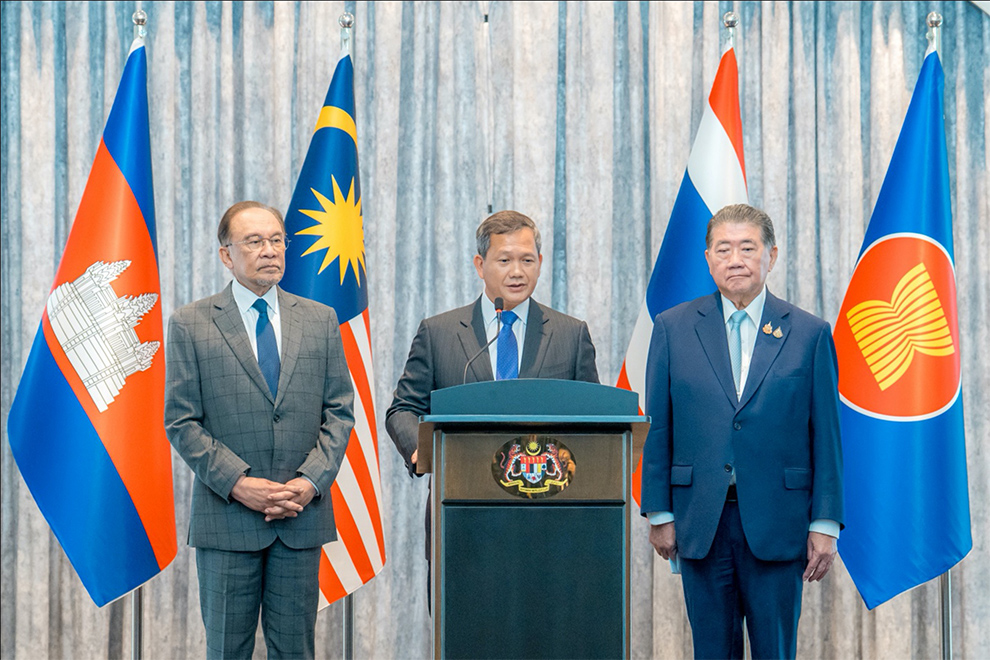
On July 28, 2025, the border between Cambodia and Thailand went quiet after weeks of tension and deadly clashes. That silence was not by chance — it was the result of urgent diplomacy. US President Donald Trump personally stepped in to broker a ceasefire, supported by active participation from China and coordination by Malaysia. This was a rare moment of consensus among major players, proving that when the international community engages, peace can be restored.
One month on, that ceasefire has held. No soldiers have been lost, no civilians harmed and border communities have been able to return to a fragile normalcy. This is an achievement worth recognising. But it is also a reminder of a simple truth: a ceasefire is only as strong as the parties that honour it. Cambodia has treated this agreement not as a pause but as a commitment. Our armed forces have fully respected the terms, showing restraint and discipline, even under provocation.
Yet peace cannot be the work of one side alone. A lasting ceasefire demands that Cambodia and Thailand move together. It requires not only words of commitment but consistent action. It is here that Thailand must do more. Reports of provocative troop movements, inflammatory rhetoric and a worrying wave of misinformation — ranging from manipulation to outright false accusations — risk undermining trust. Such tactics are not harmless; they inflame public opinion, destabilise communities and bring us closer to confrontation.
The Thai government must take responsibility for reining in these actions. Controlling military units, stopping unverified or misleading claims, and preventing the spread of fake news are not optional — they are essential for peace. The ceasefire was never meant to be a tool for political advantage or media manipulation. It is a lifeline for soldiers and civilians alike.
Cambodia’s position is clear. We seek stability, respect for sovereignty and regional cooperation. We welcome dialogue, joint mechanisms and transparency, including military-to-military communication and fact-based reporting. We believe Thailand can be a constructive partner if it chooses discipline over provocation and facts over fabrication.
This first month of peace showed what is possible. The Trump-brokered ceasefire, backed by China and Malaysia, has given both nations breathing space. Now comes the harder part: turning a temporary halt into a durable peace. That will not happen if one side bears the burden of compliance while the other tests the limits.
The message is simple: peace requires two hands to hold it. Cambodia has extended its hand. It is now up to Thailand to grasp it firmly, honour its promises, and ensure that our shared border remains a place of security rather than strife. Lives depend on it.
Roth Santepheap is a geopolitical analyst based in Phnom Penh. The views and opinions expressed are his own.
