



I am writing publicly to ask direct questions of Thailand’s caretaker Prime Minister Anutin Charnvirakul and the Royal Thai Army, regarding their calls for a ceasefire amid the ongoing violence along the Cambodia–Thailand border.
According to remarks reported in Thai media, stated that any ceasefire must involve a halt to fighting and the withdrawal of forces, warning against a situation in which weapons remain pointed at Thailand. On this point, I agree in principle. Fighting must stop, and forces must withdraw. But the critical question remains unanswered: withdraw from whose land, and to where?
The facts, as reported by Cambodian authorities, supported by images and videos shared by civilians and foreign media, show that Thai military units crossed into Cambodian territory and carried out artillery, naval and air attacks inside Cambodia. Civilian areas were hit, including villages, bridges, hotels, religious sites and historic temples like Ta Krabei broken down to the ground. These are not disputed borderlands under Thai administration; they are areas long recognised as part of Cambodia.
Given these facts, I ask Anutin and the Royal Thai Army directly: how can Cambodian forces withdraw when they have not crossed the border and are defending their own land? If withdrawal is truly required for peace, should it not be carried out by the forces that entered another country’s territory?
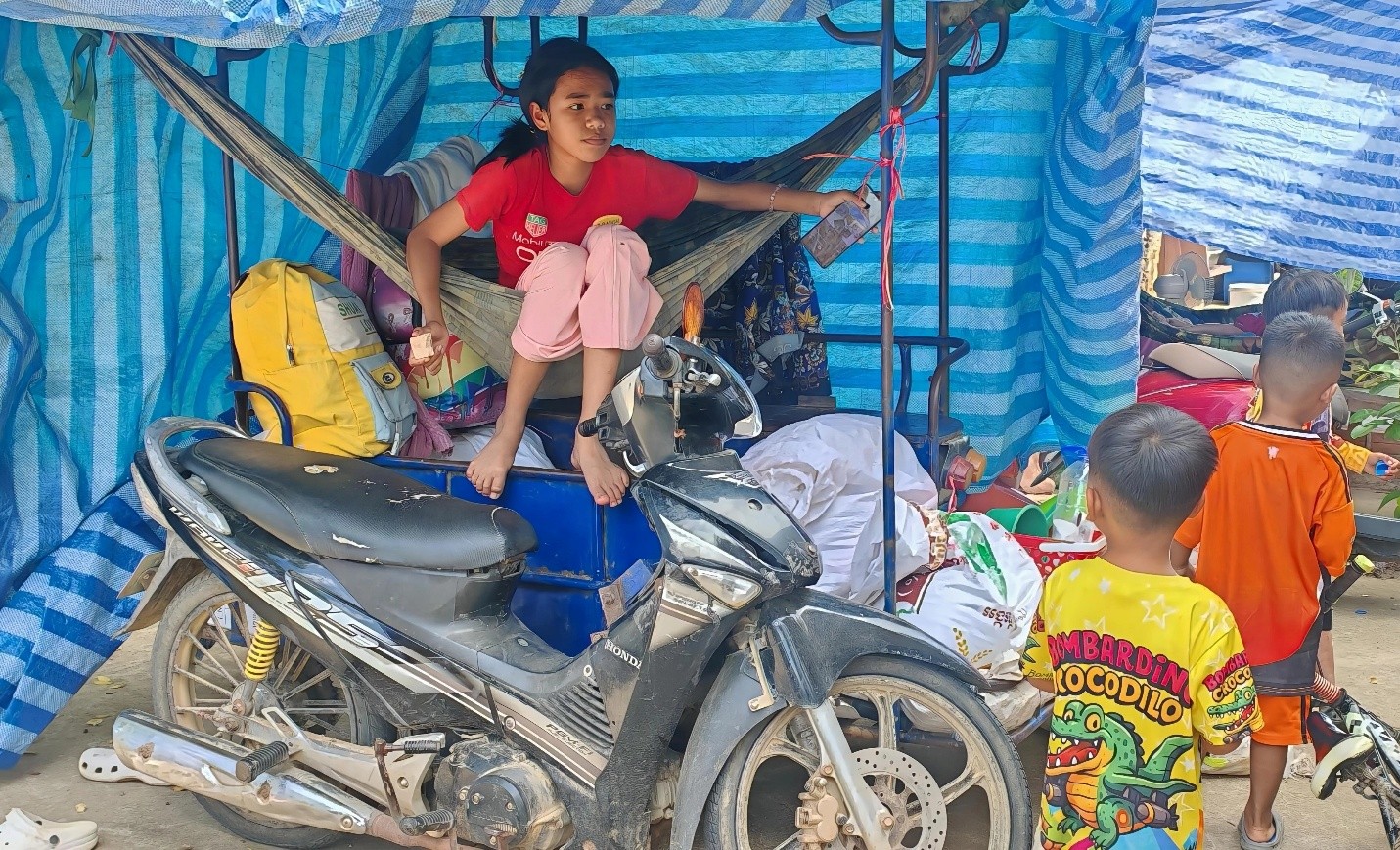
As of December 14, fighting has continued despite public talk of de‑escalation. Cambodian briefings describe repeated shelling, airstrikes and ground operations across multiple provinces, including naval fire in Koh Kong and aerial bombardment in Thmar Da. Civilian infrastructure has been damaged, and communities have been forced to flee. These actions do not signal restraint, nor do they build confidence in ceasefire statements.
Thailand has repeatedly described its actions as “self‑defence”. I respectfully challenge this claim. Sustained bombardment, the use of heavy weapons and the advance of armoured units into Cambodian villages do not meet the commonly understood standard of self‑defence under international law. Self‑defence does not involve operating deep inside another country’s territory while demanding that the defending side withdraw.
I also ask why Thailand is urging Cambodia to submit ceasefire proposals while refusing to acknowledge responsibility for initiating hostilities. A ceasefire cannot be meaningful if it is built on denial. Peace cannot be achieved through carefully worded statements that ignore realities on the ground.
The humanitarian consequences are already severe. Civilians have been displaced, livelihoods disrupted, and cultural and religious heritage placed at risk. Continued fighting threatens not only Cambodia and Thailand, but regional stability and the credibility of peaceful dispute resolution in Southeast Asia.
By raising these questions publicly, my intention is not to inflame tensions, but to seek clarity and accountability. If Thailand truly seeks peace, then honesty must come first.
A genuine ceasefire requires verifiable withdrawal by forces that crossed the border, protection of civilians and respect for sovereignty.
The international community is watching. History is watching. I ask Anutin and the Royal Thai Army to answer these questions openly and to act in accordance with international law, so that peace can be achieved not in words alone, but in reality.
Tesh Chanthorn is a Cambodian citizen who longs for peace. The views and opinions expressed are his own.
