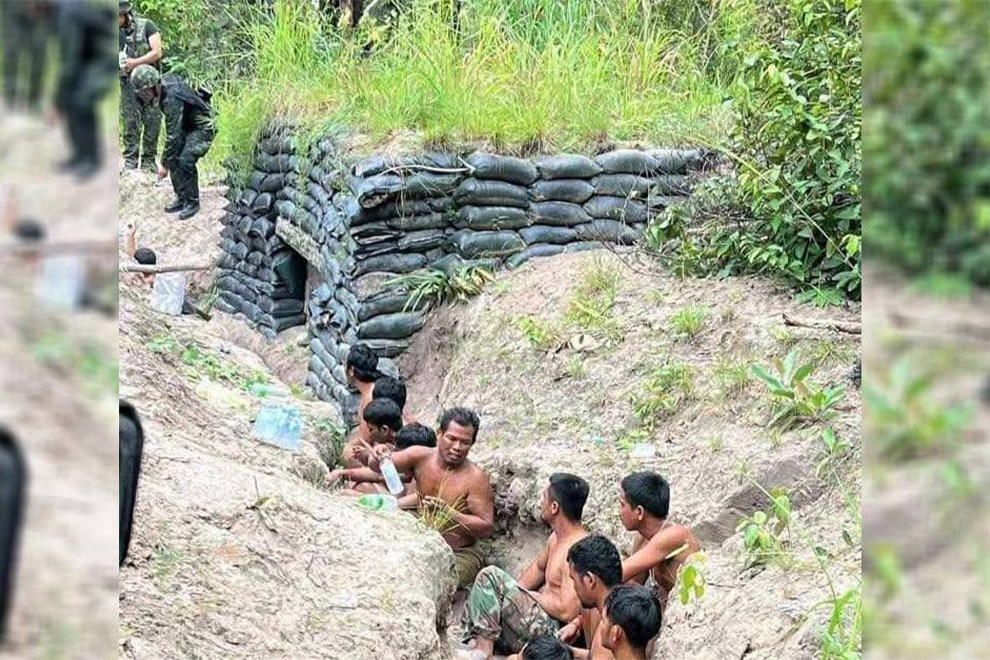
When guns fall silent, the law must speak. Yet more than two months after a Malaysia-brokered truce halted July’s deadly five-day border fighting, Thailand is still holding 18 Cambodian soldiers who were captured after the ceasefire took effect; returning only two wounded men while insisting the rest will be “processed” under Thai law.
That stance violates the spirit and likely the letter of the ceasefire, undermines Thailand’s professed commitment to peaceful dispute settlement, and sits uneasily with its reluctance to fully empower ASEAN monitoring or accept international adjudication.
A ceasefire you keep by releasing those captured after it
The timeline matters. A truce brokered in Malaysia took hold in late July; within hours, Thai forces took custody of Cambodian troops who, by Thailand’s own account, had laid down arms and were later “processed” for immigration violations. Bangkok returned two wounded soldiers on August 1 but continued to hold 18 others. Multiple outlets, including Reuters, AP and pbs NewsHour, corroborate those basic facts.
Under the Third Geneva Convention, once active hostilities cease, prisoners must be repatriated “without delay.” Thailand cannot have it both ways; invoking a ceasefire to claim de-escalation while treating post-truce detainees as ordinary border offenders. The longer the detention drags on, the clearer the breach becomes. Even regional commentary has flagged the legal inconsistency and urged immediate release on humanitarian and legal grounds.
If Bangkok believes any individual committed crimes, it should release the group, share evidence through agreed bilateral or ASEAN channels, and pursue cases via established mechanisms, not hold a platoon-size bargaining chip while proclaiming compliance.
‘Peaceful settlement’ requires action, not slogans
Thai leaders have promised diplomacy and a path to de-escalation. Yet in the weeks since the truce, Thailand’s signals have been mixed; continued custody of the 18, public talk of revoking long-standing border frameworks and episodic incidents along the frontier.
Words about peace ring hollow when core confidence-building steps like releasing detainees captured after a ceasefire are avoided. Cambodia, for its part, has leaned into verification and law, including taking foreign attachés to the destroyed checkpoint, asking the ICJ to adjudicate high-risk areas and pressing for neutral monitoring.
Holding the 18 soldiers after a truce sends the opposite signal.
ASEAN sincerity test: Empower the ASEAN Observer Team (AOT) and accept the ICJ
Both sides agreed in principle to deploy ASEAN monitors in August. But Thailand has leaned toward an Interim Observer team (IOT) of defence attachés while hesitating on the fuller ASEAN Observer Team (AOT) proposed by Malaysia.
The AOT is the credible, stand-alone mechanism to verify compliance impartially including clarifying contested narratives around the 18 detainees. On law, Cambodia has already asked the ICJ to settle disputed areas. Thailand, however, has again resisted ICJ jurisdiction and prefers bilateral talks. Rejecting the Court, delaying monitors and holding detainees risks relapse into war.
What should happen now
First, release the 18 soldiers immediately. A Red Cross-facilitated handover at an agreed crossing point, with ASEAN and international observers present, would restore a modicum of trust and align practice with the ceasefire’s purpose.
Second, deploy a robust AOT within days, not months. Give ASEAN monitors a written mandate, freedom of movement across agreed buffer zones, access to incident logs and detainees, and a joint hotline to defuse local flare-ups. The IOT can complement, but not substitute for, an empowered AOT that both capitals have publicly endorsed.
Third, return to law. Cambodia has already opened the door to adjudication; Thailand should walk through it by jointly framing questions for the ICJ on the most dangerous hotspots, or at minimum by agreeing to binding arbitration with timelines and third-party technical mapping. Rejecting the court, delaying monitors and holding detainees is a trifecta that sets the stage for the next crisis.
Finally, de-politicise cartography and de-mine the frontier. Joint survey teams, transparent publication of baseline maps, and a surge in humanitarian de-mining (with external funding) would save lives and reduce the risk of soldiers stumbling, literally, into the next incident. Recent landmine injuries on the Thai side are a grim reminder of what’s at stake even when the guns are silent.
The stakes
July’s fighting killed dozens, displaced hundreds of thousands and ripped open old wounds. Ceasefires are not self-enforcing; they require visible good-faith steps. For Thailand, releasing the 18 Cambodian soldiers would cost little and gain much especially moral high ground, ASEAN credibility and momentum towards peace.
For Cambodia, anchoring diplomacy in observers and the ICJ is the right call because disputes must be settled by facts, maps and law, not by artillery. If Southeast Asia is serious about a rules-based order, this is where it begins: Not in slogans, but in whether 18 men go home.
Seng Vanly is a Phnom Penh-based Geopolitical Analyst. The views and opinions expressed are his own.