



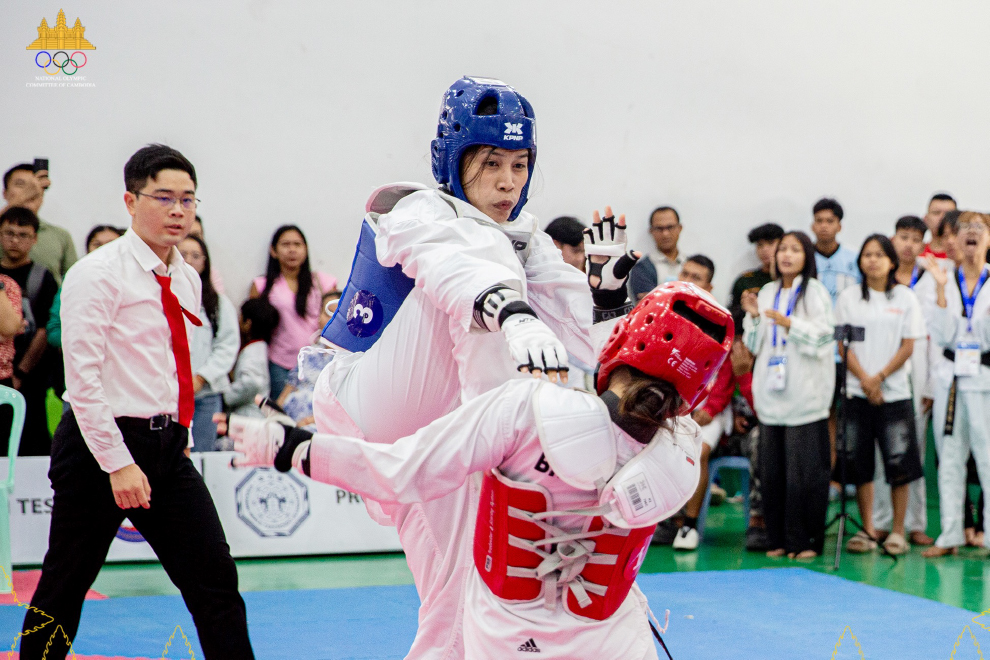
Vath Chamroeun, secretary-general of the National Olympic Committee of Cambodia (NOCC), has revealed hopes that Cambodian athletes could achieve a historic first Olympic medal when the United States hosts the Olympic Games in 2028. A gold medallist could potentially receive a reward worth up to one million US dollars, along with immeasurable prestige and honour.
Chamroeun shared his remarks following the signing of a memorandum of understanding (MoU) between the NOCC and the American Chamber of Commerce in Cambodia (AmCham) on January 14.
The MoU aims to jointly seek sponsorship to fully and comprehensively support the training of Cambodian athletes, ensuring thorough preparation to achieve Cambodia’s goal of winning an Olympic medal in 2028.
“At present, we are targeting nearly 10 sports where we have the potential to win Cambodia’s first Olympic medal. These will mainly include combat sports, as well as swimming and athletics. We must identify talented athletes with strong determination, and we will support them with training both domestically and abroad at specialised training centres in preparation for the Olympics,” said Chamroeun.
He explained that selected athletes would be placed in special training camps. He cited Kenya as an example, noting that it offers highly favourable conditions for training in long-distance running, and that many of the world’s top runners train there. Cambodia, he said, must adopt a similar approach.
“We hope to send our athletes to train in countries with strong potential in specific disciplines. Wherever a country excels, we will send our athletes there to train at an elite level. We will also ensure that they participate in many competitions, because competition is the true measure of their abilities as they prepare for the Olympics,” he added.
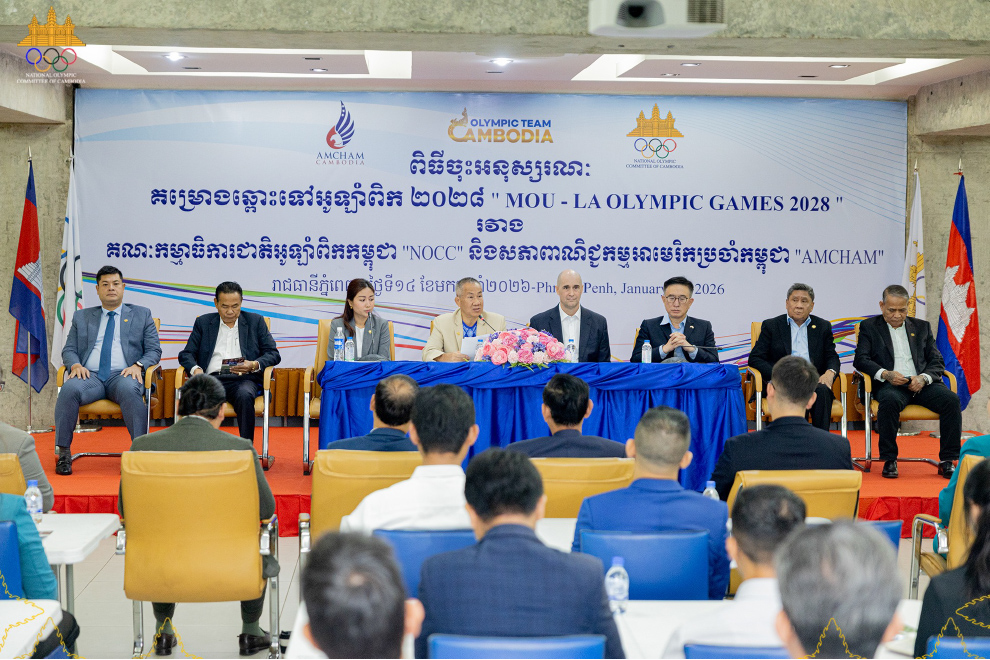
Chamroeun also disclosed that the NOCC’s goal for the current term through 2028 is to have as many Cambodian athletes as possible qualify for the Olympic Games through official qualification rounds. In the past, Cambodia has often relied on wildcard entries. He emphasised that having more athletes qualify directly would increase the chances of winning a medal, whereas limited qualification would reduce those opportunities.
“We hope to receive support from both domestic and international communities to back our athletes. We also hope that all parties will help promote and encourage this effort to create a new chapter in history — winning Cambodia’s first Olympic medal — which would serve as a symbol of heroism and inspiration for future generations of athletes to strive for similar success,” he said.
AmCham president Casey Barnett noted that efforts to secure sponsorship for the training of Cambodian athletes will begin immediately and continue until the games. The selection of capable and talented athletes for overseas training and competition will also commence, with the aim of helping Cambodian athletes achieve success and bring honour to Cambodia.
Benjamin Chiang, chargé d’affaires ad interim of the US embassy in Cambodia, described the MoU as a significant step forward in strengthening opportunities for sports development and business cooperation between Cambodia and the US. He also highlighted its role in celebrating shared excellence and deepening people-to-people ties.
“The Olympic Games will not only showcase American creativity and dynamism, but will also open doors for Cambodian entrepreneurs, investors and businesses to connect with US partners, explore new markets, and build long-term economic relationships that will contribute to prosperity for both the US and Cambodia,” he said.
Chamroeun also revealed that the Royal Government of Cambodia has already issued a sub-decree on prize incentives. Medal winners may receive rewards starting from $30,000, while the first-ever Cambodian gold medallist could receive up to one million dollars.
“If an athlete wins Cambodia’s first gold medal, I believe they would receive no less than one million dollars. They would become a national hero — an outstanding sports figure in our history. For their career and family legacy, the value would be immense,” he said.
“We can imagine how, in other countries, gold medallists are honoured with statues placed at major training centres as symbols of inspiration and respect for their heroism. This kind of honour is far greater than material wealth alone,” he added.
