



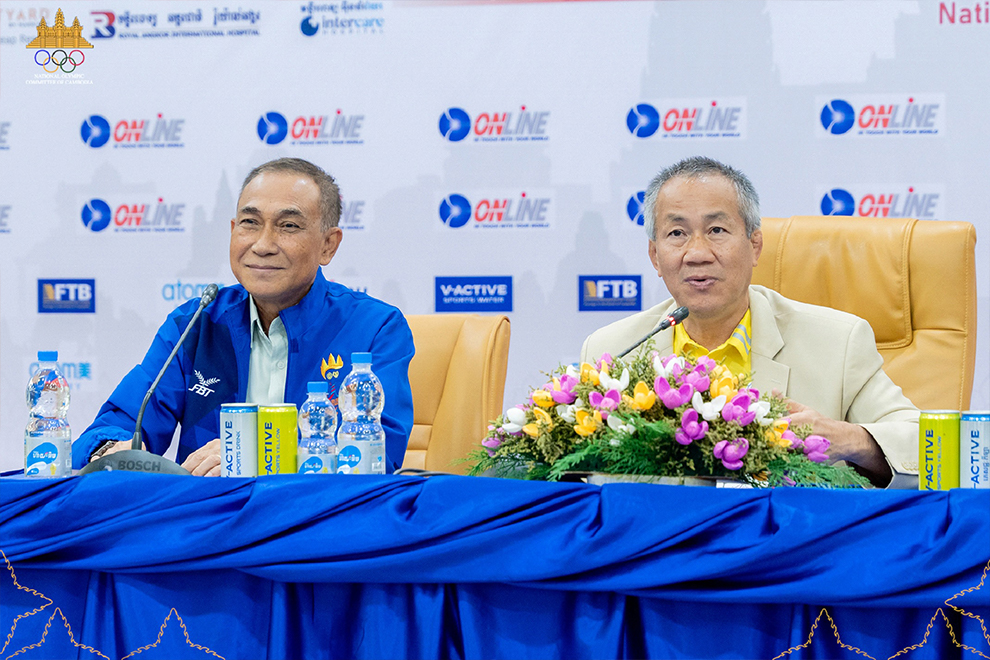
Cambodia, through the National Olympic Committee of Cambodia (NOCC), is currently working with Chinese partners to develop a promotional strategy that will encourage more Chinese runners to participate in the Angkor Empire International Marathon. The committee recently signed a memorandum of understanding (MoU) with the Dali Marathon in China’s Yunnan province.
Vath Chamroeun, NOCC secretary-general, explained that the MoU with the Dali Marathon includes a pledge from the Chinese side to encourage at least 5,000 Chinese nationals to join the Angkor Empire International Marathon in the next two to three years.
“We are working on a strategic plan with our Chinese partners for the coming years. This is part of our strategy to attract at least 5,000 Chinese runners in the next few years. The Chinese side has guaranteed that this target can be reached within two or three years,” he told a June 23 press conference.
“This is what we are striving to organise in cooperation with the Ministry of Tourism, the Cambodian Federation of Volunteer Athletes, and other relevant authorities to ensure our marathon event is well organised and safe for all runners,” he added.
The 10th edition of the Angkor marathon will take place on August 3. China has already registered 100 runners. They were granted visa facilitation by the Cambodian government, and 50 of them were also granted free registration by the organising committee.
The government encouraged the NOCC to invite the Chinese ambassador to Cambodia to participate. So far, approximately 3,000 runners from 57 different nationalities have registered. The largest groups of foreign participants are from China, Japan, Malaysia and the UK.
Chamroeun expressed his hopes that by race day, the number of participants could rise to 4,000 or even 5,000 — a 25% to 50% increase compared to last year’s turnout of around 2,800 runners.
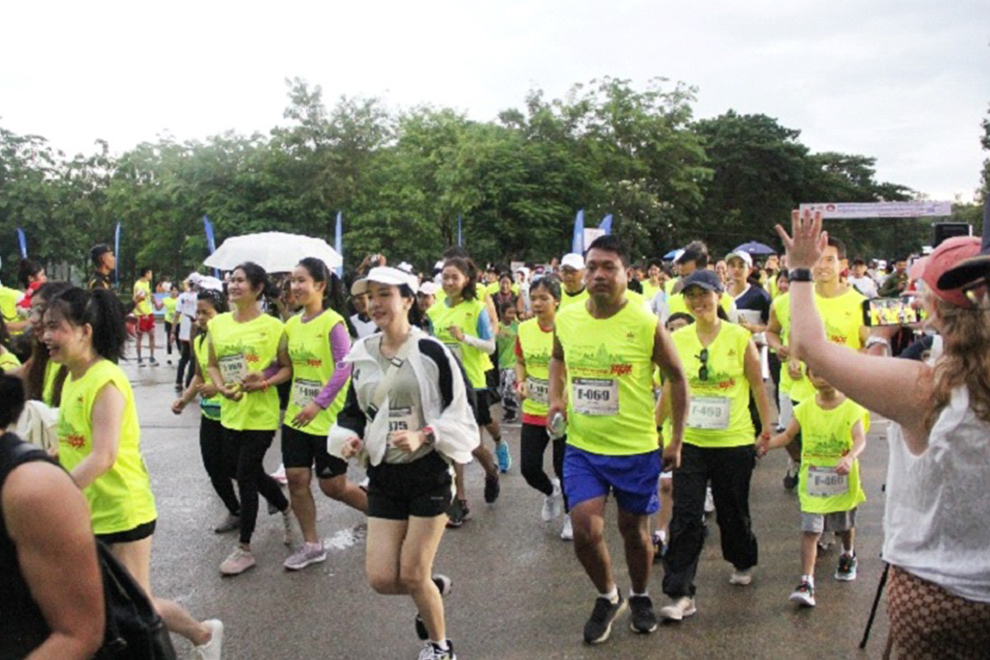
He expressed both pride and surprise at the number of Cambodians — around 600 — who have registered for the full 42-kilometre marathon, noting that this is an unprecedented number.
“This is a remarkable figure, reflecting the improved heart health of the Cambodian people as well as their growing interest in long-distance running,” he said.
“This is a proud milestone for public health and reflects the increasing awareness among Cambodians of the benefits of running and engaging in sports. In comparison, only around 200 foreign runners have registered for the full 42-kilometer distance,” he added.
Chamroeun noted that the Angkor Empire International Marathon is held annually to promote tourism and support the tourism industry during the rainy or “green” season, when tourist numbers usually decline. He also noted that the event has a charitable component, with surplus funds from the organization being donated to children’s hospitals.
Sem Phalla, executive director of the event, explained that there are four distances: the full 42km marathon and a 21km half, as well as a 10km and a 3km fun run for families.
Phalla called on anyone interested in joining to register in time so the organisers can prepare materials and logistics. He also encouraged strong participation to help promote Cambodia’s one and only international marathon on the global stage — particularly since it is the only Cambodian member event of the Association of International Marathons and Distance Races (AIMS), which has 112 member countries worldwide.
