



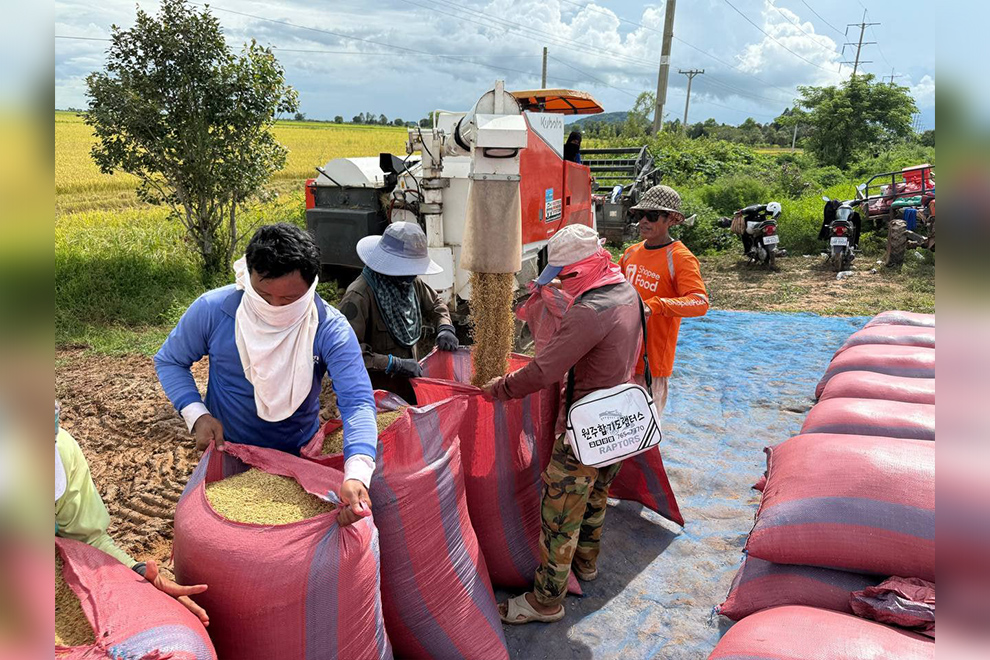
Cambodia is preparing to undertake the next Cambodia Agriculture Survey (CAS) 2025, the country’s largest and most trusted source of information on farming and rural life.
The survey, carried out every year since 2019, provides vital data to help shape policies that improve the lives of farmers and rural communities. This year, it will also include a special section on income, labour roles and productivity — looking closely at how much farmers earn, how families share farm work and how productive fields are, according to a joint press release.
During a national consultation workshop, organised by the National Institute of Statistics (NIS) under the Ministry of Planning, the Ministry of Agriculture, Forestry and Fisheries and the Food and Agriculture Organization of the UN (FAO), officials and partners discussed how to make sure the survey captures the most important information.
Representing the government, Rin Virak, planning ministry secretary of state, noted that the CAS has become an indispensable tool for guiding policies and programmes.
“By taking full ownership of CAS 2025, Cambodia shows its strong commitment to using good data to support farmers, strengthen the seventh-mandate government’s Pentagonal Strategy, and contribute to the Sustainable Development Goals,” he said.
Proyuth Ly, assistant FAO representative in Cambodia, underlined the value of quality agricultural data, as he addressed the meeting.
“Substantial data is essential for building a better future for Cambodia’s farmers and rural communities. With CAS 2025, we will continue this important work while also gaining fresh insights into farmers’ incomes, labour and productivity,” he said.
It noted that this year also marks a big step forward, as Cambodia will take full responsibility for the survey’s fieldwork, after graduating from the international 50×2030 Initiative that has supported its development over the past years.
The survey’s findings will help track Cambodia’s progress toward global goals. This includes better farm productivity (SDG 2.3.1), improved incomes for small farmers (SDG 2.3.2), women’s land rights (SDG 5.a.1) and sustainable agriculture (SDG 2.4.1).
The consultation brought together government officials, development partners, civil society, universities and farmer’s representatives, all working together to ensure CAS 2025 provides the best picture yet of Cambodia’s agriculture sector.
