



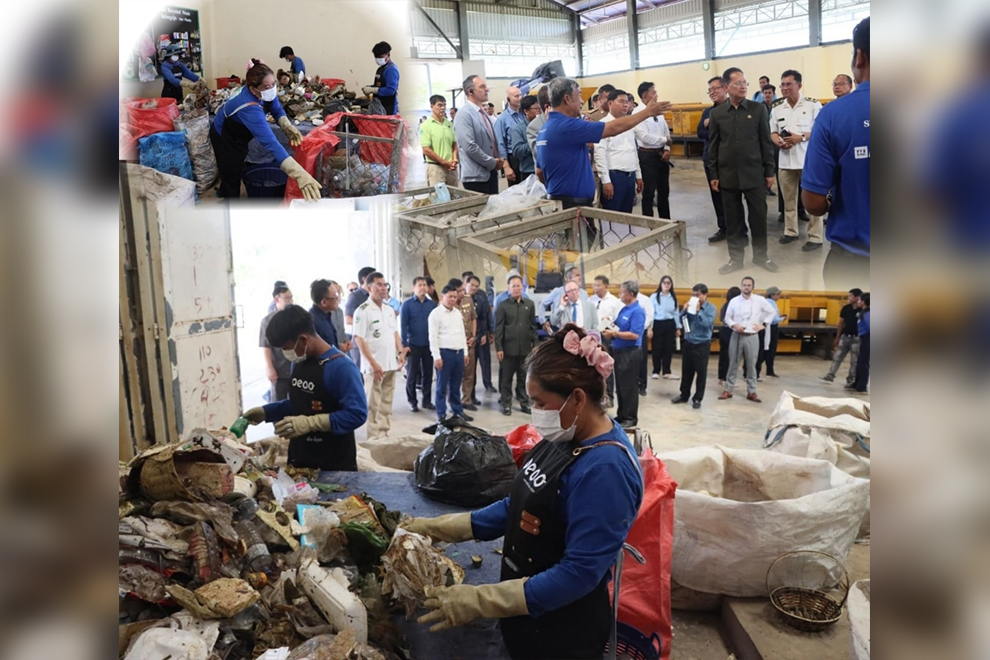
The Ministry of Environment and the German embassy in Cambodia have announced the implementation of a solid waste separation project in Battambang province, while also celebrating the 25th anniversary of Cambodia-Germany cooperation on composting and waste management.
This event marked the launch of the “Green Growth Initiative for Circular Economy” (GGI4CE) project, following the signing of an implementation agreement between both parties in January 2025.
Environment minister Eang Sophalleth presided over the launch ceremony at the Moha Norkor Hall of the National University of Battambang, which received technical and financial support from Germany’s development agency, GIZ.
The official launch represents a major effort to promote efficient and sustainable solid waste management in Cambodia. It also reflects the achievements of over 25 years of Cambodia-Germany environmental cooperation.
Sophalleth described the event as an important milestone in pushing forward effective and sustainable waste management, while also contributing to Battambang’s beautification.
In conjunction with this event, Cambodia and Germany celebrated 25 years of cooperation in composting and waste management — highlighting the strong friendship and partnership between the two nations in building a clean, green and sustainable environment for all.
“The GGI4CE project in Battambang is a key model to promote the circular economy and sustainable waste management. By encouraging household-level waste separation and increasing recycling, the project significantly contributes to reducing plastic waste sent to landfills,” added the minister.
He emphasised that the “Clean Cambodia” movement is expanding nationwide, with over 20,000 people participating daily in the “Clean Cambodia, Khmer Can Do” campaign to collect garbage.
Following cleanup efforts, the ministry has distributed waste bins to citizens and students to encourage proper sorting and disposal. This initiative not only helps waste processors but also reduces the amount of garbage going to landfills.
He added that the project represents another step toward achieving the “Clean Cambodia” vision, in line with the environmental strategy set forth by Senate president Hun Sen and Prime Minister Hun Manet, through the “Environmental Sector Strategic Framework”, which emphasises three pillars: cleanliness, greenery and sustainability.
“Tangibly, we’ve already achieved a major milestone by reducing plastic bag imports by over 84% in 2024. Additionally, we are seeing cleaner water and air, which reflects our strong commitment to a clean and sustainable Cambodia,” he said.
He thanked German ambassador Stefan Messerer for sharing Germany’s valuable experience in solid waste and garbage management, noting how well it aligns with Cambodia’s environmental goals.
The project supports the introduction of principles of sustainable circular economy into the Cambodian waste management system at national and subnational levels. It will run until September 2027, focusing on waste segregation at the source. It is being implemented in five target provinces: Battambang, Siem Reap, BanteayMeanchey, Kratie and Kampong Cham.
During the signing ceremony in January, ambassador Messerer underlined the crucial partnership between German and Cambodia. He shared the lessons learnt by Germany.
“It is not an easy, but the strong commitment will come to key success with the efforts for sustainable infrastructure systems, waste management systems, technologies and awareness and participation of citizens” he said, adding that the purpose of the GGI4CE project is to bring all these stakeholders together to create a robust system that benefits everyone.
Battambang produces around 470 tonnes of waste per day on average, ranking seventh in the country. Phnom Penh ranks first, producing 3,700 tonnes of solid waste daily. Kep produces the least, at around just 15 tonnes.
Local authorities reaffirmed their commitment to transforming Battambang into a clean, green, smart and attractive city, aiming to reduce waste by 40%, improve public health and extend the lifespan of landfills.
