



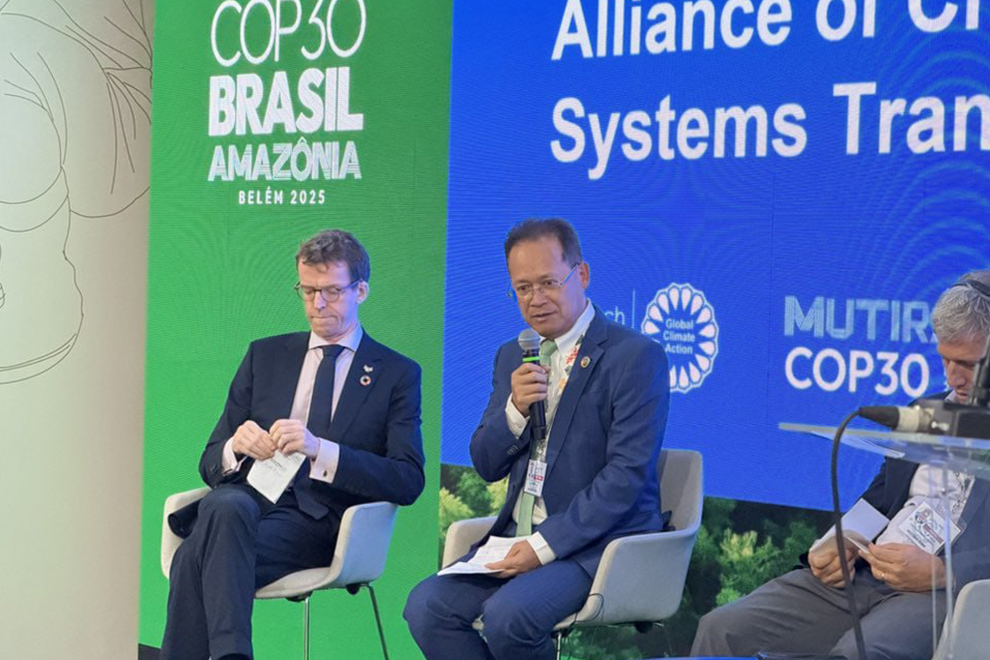
Cambodia is prepared to share its experiences and learn from other countries to accelerate the transformation of its food systems, as it aims for resilience and low carbon emissions through its third Nationally Determined Contribution (NDC 3.0) plan.
Minister of Environment Eang Sophalleth outlined the Kingdom’s plans as he delivered his keynote address at the “Alliance of Champions for Food System Transformation (ACF)” meeting, held within the framework of the 30th Conference of the Parties to the United Nations Framework Convention on Climate Change (COP30) in Belem, Brazil, on November 18,
“We can ensure that the food system becomes the foundation of climate action and sustainable development. Cambodia recognises that transforming the food system is central to achieving both climate goals and sustainable development objectives,” he said.
He noted that Cambodia’s NDC 3.0 includes food system transformation as a core strategy to reduce emissions, adapt to climate change and build resilience.
Cambodia has prioritised several key areas of its food systems for transformation. They include promoting sustainable and healthy diets, expanding climate-smart and resilient agriculture, encouraging ecosystem-based conservation and restoration practices, reducing food waste and integrating gender equality into all activities.
These priorities are outlined in several strategic roadmaps, including the “Food Systems for Sustainable Development in Cambodia 2025-2030” and the “National Strategy for Food Security and Nutrition 2024-2028”.
As a member of the ACF, Cambodia has praised the coalition for its support in helping the Kingdom
develop its own pathway toward food system transformation since the launch of the initiative at COP28.
Sophalleth highlighted that this partnership has provided valuable shared experiences and facilitated the integration of food systems and climate policy across ministries and institutions at both the national and subnational levels. It has also enhanced Cambodia’s relationships with development partners, including UN agencies, international financial institutions and bilateral donors.
The launch of the ACF’s development framework demonstrates Cambodia’s ongoing commitment to sharing knowledge, expanding cooperation and further leveraging resources, he added.
In 2025, the ACF welcomed Italy and Vietnam as new members. The coalition, which started at COP28 in 2023 in Dubai included five member countries: Brazil, Cambodia, Norway, Rwanda and Sierra Leone. All members are committed to transforming their food systems to deliver better outcomes for people, nature and the climate.
On November 17, Sophalleth led a Cambodian delegation to the 30th COP meeting in Belem.
It consists of representatives from various government institutions, including the Ministry of Environment, the Ministry of Foreign Affairs and International Cooperation, the Ministry of Land Management, Urban Planning, and Construction, the Ministry of Agriculture, Forestry, and Fisheries and the Ministry of Economy and Finance.
