



Minister of Environment Eang Sophalleth and UNESCO country representative Sardar Umar Alam met on Monday, July 28, to reinforce bilateral cooperation on the protection of natural resources and cultural heritage, with a particular focus on transboundary groundwater conservation and ecological sustainability.
One of the key topics of discussion was the Cambodia-Mekong River Delta Aquifer (CMDA) project, which aims to enhance the sustainability of shared groundwater resources between Cambodia and Vietnam in the Mekong River Delta region. The project is being jointly implemented with support from the Global Environment Facility (GEF) and partners including FAO, IUCN and UNESCO.
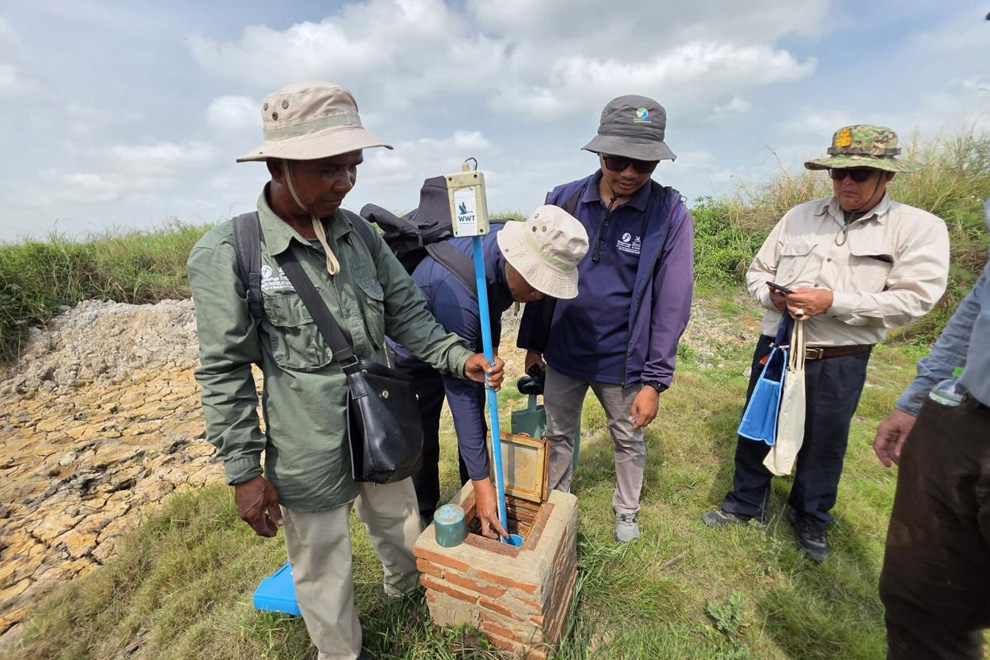
Through this project, UNESCO is collaborating with IUCN and MERFI to assess groundwater reserves and analyse ecosystems that depend on these underground water sources, particularly in wetland areas.
Their findings will help develop effective and sustainable management strategies for groundwater use in the transboundary aquifer system, which is vital to wetland preservation, biodiversity and local livelihoods.
Sophalleth also proposed several new environmental initiatives, including the establishment of new biosphere reserves and geoparks, and the designation of Koh Sralau as Cambodia’s first plastic-free and carbon-neutral island.
The environment ministry is currently preparing to map and monitor the rate of groundwater depletion to secure long-term water sustainability, with the collaboration with UNESCO expected to accelerate the implementation of the project.
The two sides also discussed the National Beekeeping Strategy, which aims to boost honey production and improve community livelihoods, especially in protected areas. The minister emphasised the importance of empowering communities to take ownership of local products to ensure long-term sustainability and quality.
Ministry spokesman Khvay Atitya said on Tuesday, July 29, that the two sides primarily focused on environmental challenges, including climate change adaptation.
“Alongside the Ministry, UNESCO’s work focuses on conserving the Tonle Sap region and ensuring long-term safety and sustainable livelihoods for local communities, as well as studying and managing biodiversity in the area,” he noted.
