



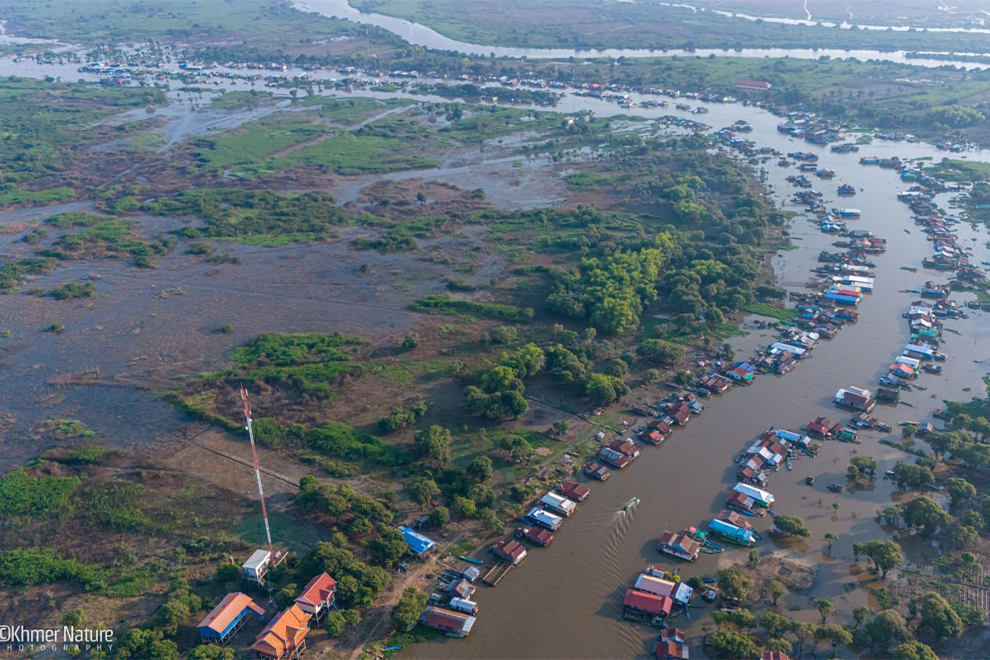
The government has established a commission which will oversee relocation plans for many of the floating houses on the Tonle Sap lake, as well as monitor fish farms. The effort is aimed at reducing environmental pollution, protecting biodiversity and preserving the ecological system of the lake.
A decision on the creation of the commission, signed by Prime Minister Hun Manet on July 10 and made public on Sunday, July 13, names Minister of Interior Sar Sokha as chairman. The commission includes deputy chairs and members from various ministries, institutions and the provincial administrations of the five provinces which surround the lake: Battambang, Siem Reap, Kampong Thom, Pursat and Kampong Chhnang.
The commission is tasked with developing medium- and long-term strategic plans to relocate floating houses to land, as well as issuing guiding policies for the five provinces on how to implement measures to move people land-based settlements.
Additionally, the commission is responsible for managing data on floating houses, fish farming cages and the residents living on them. It is also tasked with enforcing bans on the expansion or creation of new floating houses or fish farming cages, and preventing the establishment of new settlements on the water.
The commission will study and develop regulations and procedures for managing life on the lake, identifying areas where living on the water may continue and areas where it will be prohibited. It will also formulate step-by-step relocation plans for residents of floating homes to move to land, supported by the government and in cooperation with the relevant institutions.
The plans will provide appropriate social land concessions to any Cambodian citizens who relocate to land, develop supporting infrastructure at the new sites and offer support to improve the livelihoods of those who voluntarily relocate. This includes financial aid, assistance mechanisms and the creation of alternative jobs and occupations beyond fishing and fish farming.
The commission also has the duty to: “Take action against illegal immigrants currently living on the water, in accordance with the law”.
Public education campaigns to inform floating house residents and fish farmers not to expand or create new structures will be managed by the commission.
It will also assess and evaluate environmental impacts to avoid serious harm to biodiversity and aquatic ecosystems, including water quality decline, pollution and navigation disruptions, and implement appropriate responses.
Finally, the commission is responsible for supporting the delivery of healthcare, education, and vocational training services — including stopping the operation of illegal schools, which also falls under its mandate.
