



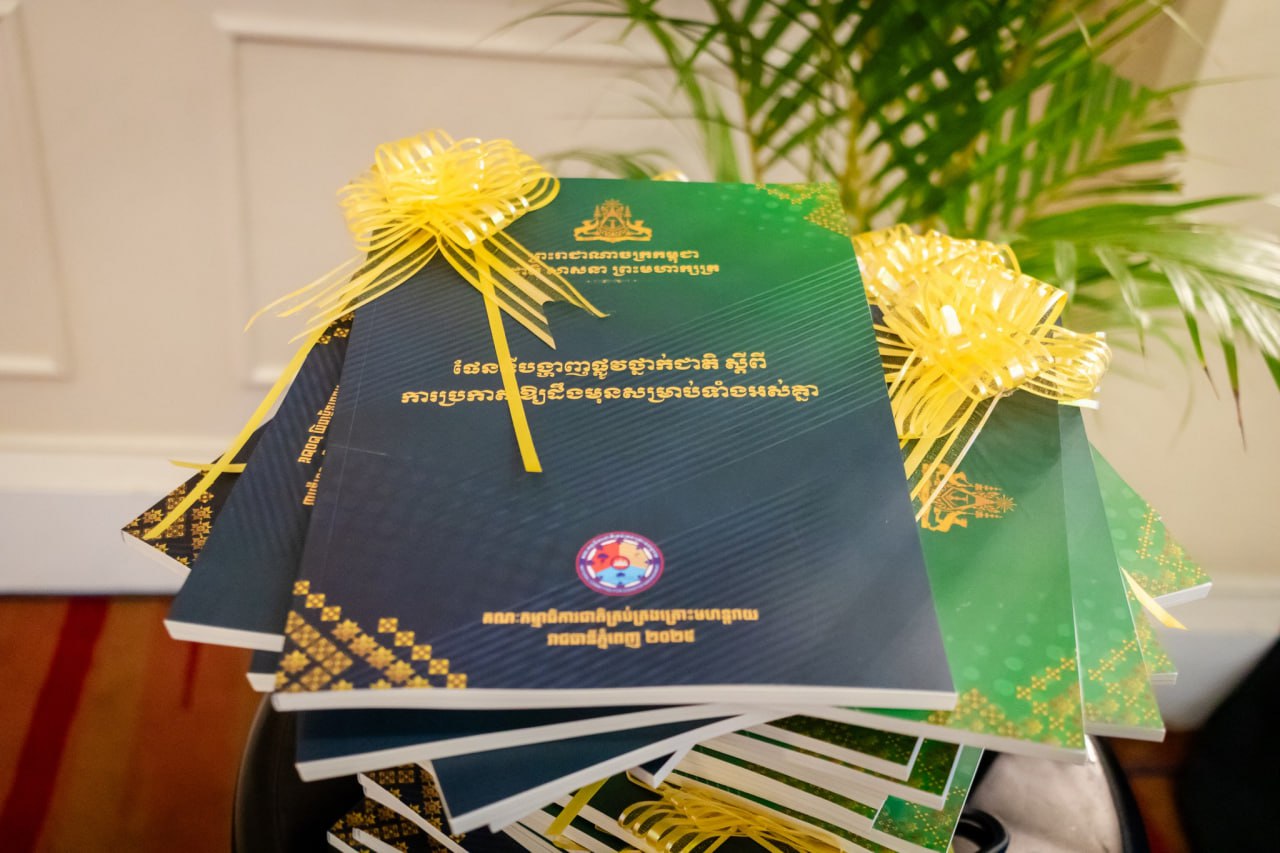
Cambodia has launched the National Roadmap for Early Warnings for All (EW4ALL) 2025–2028, aimed at expanding early warning coverage for disasters from the national level down to community level — especially important as an estimated 80 per cent of Cambodians living in rural areas are vulnerable to climate change.
The official November 20 launch was jointly organised by the National Committee for Disaster Management (NCDM), the UN World Food Programme (WFP) and other UN partners.
The event was presided over by Senior Minister Kun Kim, first vice-president of the NCDM, with participation from Jo Scheuer, UN resident coordinator in Cambodia, as well as leaders from the NCDM, representatives of ministries and institutions, provincial and municipal administrations, and partner organisations.
The NCDM described the official launch of the roadmap — approved by Prime Minister Hun Manet in August — as a milestone in strengthening national safety and resilience.
The WFP highlighted the critical importance of the roadmap. It stated that with around 80 per cent of Cambodians live in rural, climate-sensitive areas.
“With 65 per cent of them reliant on agriculture livelihoods vulnerable to floods, droughts and storms, early warning matters now more than ever,” it said, via a press release.
“The forthcoming national roadmap will help build inclusive, multi-hazard early warning coverage from the national level down to local communities,” it added.
The roadmap, developed through collaboration among government ministries, UN agencies and civil society, aligns with global Early Warnings for All (EW4ALL) standards and Cambodia’s Disaster Management Law.
“This national roadmap gives Cambodia a clear pathway to strengthening coordination. With leadership, partnership and sustained resources, we can ensure warnings become action and vulnerabilities become resilience,” said Kim.
The roadmap sets a clear path to strengthen resilience against climate and disaster risks. It calls for better coordination, investment in early warning systems and a people-first approach to preparedness.
“Its successful implementation will depend on a strong, government led institutional mechanism that effectively mobilises all relevant ministries and partners in the delivery of timely, reliable alerts to save lives and livelihoods,” said Scheuer.
The roadmap sets out four foundational pillars: Disaster risk knowledge, observation and forecasting, warning dissemination and communication, and preparedness and response.
The WFP will work with the NCDM to establish a multi-stakeholder coordination platform, bringing together government ministries and partners such as UNDP, FAO, IFAD and the World Bank.
According to the WFP, despite a recent Green Climate Fund allocation of $103.2 million for regional early warning system, Cambodia still faces a shortfall of $22.7 million, approximately 41 per cent of the roadmap’s estimated cost.
“The real work begins now. We need to move swiftly from roadmap to action, mobilising resources, linking early warnings to local response and ensuring that every community is ready to act when it matters most,” said Kyungnan Park, WFP representative in Cambodia.
Immediate priorities include finalising operational protocols, activating coordination platforms, establishing resources allocation plans and stepping up last‑mile communications to reach women, indigenous peoples and persons with disabilities.
