



The Ministry of Labour and Vocational Training has condemned a recent “false” and “politically motivated” report from Human Rights Watch (HRW), which accused the Cambodian government of neglecting the Cambodian migrant workers who have returned from Thailand since June border tensions led to the armed clashes of late July.
In a statement issued late on Wednesday, 26 November, the ministry described the HRW report as “unprofessional and lacking clear evidence, causing confusion with malicious intent, incitement and undermining the government’s sincere efforts to care for migrant workers returning from Thailand”.
The ministry explained that, in reality, since June 8, migrant workers returning from Thailand have been warmly welcomed and provided with extensive support. This includes setting up reception centres, offering free transport to their home provinces, assisting with luggage, providing clean drinking water and snacks, facilitating identity documentation and coordinating with microfinance institutions to postpone repayment deadlines.
In addition, the ministry has cooperated with local authorities and relevant institutions to implement the “Khmer Help Khmer Find Jobs” campaign, enabling returning workers to register for employment through the 1297 hotline and via Telegram. These measures allow citizens — including volunteers from the Union of Youth Federations of Cambodia — to help register workers for job opportunities without requiring them to travel to registration offices.
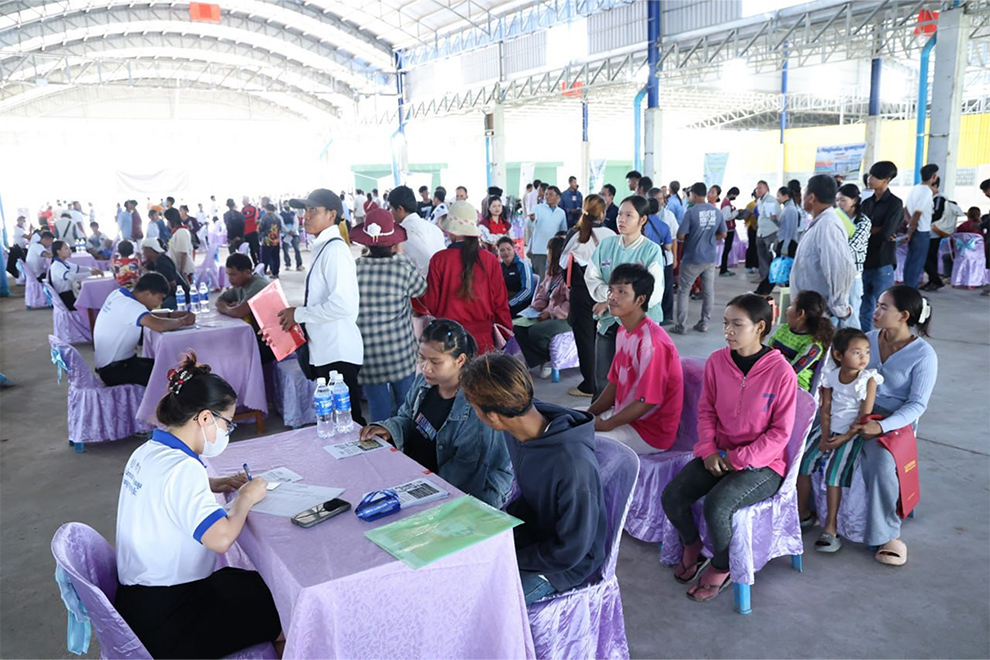
Job forums have also been organised in communes with high numbers of returning workers, bringing representatives from enterprises, companies, factories and farms to conduct on-the-spot job interviews. A total of 577 such forums have been held. Training programmes for technical and vocational skills have also been launched to support workers who wish to start small businesses or work in their home villages.
“As a result, more than 280,000 returning workers have secured formal employment. The ministry currently has around 80,000 job vacancies available and is continuing to highlight more opportunities,” it added.
The ministry urged the public not to share or spread inaccurate and unprofessional reports or articles like the HRW report.
The HRW findings were reportedly based on interviews with 56 people in Banteay Meanchey province who claimed they were facing food shortages due to saving money to repay microfinance institutions or banks.
Ministry spokesperson Sun Mesa noted that using only 56 individuals to represent more than 900,000 former migrant workers, as implied in the report, is “not scientific, unprofessional and unacceptable”.
He added that between 400,000 and 450,000 returning workers have found jobs as of mid-November, thanks to more than a dozen strategies implemented by the ministry. Through the ministry’s mechanisms alone, around 280,000 obtained jobs, while tens of thousands more found informal employment in handicrafts, construction sites, farms and other sectors.
The spokesperson also called on HRW to share the contact details of the 56 workers it surveyed, so the ministry can help find them jobs.
