



At least 11 key ministries and government institutions have begun consultations on the management of the Angkor Archaeological Park and Tonle Sap Lake areas, ahead of preparing Cambodia’s first-ever national master land use plan covering all 1,652 communes nationwide.
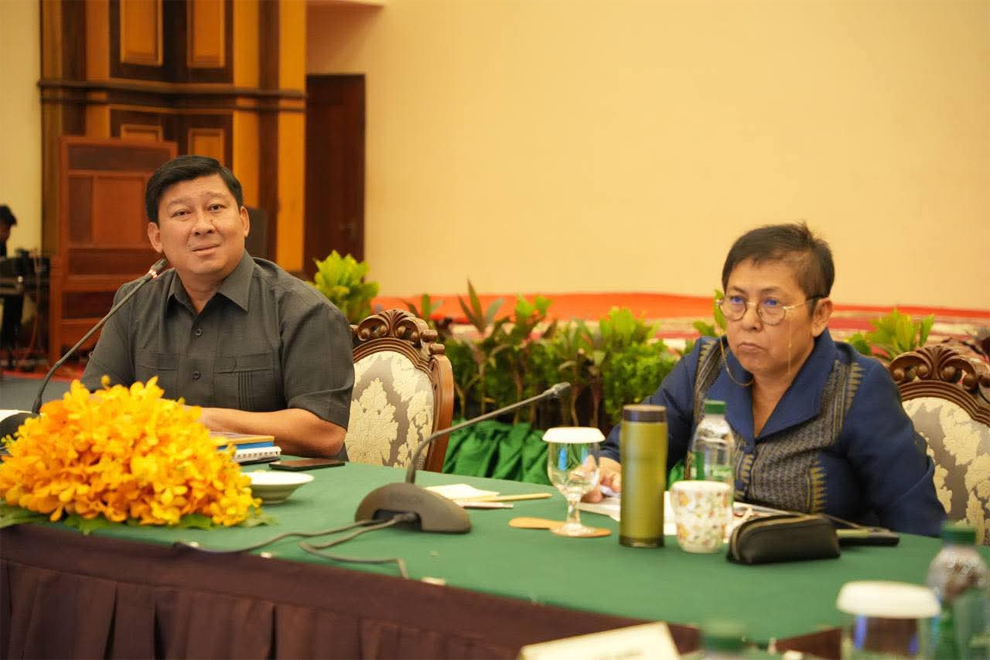
The consultation, focusing on the management of the Angkor heritage site and the Tonle Sap Lake region, was launched on Monday, August 25, in Siem Reap province. It involved the Ministry of Land Management, Urban Planning and Construction, the Ministry of Culture and Fine Arts, the government’s Siem Reap working group, the APSARA National Authority, the Tonle Sap Authority and the administrations of the six provinces surrounding the Tonle Sap area.
The consultation session was co-chaired by land management minister Say Sam Al and culture minister Phoeurng Sackona.
Sam Al described the meeting as a crucial step towards building consensus on a unified working map to guide the drafting of the master land use plan. This includes setting conditions for land use and urban and construction management within the Angkor UNESCO World Heritage Site and the Tonle Sap region before extending the master land use plan nationwide.
“The unified working map will serve as a guiding tool toward implementing a land use plan that is agreed upon by both citizens and authorities. It aims to improve the livelihoods of Angkor residents and those around the Tonle Sap, while strengthening the national economy, based on the sustainable use of land resources, so Cambodia can live independently,” he said, via social media.
During the consultation, case studies were presented on land management and use in Pur Treay commune, Puok district and in Preah Dak village, Preah Dak commune, Banteay Srei district, Siem Reap province, by the provincial land management department.
Once completed, the master land use plan will be handed over to provincial administrations, municipal and provincial land management departments, and local commune authorities to assess urban and community development potential.
The plan aims to improve living standards by transforming cities and communities across Cambodia into modern rural towns and prosperous, sustainable villages, in line with the vision of the head of government.
