



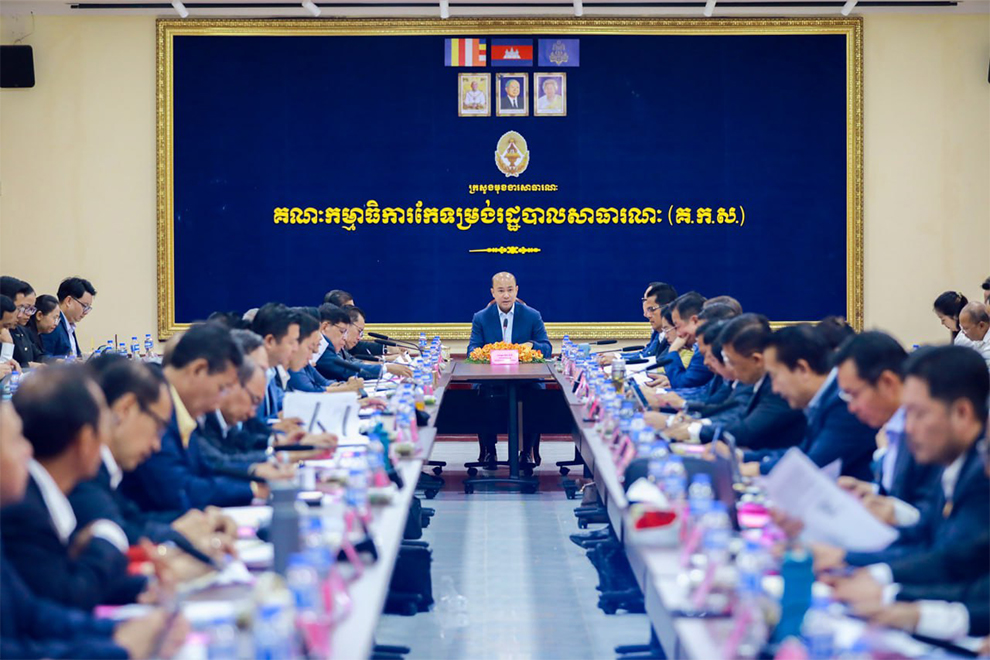
The Ministry of Civil Service, in cooperation with other government institutions, has established a new monitoring mechanism for the disbursement of salaries and other allowances. The goal is to ensure the correct, targeted use of national funds in accordance with the government’s legal standards and financial regulations.
On Wednesday, July 9, the ministry stated that amid the momentum of the key reforms led by Prime Minister Hun Manet, it has made strong efforts to ensure the timely and policy-compliant disbursement of salaries and allowances to civil servants and contracted officials. This aims to enhance public financial management efficiency, in line with government principles.
According to the Anti-Corruption Unit, between 2022 and 2024, more than $10.7 million in salary overpayments were discovered among civil servants at both national and sub-national levels. Of this, more than $9 million has already been returned to the national budget. The ministry is continuing to push for the recovery of the remaining funds.
To manage the disbursement of salaries and allowances more effectively and ensure the correct use of the budget, the ministry has set up a regular monitoring and inspection mechanism. This will help ensure that salary and allowance budgets are used for their intended purposes, as defined in the government’s financial and legal framework. The process involves close cooperation between national-level ministries and sub-national administrations.
Salary and allowance disbursements are paid directly into officials’ bank accounts every two weeks, with the exceptional of traditional holidays such as Khmer New Year and Pchum Ben, when payments are generally received ahead of holidays, which advance payments sometimes made afterwards.
“This timely and efficient payment arrangement reflects the government’s deep and continuous concern for the living conditions and daily needs of civil servants and contracted officials,” explained the ministry.
The ministry added that in cases where salary or allowance payments are not made in accordance with policies — due to delays in reporting personnel changes or incomplete documentation — monitoring will be intensified. Examples include the death of an official, unpaid leave, removal from the official roster, retirement and extended absence from duty.
“In cases of overpayments, the ministry urges all government institutions to return the excess funds to the national budget. This process is taken seriously and monitoring will be conducted on a regular basis,” it added.
At the same time, the ministry is reviewing and improving procedures for salary and allowance disbursements, particularly through digital system development, to improve efficiency, transparency and financial governance. This supports the broader government reform agenda.
