



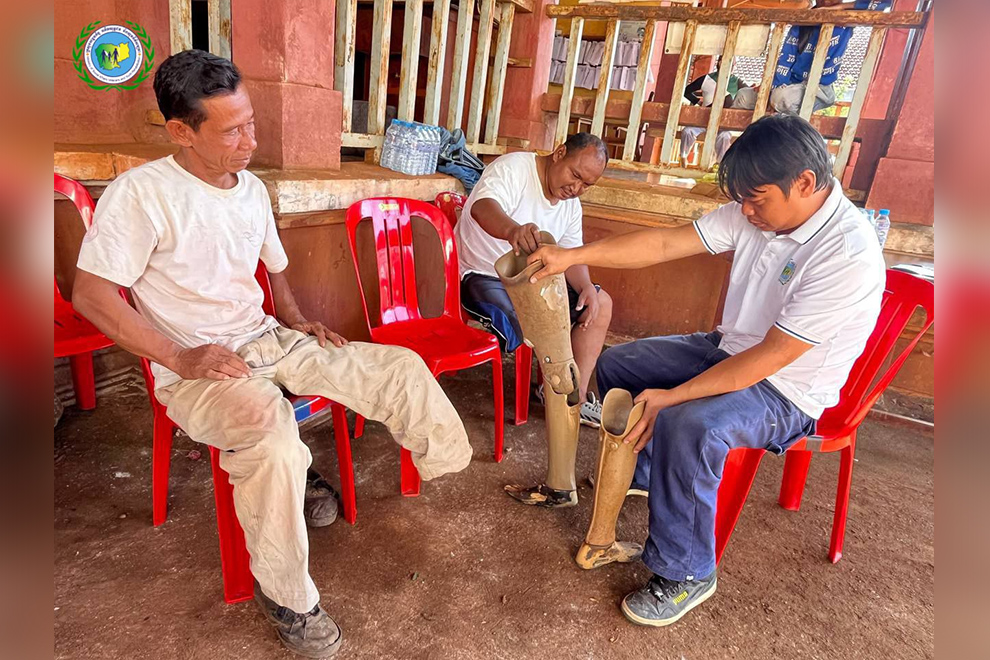
Prime Minister Hun Manet has highlighted Cambodia’s significant achievements in the disability sector, thanks to the efforts of ministries, institutions and sub-national authorities in promoting the rights and well-being of persons with disabilities. Among these achievements, more than 50,000 persons with disabilities are currently receiving financial support from the national social assistance programme, under the Family Package scheme.
Manet shared his remarks in a congratulatory message issued to mark December 3, the 27th Cambodian Day of Persons with Disabilities and the 43rd International Day of Persons with Disabilities, celebrated under the theme “A Disability-Inclusive Environment Across All Sectors to Promote Social Development”.
The accomplishments highlight progress in promoting equality, reducing and eliminating discrimination, broadening public awareness on disability, improving accessibility, ensuring harmonious and resilient communities, and expanding access to mobility aids, personal support equipment, respect for privacy and improved housing, among others, he noted.
“In the Kingdom of Cambodia, the Royal Government places a high priority on promoting the rights and well-being of all persons with disabilities without discrimination based on race, religion, status or political tendencies,” he said.
He added that, through the Ministry of Social Affairs, Veterans and Youth Rehabilitation, the government has implemented and continues to implement a social and rights-based disability identification system. Currently, 355,280 persons with disabilities, including 174,013 women, have been identified at the commune/Sangkat level. A total of 289,543 disability ID cards have been issued, including 141,085 for women.
As of September 2025, a total of 717,132 households were registered in the national social assistance program under the Family Package scheme. Among them, 54,819 persons with disabilities have benefited from the program, with a monthly budget allocation of 10,321,500,000 riel (approximately $2,580,375). Each person with a disability receives 28,000 riel per month. Those who are both elderly and living with HIV/AIDS receive triple the monthly support.
The government will continue strengthening the disability identification system nationwide, aiming to identify all persons with disabilities across the country. This system will provide essential baseline data for designing policies related to social protection and social affairs tailored to real needs and specific sectors.
In addition, 40 ministries and public institutions had employed 7,502 persons with disabilities as of October 2025, including 1,035 women and 3,035 persons with severe disabilities, representing 2.48% of total employment.
In the private sector — including banks, microfinance institutions, hotels, factories and companies — 466 entities have registered and received certification for complying with the Disability Rights Law.
These institutions collectively employ 6,905 persons with disabilities, including 4,527 women. Altogether, both the public and private sectors across the country have employed 14,407 persons with disabilities, providing them with income and social benefits in line with their roles, responsibilities, abilities and individual talents.
The prime minister instructed the social affairs ministry to continue working with other authorities to advance the social and rights-based disability identification system and issue disability ID cards to all persons with disabilities so they can access the benefits they are eligible for.
Furthermore, he ordered the Ministry of Public Works and Transport, the Ministry of Health, and the Ministry of Social Affairs to work together to ensure that persons with disabilities can obtain driver’s licenses without obstacles or discrimination, in accordance with the inter-ministerial proclamation on licensing conditions for persons with disabilities. Public and private transport providers, whether by land, air or water, should ensure their facilities are accessible to persons with disabilities.
Additionally, the health and social affairs ministry must cooperate to provide quality, free medical and social rehabilitation services to poor persons with disabilities, as mandated by government policies.
