



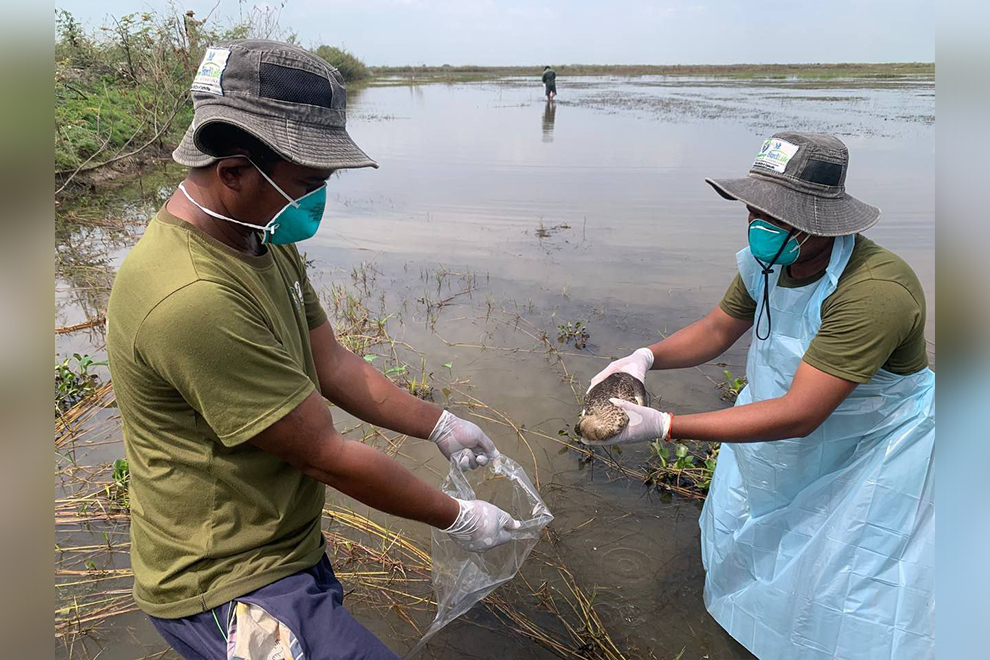
A conservation organisation has expressed concerns over the poisoning of wildlife, especially during the dry season, as it can kill large numbers of animals in a short period of time. It also highlighted the severe health impacts that consuming poisoned animals can have on humans.
NatureLife Cambodia (NLC) raised the issue after environmental rangers, the organisation’s biodiversity monitoring officers and members of the police recently discovered rice laced with poison in the Boeung Prek Lpov Protected Landscape Area, an important habitat for endangered species such as the sarus crane and yellow-breasted bunting.
“Poisoning has extremely serious consequences. It can kill large numbers of animals in a short time, including rare and endangered species such as the sarus crane. Based on our observations, the perpetrators intended to capture the animals for consumption or sale at markets. If people consume meat from poisoned animals, it will severely affect their health,” it stated.
NLC reported that the team found two dead wild ducks floating in a water management pond within the protected area, along with rice grains laced with poison scattered in the pond. Samples were collected and sent to the Wildlife Health Technical Team of Wildlife Conservation Society. The duck carcasses were burned. Rangers are currently attempting to identify those responsible.
The organisation expressed strong concerns about the poisoning and called on local authorities in Borei Cholsar and Koh Andet districts of Takeo province to assist in investigating and preventing illegal activities in the protected area.
It also reported that, to help wildlife cope with water shortages during the dry season, a new pond has been permanently restored within the Lumphat Wildlife Sanctuary in Ratanakkiri province. The pond will strengthen conservation efforts by ensuring water sources and feeding grounds for wildlife, particularly the sarus crane and the giant ibis, during the dry season — the most critical period for wildlife survival.
The pond restoration was carried out in cooperation with THACO AGRI, which voluntarily set aside 25 hectares of land to support environmental protection and natural resource conservation. The pond restoration is one of several activities outlined in a five-year management plan for the company’s conservation area. The plan aims to protect and restore natural resources through measures such as habitat protection, ecosystem restoration, law enforcement, wildlife monitoring and promoting stakeholder participation.
Conservationists also warned that if people do not help protect and conserve wildlife, many species may disappear and exist only in stories told to future generations. On the other hand, active public participation in conservation will help ensure their survival for generations to come, it added.
