



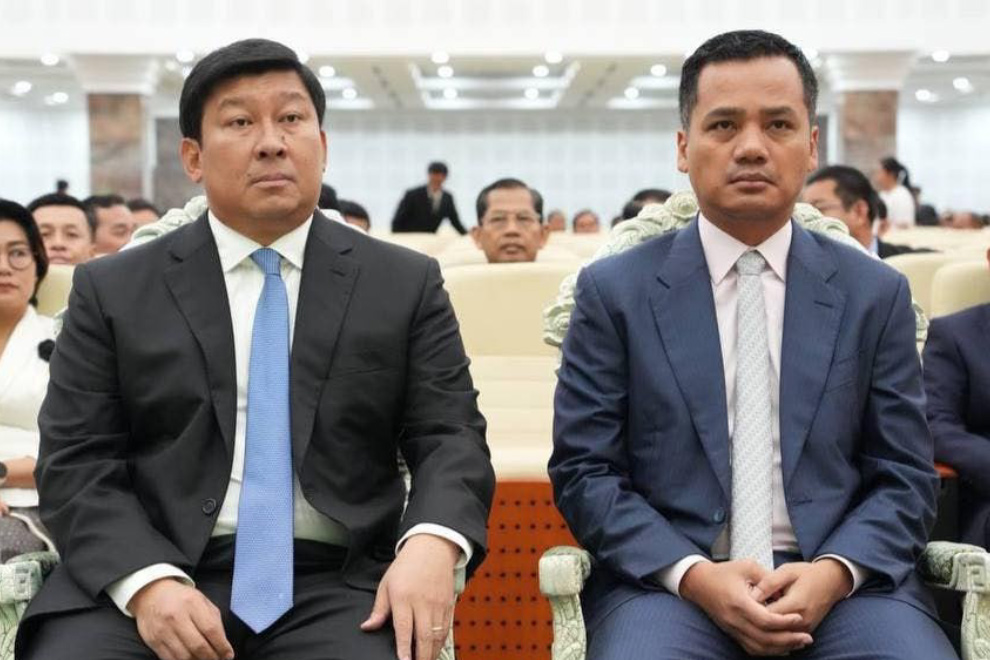
Minister of Interior Sar Sokha has urged subnational administrations across Cambodia to take increased responsibility for implementing approved land use master plans.
The committee’s first meeting, held on Monday, October 6, at the Ministry of Land Management, was co-chaired by Sokha and Minister of Land Management Say Samal.
Sokha noted that this work is relatively new for many subnational administrations, as they have not previously been responsible for implementing land management activities.
He encouraged all local administrations to start taking ownership and responsibility for preparing, developing and executing their own land management plans, land use master plans and local land use plans — and to do so actively and responsibly.
The initiative aims to accelerate and improve the effectiveness of land use planning, urban planning and settlement organization nationwide, ensuring that Cambodian citizens can live in peace, harmony and dignity, he said.
At the same time, he called on all subnational administrations at every level to turn the vision of model villages, rural housing developments, safe communities and happy settlements into practical actions as soon as possible.
These efforts, he said, should align with the government’s “Safe Commune-Village Policy” and local development plans to build a peaceful society where all citizens can live in solidarity.
“The governors of towns and districts must take ownership of their territories — they should not depend entirely on the provincial or capital governors, who themselves are implementing policy from the national level,” he instructed.
Both the interior and land management ministries expressed confidence that the already-approved land use master plans will be implemented effectively across all municipalities and districts. These plans are expected to guide sectoral development projects, align local priorities with national strategies and respond appropriately to real local needs and challenges.
Samal also remarked that, thanks to the current working structure and collaboration between the two ministries, Cambodia has reached a turning point that opens new opportunities for land management and urban planning.
He noted that after establishing a climate of no land disputes, the two ministries are now turning their focus towards land organisation and urban development, marking a new chapter in national progress.
“Starting today, we will begin transforming all settlements into rural borey zones, safe communities and happy homes. Together, we will develop land use master plans, identify commercial, agricultural, industrial and special economic zones, demarcate administrative boundaries nationwide, and plan residential and security infrastructure — all tailored to each region’s potential, using the resources we already have,” Samal said.
He added that this process will also include the organisation of public spaces, the resolution of disorganised or unsafe constructions, and the renovation of old, dilapidated buildings. These priorities form the core of the first phase of the government’s Pentagonal Strategy, which directly supports the country’s socio-economic transformation — improving citizens’ livelihoods and allowing them to live independently.
