



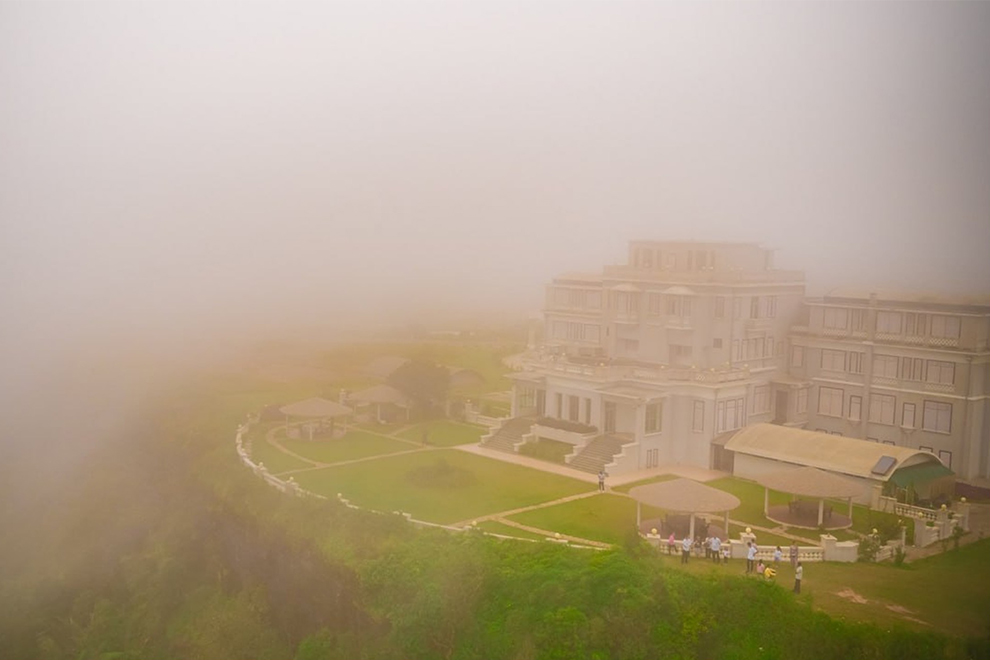
Temperatures in Cambodia’s mountain ranges, including the Dangkrek, Cardamom and Bokor ranges, may drop significantly until November 30, according to a warning from the Ministry of Water Resources and Meteorology, released today, November 21. According to the ministry, mountain temperatures will range from lows of 16°C to a maximum of 27°C.
The announcement is based on monitoring and analysis of regional and national weather conditions, noting that the northeast monsoon has strengthened, bringing significant influence over the South China Sea, the Mekong basin, the Cambodian Sea, the Gulf of Thailand and Cambodia as a whole.
During the same period, lowland areas may also experience colder weather, with average minimums of 20°C and maximum averages of 29°C. This includes Banteay Meanchey, Battambang, Pursat, Kampong Chhnang, Siem Reap, Kampong Thom, Kampong Cham, Tbong Khmum, Prey Veng, Kandal, Takeo, Svay Rieng and the capital, Phnom Penh.
In the plateau regions, temperatures may drop to a minimum average of 18°C and a maximum average of 28°C, including Kampong Speu, Pailin, Oddar Meanchey, Preah Vihear, Kratie, Stung Treng, Ratanakkiri and Mondulkiri.
Meanwhile, the coastal provinces — Koh Kong, Preah Sihanouk, Kampot, and Kep — are likely to experience temperatures from 21°C to 31°C.
The ministry urged authorities and the public to remain cautious of the cold weather conditions.
Pursat provincial governor Khoy Rida stated that water levels in the Pursat River basin may begin to recede, which could ease the current flooding situation—assuming there is no renewed heavy rainfall in the Cardamom Mountains.
As of Friday morning, the floodwaters in Pursat town had not yet receded.
According to the governor, the flooding was not caused by direct rainfall, nor by pressure from the Tonle Sap Lake or neighbouring countries, but rather by overflow from three rivers: The Pramouy River in Veal Veng district, A’rai River, and Prey Khlong River, all of which converge in Phnom Kravanh district before flowing into the Pursat River.
He urged residents — especially those living along rivers and in other flood-affected areas — to remain vigilant. During this period, public health and hygiene are crucial: people should ensure they eat clean, drink clean, and take precautions against infectious diseases that commonly occur after floodwaters recede.
