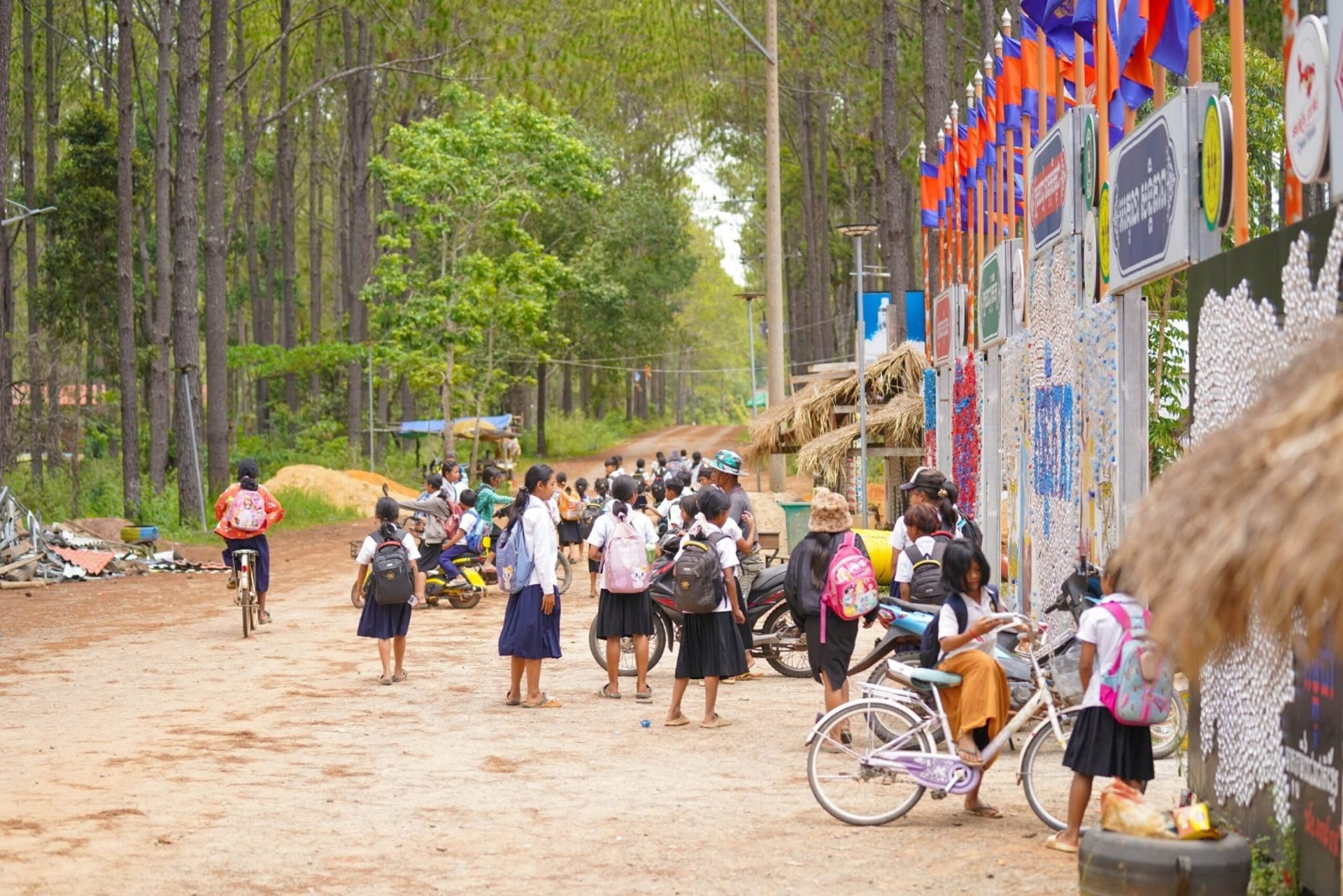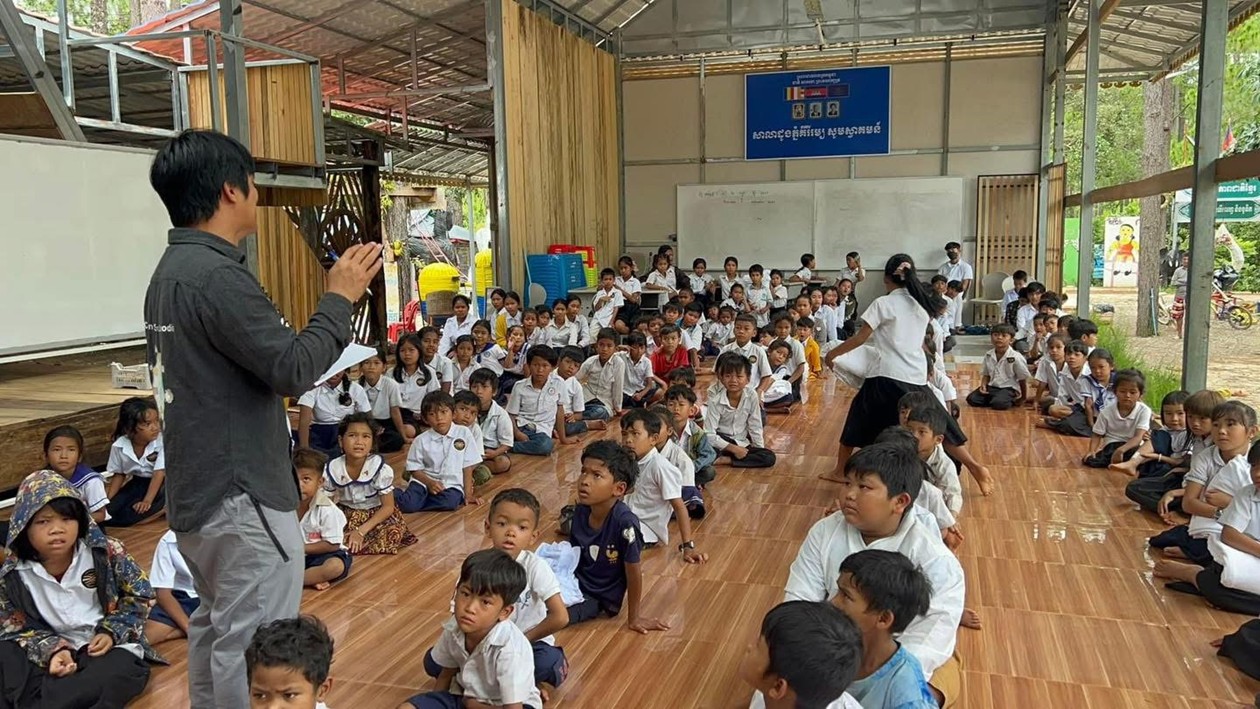
Sala Doung, the “Coconut School”, is nestled in Kirirom National Park. Since its establishment in 2018, it has taught hundreds of impoverished and orphaned local children.
The school, which relies on the income from a coffee shop and the goodwill of philanthropists to support the 150 children who currently study there, is now facing a funding crisis, with fears that it may have to close as soon as April.
Ouk Vanday, affectionately known as the “Trash Warrior”, founded the school with a unique vision. The campus was constructed with waste materials like bottles, straws, bottle caps, car tyres, gas cylinders and other seemingly worthless items, each used to create colourful classrooms.
The Trash Warrior told The Post that the problem of insufficient funding for the school’s operation has existed for many years, especially since the Covid-19 pandemic.
He has tried to find financing from various sources to try to prevent the school from closing. He established the Trash Café coffee shop, along with guesthouses and other entertainment in the forested areas of the Kirirom Mountains, with a view to attracting tourists and generate additional income.
Unfortunately, circumstances appear to have conspired against Vanday.
He explained that the border clashes war between Cambodia and Thailand, the more general economic problems of the public, and several other contributing factors, have made it impossible for Sala Doung to find additional funding. The school’s existing reserves will only sustain operations for another 2 to 3 months.
“The war and economic crisis have led to a decrease in donations from philanthropists. Meanwhile, the number of tourists visiting Sala Doung and Trash Cafe has also declined due to three main factors. First, people are less inclined to travel, needing to reduce expenses in this difficult situation,” Vanday said.
“Secondly, many coffee shops have opened on Kirirom Mountain, which seems to make guests bypass this location. And thirdly, a misunderstanding. Some people think that Sala Doung has developed through its buildings, grounds and materials, believing that the school is no longer poor and in need as before. Unfortunately, this is just an external view and does not reflect the problems that he and the school are facing,” he added.
According to Vanday, the total operating costs for the forest school are approximately $3,000 per month, or $35,000 per year.
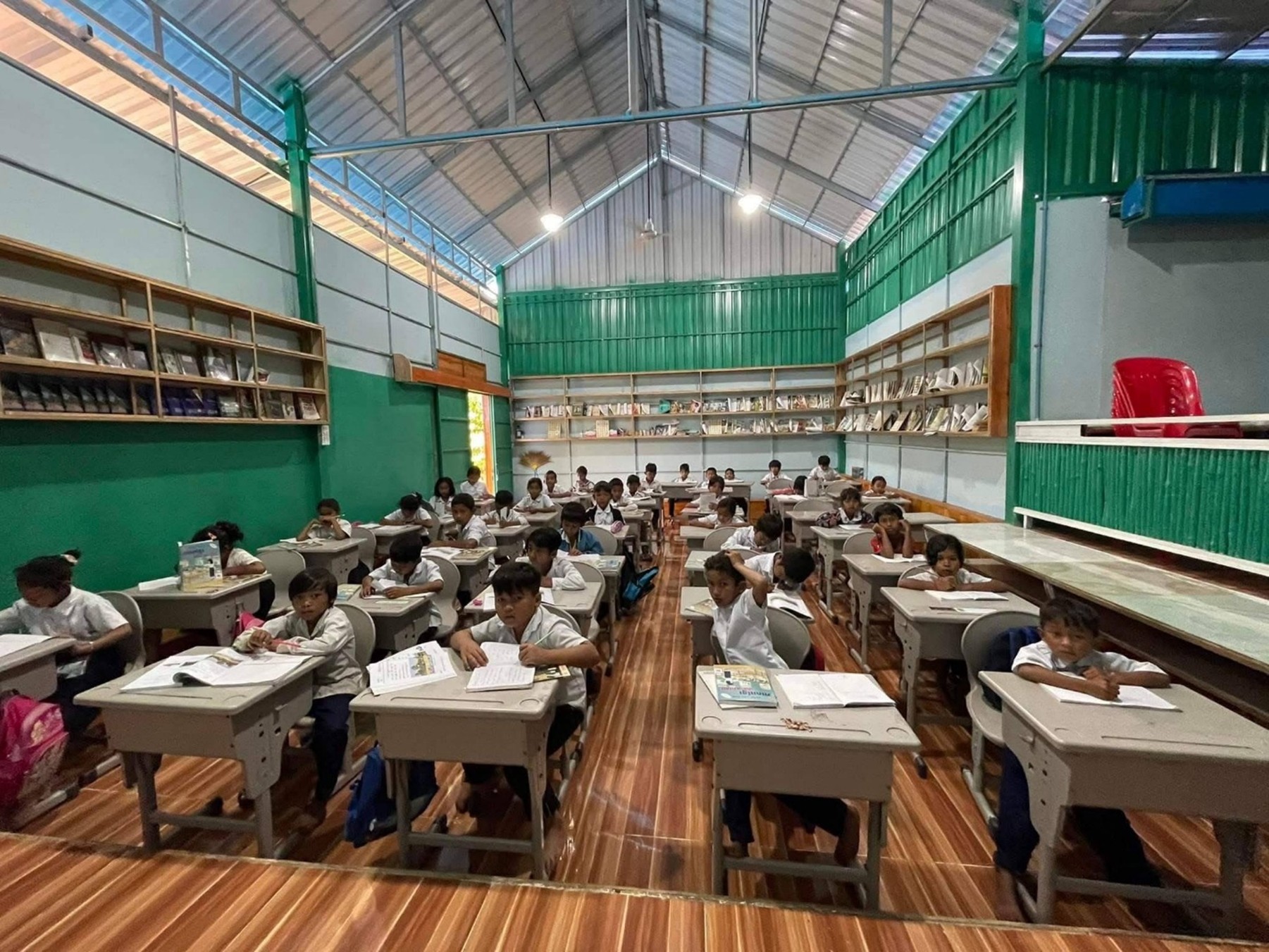
He explained that this monthly expenditure covers the salaries of five teachers, which amounts to $1,500, with another $1,500 or so spent on food, utilities and study materials for the students.
Of the 150 students currently enrolled, 70 study in the morning and 80 in the afternoon.
Vanday recounted that initially, he wanted to close the school quietly.
However, he has been convinced to make one final appeal and seek support from members of the public who see the value of education.
He hopes that willing philanthropists will contribute funds to support the Coconut School, as his dream is to see the facility continue to educate children. The school has given them knowledge, encouraged them to love the environment and even taught them how to recycle trash into useful items.
Additionally, added Vanday, it has stopped local children from being made to work as beggars, asking for money from tourists who visit the mountain.
With only a few months before he is forced to shutter the school, supporters are urged to get in touch.