



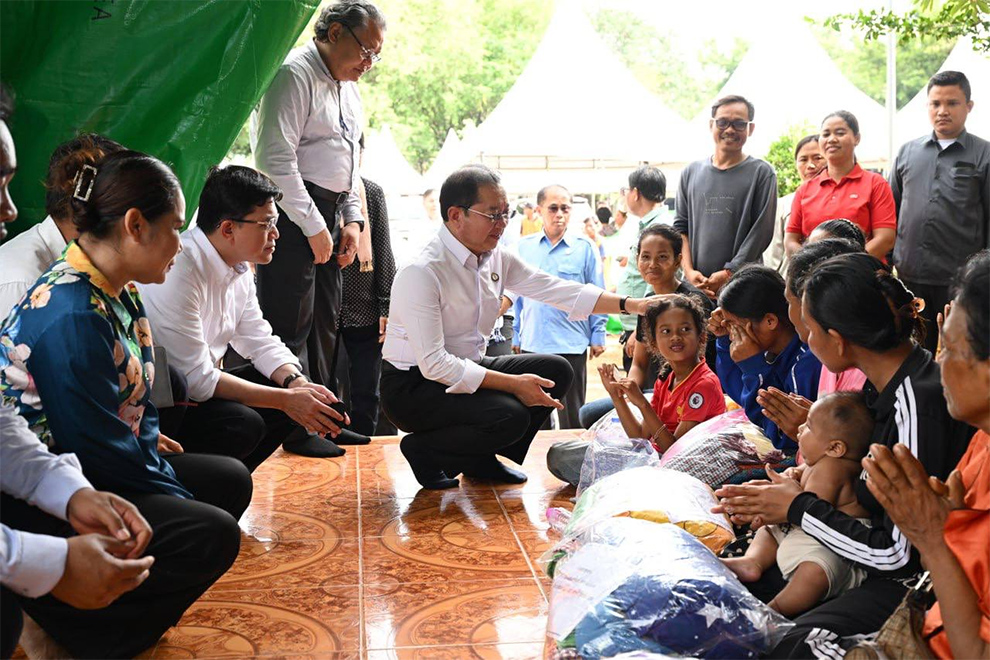
The Ministry of Health and UNICEF have launched an urgent vaccination campaign starting July 28 to support communities in Pursat, Battambang and Banteay Meanchey provinces, and beyond, to protect the health of children displaced by the border dispute between Cambodia and Thailand.
According to UNICEF Cambodia, the campaign aims to prevent the spread of disease and safeguard the health of children and the broader community, particularly those displaced during this difficult period of forced relocation.
The campaign will provide essential immunisations including tetanus and diphtheria vaccines for women, routine vaccinations for children under 2, measles-rubella vaccines for children aged 3-15 who have not yet been vaccinated, and Covid-19 vaccines for those aged 12 and above, based on their vaccination history.
“Every child deserves access to life-saving healthcare and immunisation to survive and thrive. Healthcare and vaccinations are critically important for every child, to ensure they are fully protected and able to live and grow in good health,” it stated.
Tens of thousands of Cambodians living near the border in provinces such as Preah Vihear, Pursat, Oddar Meanchey, Banteay Meanchey and Battambang were forced to flee to safer areas following armed clashes during the Cambodia-Thailand border conflict that began on July 24.
Alongside vaccinations, UNICEF has also distributed essential hygiene and clean water supplies, including water containers, collapsible jerrycans, soap, water filters and other sanitation items. These resources are vital for reducing public health risks and have been provided in partnership with the Ministry of Rural Development.
UNICEF stated that its top priority in this emergency phase is to continue supporting national and local efforts to reduce health risks and provide vital assistance to affected families — particularly children — still residing in displacement camps.
Health minister Chheang Ra urged displaced communities to follow health measures, including maintaining good hygiene, drinking clean water, resting under mosquito nets to prevent dengue and malaria, and thoroughly cooking food to avoid illnesses such as cholera, typhoid or and food poisoning.
Anyone experiencing health problems should seek medical care at the nearest health post or facility.
